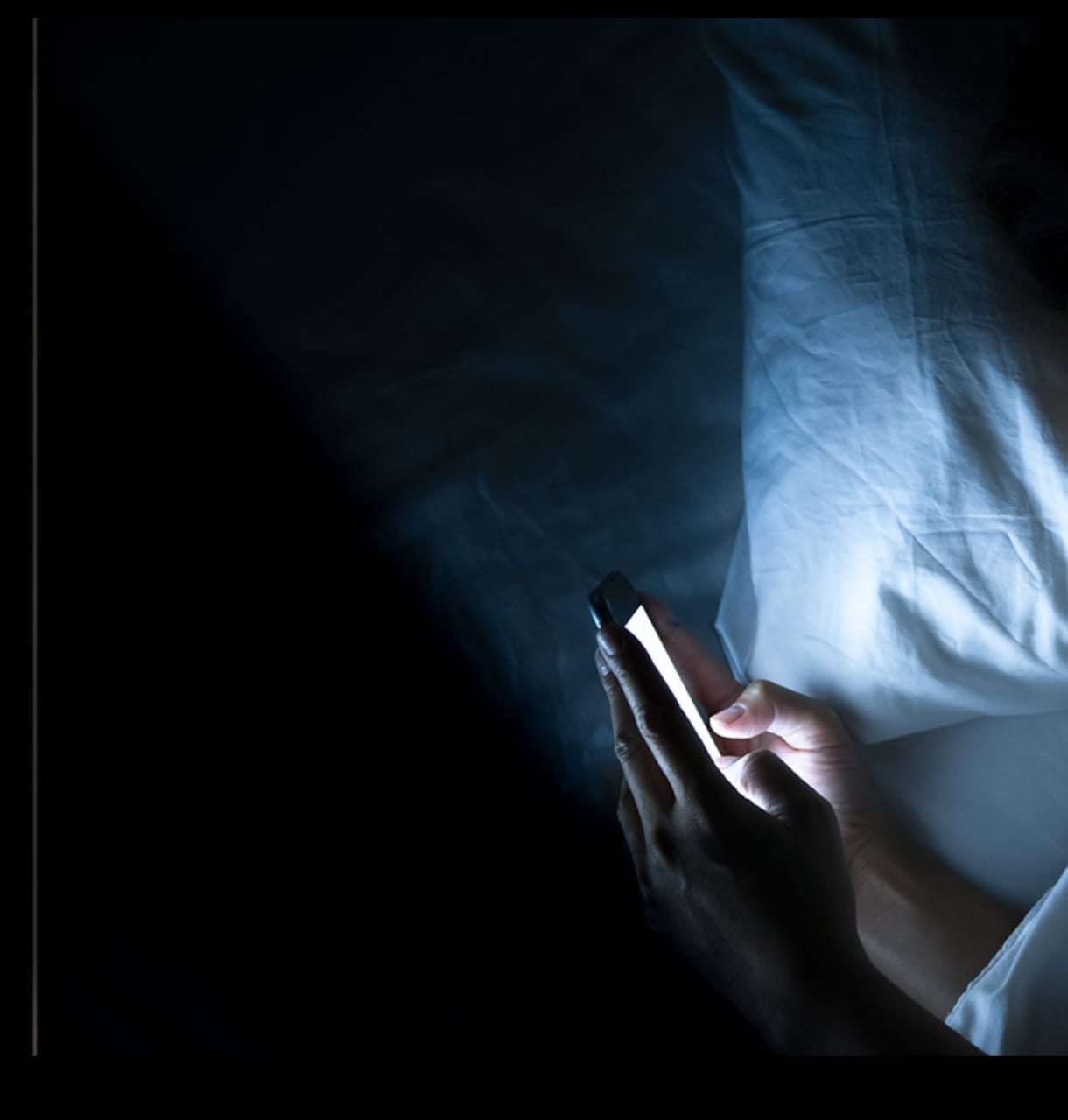
The rapid development of digital technology has transformed our daily lives. Televisions, smartphones, tablets, computers… these ubiquitous screens accompany us from morning till night. Children, teenagers, adults—no one escapes this digital immersion, yet these tools present serious consequences for eye health.
Children spend hours in front of the television, often in their bedrooms, without regard for the recommended viewing distance. Teenagers are glued to their smartphones, and adults check their emails and work on computers for long hours. This massive and prolonged exposure to screens, often in unsuitable conditions—that is, with poor ambient lighting, insufficient distance, etc.—poses a real public health problem, particularly concerning eye health. Medical professionals recommend a minimum distance of at least two meters for televisions, a distance that increases proportionally to the screen size. This simple recommendation is far from being followed in most homes, exacerbating the risks associated with screen use. The omnipresence of screens in our lives is undeniable, but their impact on our eye health is often underestimated, or even ignored until significant problems develop.
The consequences of prolonged screen exposure are very real, as some attest. Nestor, a telecommunications engineer, describes stinging eyes after an hour of working on a computer. Mounira, a student at the University of Garoua, shares the same observation. Odilon, for his part, reports watery eyes after extended video game sessions on the television. These accounts, far from being isolated, illustrate the reality experienced by many young people and adults. Faced with these symptoms, some opt for protective glasses, a palliative solution that does not address the root cause. Most worryingly, the harmful effects of screen light often go unnoticed until more significant visual disturbances appear. This trivialization of the problem is a major cause for concern.
Flat screens, whether televisions, computers, or smartphones, emit what is known as « blue light. » This light, a component of the visible light spectrum, has a short wavelength and high energy. It is this energy that is particularly harmful to the retina. Prolonged exposure to blue light can lead to various eye health problems, including eye strain, age-related macular degeneration, cataracts, and sleep disorders.
Given these proven risks, it is wise to adopt preventative measures to protect your eye health. These measures generally consist of limiting screen time. Reducing the time spent in front of screens is essential. Maintaining a proper viewing distance is recommended for each type of screen. The larger the screen, the greater the distance should be. Adjusting the screen brightness to the ambient light helps reduce eye strain.