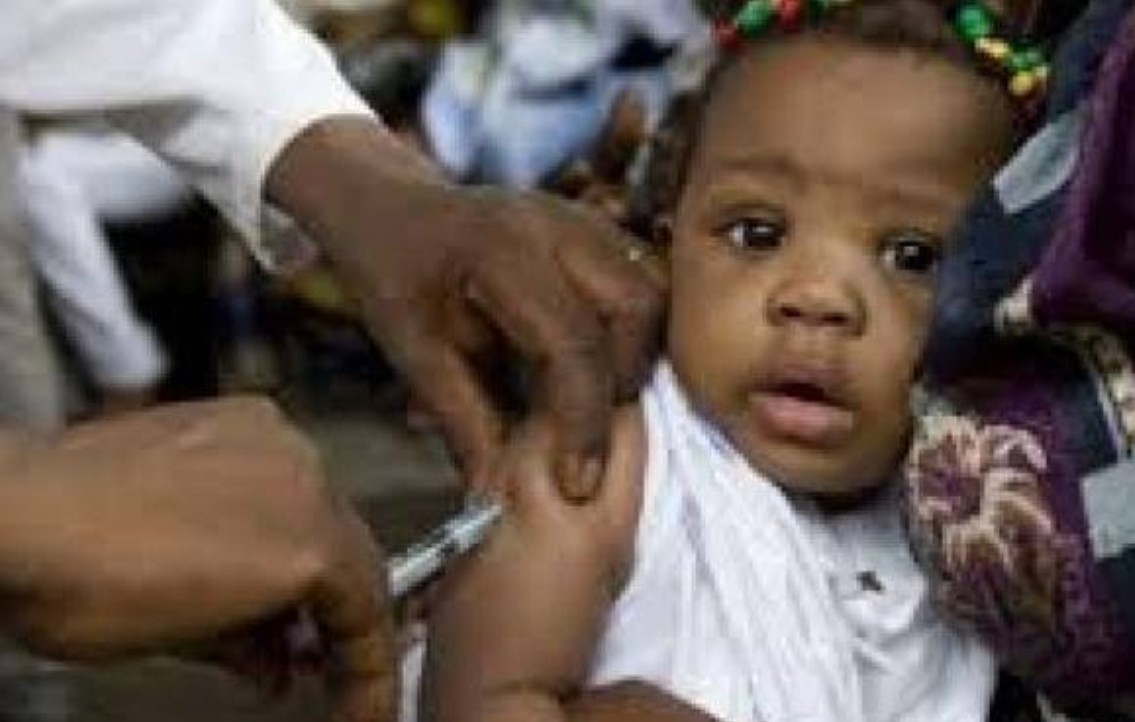
From September 16 to 20, the Ministry of Public Health will launch a national vaccination campaign against measles and rubella. With more than 120 health districts facing a worrying resurgence of the virus, this massive operation aims to protect children aged 9 months to 5 years and to stop an epidemic threatening to spread nationwide.
Dr. Tchokfe Shalom Ndoula, head of the Expanded Program on Immunization (EPI), explains the rationale for this response: “We are a country where the measles epidemics peaks every three years. This is because vaccination coverage, while good, has not reached the level needed to eliminate measles. To achieve the measles
elimination targets, the country needs 95% vaccination coverage across all districts for three consecutive years. The country has not reached this, although coverage is still significant. Therefore, with our coverage at around 80% each year, the number of unvaccinated children accumulates year after year. After three years, this number becomes large enough to cause a measles epidemic the following year.” The official emphasized the seriousness of the current situation: “This number has led to a measles epidemic, currently affecting 120 districts, with over 6,000 confirmed cases in children and 18 confirmed deaths.” Without a swift response, the outcome would be disastrous: “If we do nothing now, next year it will likely be a nationwide epidemic with many serious cases and deaths”.
Vital objectives: catch up, strengthen, and flatten the curve. Faced with this imminent threat, the Ministry of Public Health, through the Expanded Program on Immunization (EPI) and in partnership with the Doctors of Cameroon association, is organizing this integrated campaign across the entire country from September 16 to 20, 2026. The EPI’s permanent secretary detailed the priorities on the ground: “First, we need to catch up with all the children who haven’t been vaccinated, all the unvaccinated children who have accumulated.” “We must also strengthen the immunity of those who are vaccinated, so that we can stop the rising curve of the epidemic, which, if nothing is done, will lead to a nationwide and almost international outbreak”.
He adds, regarding Cameroon’s strategy: « In Cameroon, every three years we organize what we call a follow-up campaign, the aim of which is precisely to prevent the epidemic from peaking and reaching a national scale. The objective is to strengthen the immunity of all at-risk individuals. Sometimes this can extend up to age 15, but in Cameroon, we are targeting children from nine months to five years old. And for these children, we aim for at least 95% coverage, and that way, we’ll be relatively safe for three years. » The Challenge of Continuity: Aiming for Lasting Immunity
While this emergency campaign is essential, it also underscores the need to maintain a high level of daily protection to prevent the recurrence of these health crises. Dr. Tchokfe Shalom Ndoula concludes by reiterating the conditions for a definitive break from this cyclical pattern: “In three years, we must also organize a campaign, unless we achieve 95% coverage each year with routine vaccination. If we reach 95% every year starting in 2027, since the campaign is in 2026, we won’t need to organize another campaign in three years. Thus, coverage will be low, maintained between 80% and 85% over the three years, we will be forced to organize another follow-up campaign to prevent a nationwide epidemic. From September 16th to 20th, everyone’s mobilization remains the only weapon to defeat the virus and protect the health of the youngest among us.