
To mark IYRP 2026, the journal Grain de Sel is publishing a special issue on pastoralism. This provides an opportunity to highlight the decisive contribution of herders and pastoralists as the first links in the epidemiological alert chain and public health in West Africa.
Faced with climate change and socio-economic pressures across West Africa and the Sahel, pastoralism is once again proving its resilience and its central role in health and food security. As part of the International Year of Rangelands and Pastoralists (IYRP 2026) declared by the United Nations, the specialized journal Grain de Sel is publishing a major double issue. At the heart of this edition: pastoral mobility, shared management of natural resources, and, above all, the direct contribution of herding communities to global public health.
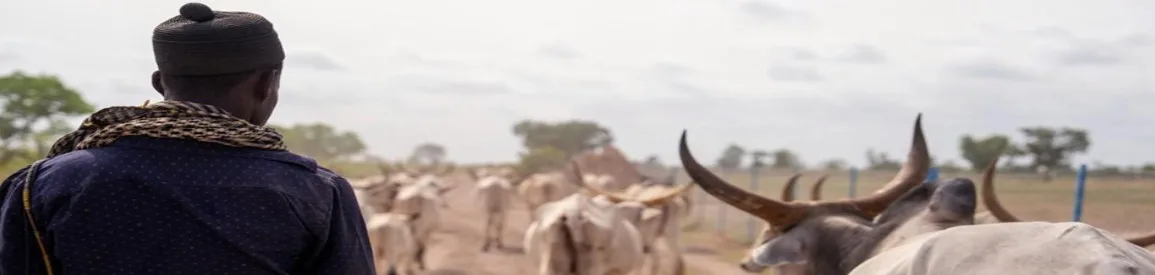
Among the key contributions in this issue, an article co-authored by Gilles Vias Franck and Djibo Mazou Boubacar, experts at Vétérinaires Sans Frontières Belgium, puts the strategic role of grassroots actors into perspective under the evocative title: « Pastoralists, first actors of health surveillance in the Sahel. » Well before laboratory protocols or state veterinary interventions, it is the herders and pastoralists who roam the pastures daily. Armed with centuries-old knowledge and keen observation of their herds, they are consistently the first to detect the early signs of an epizootic or the clinical manifestations of a zoonosis transmitted from animal to human.
The study draws on concrete experiences in Togo and Niger to demonstrate the effectiveness of a model based on mutual trust between local communities and official veterinary services. Far from being passive beneficiaries, pastoralists become essential epidemiological sentinels. The fluid flow of information between encampments and health structures critical shortens response times to emerging infectious threats.
The example of Niger, analyzed in the article through the coordinated management of a resurgence in canine rabies, provides a masterclass illustration of the One Health concept. By linking animal health monitoring, human medical care, and environmental control, pastoral communities and authorities were able to stem the resurgence of the virus.
This coordinated response proves that the boundary between veterinary medicine and human medicine is permeable, particularly in pastoral ecosystems where proximity between humans, livestock, and wildlife is constant. As international initiatives multiply to strengthen global health security, the Grain de Sel publication serves as a reminder of a fundamental reality: no epidemiological surveillance system in the Sahel can be effective without the active involvement of nomadic and transhumant populations.
Recognizing and formally integrating herders into national public health networks is no longer an option, but a strategic necessity for building fairer, more responsive, and more sustainable health systems across the continent.