
On the occasion of World One Health Day, held on November 3, 2026, in Yaoundé, the Zoonoses Program and its partners (FAO, WHO, GIZ) brought together around 100 stakeholders under the theme: « Breaking Down Silos, Building Synergy. » The goal: to unite human, animal, and environmental health.
On the occasion of World One Health Day, held on November 3, 2026, in Yaoundé, the Zoonoses Program and its partners (FAO, WHO, GIZ) brought together around 100 stakeholders under the theme: « Breaking Down Silos, Building Synergy. » The goal: to unite human, animal, and environmental health.
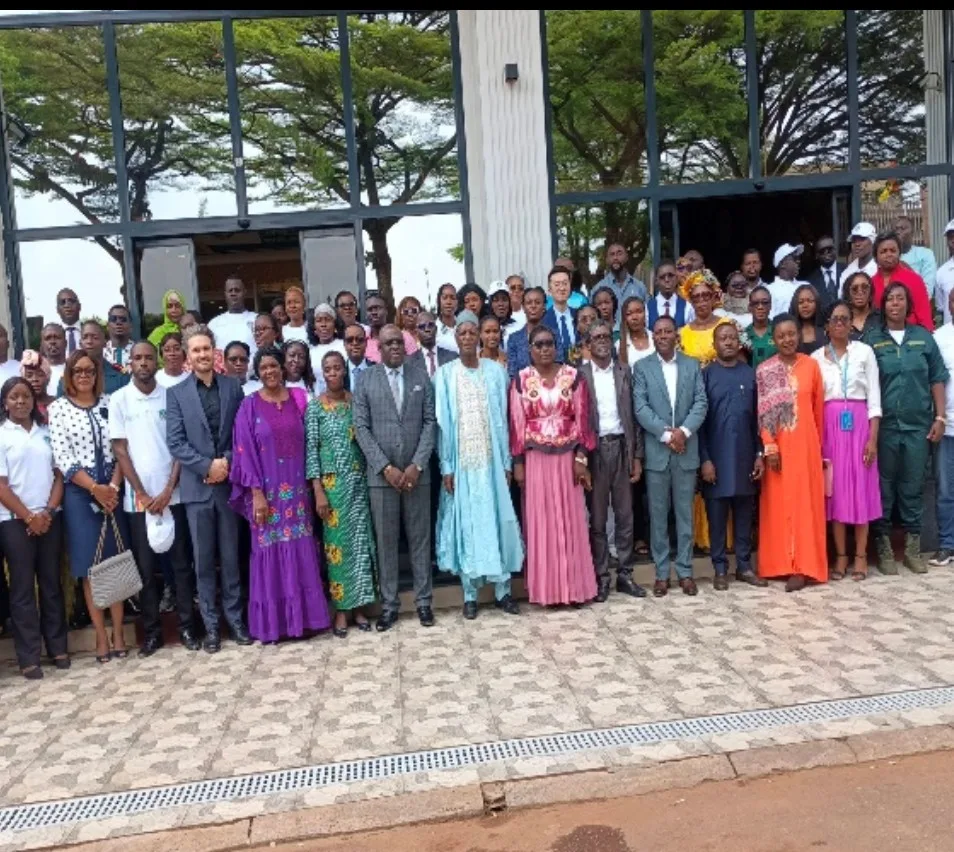
On Tuesday, November 3, 2026, the United Hotel in Yaoundé hosted a conference marking the official celebration of World One Health Day. Organized by the
National Program for the Prevention and Control of Emerging and Re-emerging Zoonoses (PNPLZER), in collaboration with strategic partners such as the FAO, WHO, and GIZ, the event drew approximately 100 participants from diverse backgrounds. The primary objective was to raise awareness among national stakeholders regarding the critical importance of best practices aligned with the « One Health » concept. This high-level meeting was held under the evocative theme: « Breaking Down Silos, Building Synergy: One Nation, One Health. »
A Multisectoral Mobilization Against Health Threats
Focused on collective action, the day underscored the absolute necessity of moving beyond traditional, siloed approaches to develop appropriate and legitimate responses to health challenges. In his opening remarks, Sali Dairou, Technical Coordinator of the Zoonoses Program at the Prime Minister’s Office, urged participants to work with focus and determination to foster harmony among the various stakeholders and to strengthen this innovative concept. This inclusive initiative was, in fact, set in motion on October 31st with a large-scale « sports walk » through the streets of Yaoundé, which brought together the general public and various partners to focus on prevention-related issues.
Key themes for reflection: thinking in terms of systems and acting in synergy
Speaking on behalf of the partners, the FAO representative emphasized the importance of supporting education on health risk prevention and management specifically by involving the education sector and building the capacity of future generations. Dr. Conrad Ntoh Nkuo, Permanent Secretary of the PNPLZER, underscored the urgent need to adopt a systems-based perspective to ensure synergistic action. He stressed the importance of recognizing the interconnectedness of human, animal, plant, and environmental health as a means of preventing disease. He noted that zoonotic and public health challenges are vast, and that eradicating them requires a collaborative approach. Dr. Ntoh Nkuo also warned against the persistent threat of scourges such as Ebola which is already knocking at Cameroon’s door stating that only rigorous preparation and collaborative research can avert a catastrophe.
Moving toward operational recommendations
Throughout the day, the conference proceedings were organized around several thematic sessions outlined in the official agenda. Discussions focused on the need to break down silos as early as the training stage in order to build the
interdisciplinary capacity of the future, with support from AFROHUN Cameroon as well as on clarifying the systemic links between human, animal, plant, and environmental health, under the guidance of the Ministry of Public Health (MINSANTE). Participants also examined group dynamics as a means to overcome tangible obstacles to cross-sectoral collaboration with CHAI Cameroon. They further explored the concept of « data without borders »—facilitating information sharing across different sectors to enable earlier detection and coordinated action with support from GIZ-OHDAA.
In short, this day November 3, 2026 reaffirmed that safeguarding animal, human, and environmental health is an essential collective responsibility for Cameroon’s sustainable development.