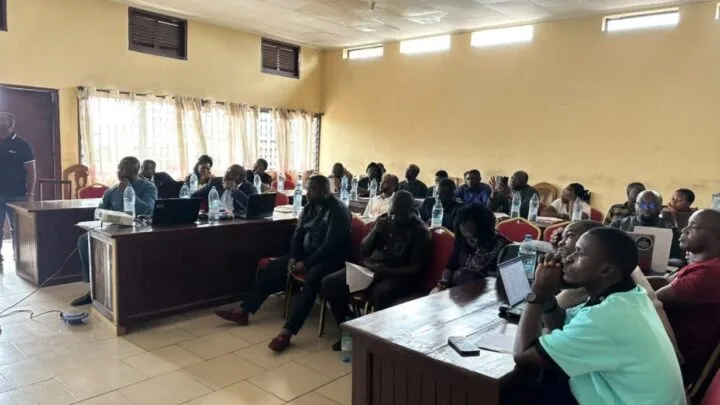

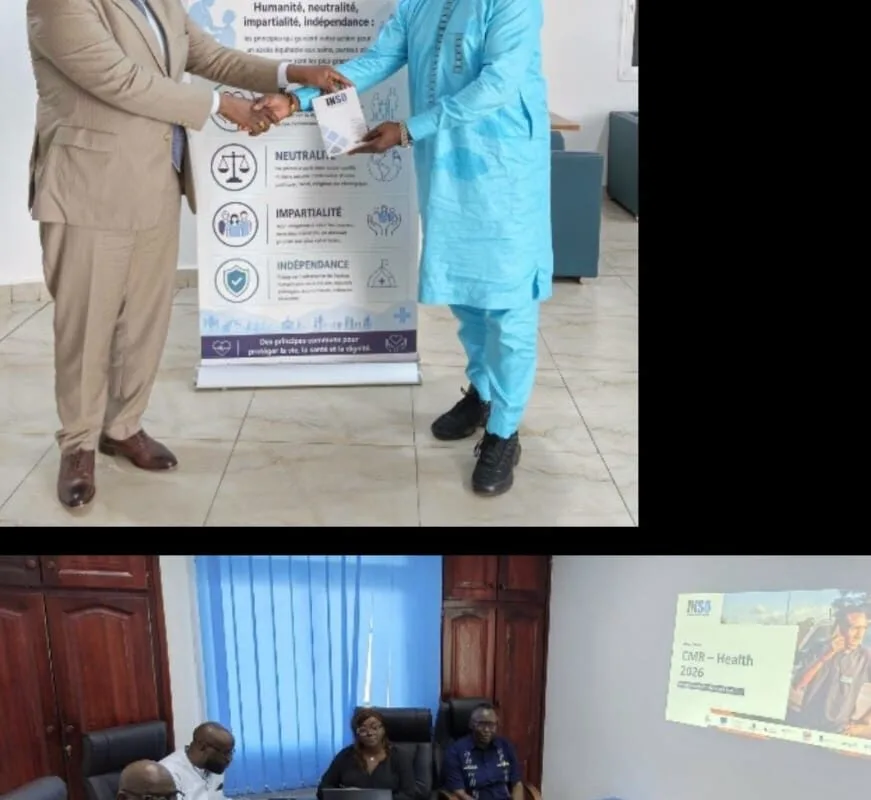
The World Health Organization (WHO) and the International NGO Safety Organisation (INSO) are strengthening their partnership in Cameroon to safeguard healthcare. Through a strategic collaboration that combines UN expertise with on-the-ground data, the two organizations are joining forces to better document, prevent, and counter attacks targeting patients and healthcare workers.
At a time when humanitarian and security crises continue to affect access to health services in various parts of the world, the protection of medical facilities, healthcare personnel, and patients is an absolute, non-negotiable imperative. It is against this critical backdrop that a high-level strategic meeting took place on November 4, 2026, in Yaoundé, between the WHO and INSO in Cameroon. This encounter marks a decisive turning point in the synergy between humanitarian and health actors, aimed at securing the space in which care is provided.
A High-Level Meeting to Combine Expertise with Field Knowledge
Led by Dr. Magaran Monzon Bagayoko, WHO Representative in Cameroon, and Mr. Kami Firmin Adjahossou, INSO Country Director, this courtesy visit quickly evolved into a substantive strategic workshop. Accompanied by key staff including Dr. Innocent Nzeyimana, Health Cluster Coordinator, and Mr. Fabrice Laviolette, Partnership Officer—the leaders conducted a thorough review of the security challenges facing healthcare personnel and medical infrastructure.
The primary objective of this consultation was to formalize and strengthen an operational bridge between the methodological rigor of the WHO and the deep, on-the-ground insight provided by INSO. In light of the resurgence of obstacles to medical access, it became urgent to devise a collective, seamless, and highly
responsive countermeasure.
At the heart of the collaboration: monitoring, analysis, and prevention
Central to the discussions was the WHO’s Surveillance System for Attacks on Health Care (SSA). This technical and scientific tool requires impeccable incident tracking to document every breach of international humanitarian law. Through the tactical input of INSO an organization specializing in the security of non-governmental organizations the data collected in the field will become more precise, timely, and comprehensive.
This alliance complements the International Committee of the Red Cross (ICRC)’s flagship initiative, « Health Care in Danger » (HCiD). By joining forces, these institutions do more than just record violations; they lay the groundwork for impactful joint advocacy and targeted prevention strategies. Better documentation of attacks not only helps break the cycle of impunity but, crucially, allows for the anticipation of risks, ensuring the continuity of health services for the most vulnerable populations.
Anchoring action in international standards
This collaborative effort is not improvised; it is rooted in robust international mandates. It adheres to the directives of resolution WHA65.20, adopted in 2012 by the World Health Assembly, while also reflecting the guiding principles of United Nations Security Council Resolution 2286 (2016), which condemns in the strongest possible terms acts of violence committed against the sick, as well as humanitarian and health-care workers. In Cameroon, the joint commitment of the WHO and INSO sends a powerful signal: healthcare is not a target. By protecting those who provide care, these organizations are working to safeguard the fundamental right to life and human dignity turning alarming findings from the field into concrete actions for protection and hope.