
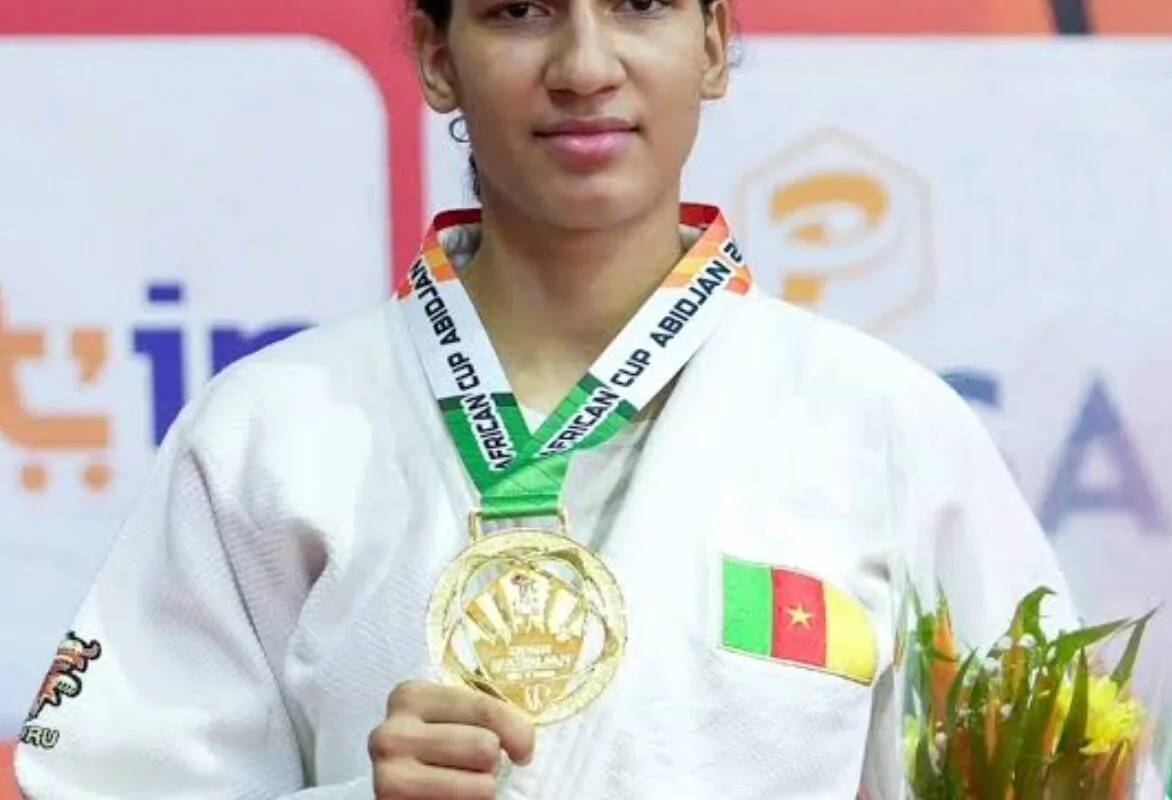
Crowned champions, Fiona Nsame Mbongo and Caroline Majoie Eboutou Eya signed a historic ratio of 100%, the result of excellent medical-sporting monitoring.
With only two athletes competing on the Ivorian tatamis, Cameroon achieved the resounding feat of finishing on the third step of the podium by nations during the Abidjan Junior African Cup 2026. Two gold medals won by Fiona Nsame Mbongo (-57 kg) and Caroline Majoie Eboutou Eya (+78 kg) which demonstrate the raw talent of Cameroonian youth, but above all the effectiveness of follow-up rigorous sports medicine.
Absolute efficiency: two fighters, two golden coronations
In a competition bringing together 47 judokas from 9 African nations, the Cameroonian delegation did not make the figure. Where certain selections relied on numbers to glean points in the general classification, the Junior Lions opted for performance surgery. The results are clear and display the best ratio of the entire tournament: 100% success.
Entered in the -57 kg category, Fiona Nsame Mbongo topped the debates with her vivacity and technical mastery, winning the most precious metal. In the process, among the heavyweights (+78 kg), **Caroline Majoie Eboutou Eya** showed her power and her composure to take her turn on the highest step of the podium. Thanks to this resounding double, Cameroon offers itself a prestigious third continental place, just behind the host country, Ivory Coast (3 gold medals), and Burundi (2 gold medals).
Medical monitoring, an invisible lever for high performance
If exploits on the tatami capture the spotlight, they are first built in the shadows of infirmaries and sports medicine offices. In a combat discipline with weight categories as demanding as judo, the line between achievement and injury is tiny. The exceptional success of the two Cameroonian champions in Abidjan illustrates the decisive impact of quality medical supervision throughout the preparation process.
From the precise management of weight curves before the official weigh-in, thus avoiding severe dehydration and loss of muscle tone, to the prevention of joint trauma, the medical staff played a leading role. Optimization of recovery between fights, personalized nutritional monitoring and regular monitoring of physiological parameters allowed Fiona Nsame Mbongo and Caroline Majoie Eboutou Eya to approach each duel at the peak of their physical and mental potential.
Modernize support to perpetuate the podiums
This Abidjan feat sounds like a resounding validation of the new approaches adopted in the supervision of national youth selections. Long relegated to the background behind technical and physical preparation alone, medical-sports monitoring has now established itself as the keystone of international performance. A well-monitored athlete is an enduring athlete, lucid in decisive moments and protected from premature wear and tear.
By raising the green-red-yellow flag at the summit of Junior Africa with a small but perfectly prepared workforce, the federation and its technical team are sending a strong signal: the quality of overall support takes precedence over quantity. This third continental place is not an isolated coup, but the promise of a golden generation which, thanks to science and medical rigor, has all the weapons to dominate the African and world judo of tomorrow.