As Cameroon prepares for the 2026 Seasonal Malaria Chemoprevention (SMC) campaign, health authorities are counting on an often-overlooked asset: community leaders. In the Far North Region, traditional chiefs, religious leaders and civil society organizations are stepping up efforts to help protect children from one of the country’s deadliest diseases.
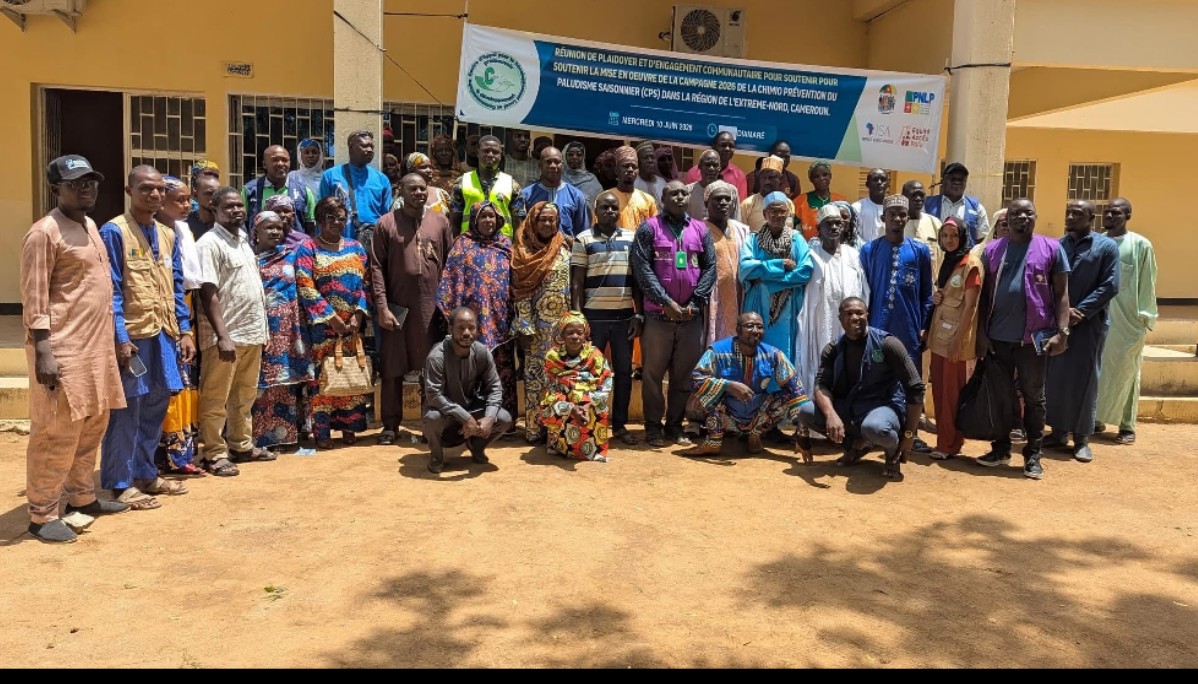
Community leaders, health authorities and partners during an advocacy meeting in Maroua ahead of the 2026 Seasonal Malaria Chemoprevention campaign in Cameroon’s Far North Region.
In the battle against malaria, medicines alone are not enough. Even the most effective preventive interventions can fall short if families do not understand their importance or fail to complete treatment cycles. Recognizing this reality, stakeholders gathered in Maroua on June 10, 2026, for a community advocacy and engagement meeting aimed at preparing the ground for the 2026 Seasonal Malaria Chemoprevention campaign.
The meeting, organized by the civil society organization CADELCO, a partner of \Impact Santé Afrique, brought together a wide range of actors involved in the fight against malaria. Representatives from Jhpiego and Plan Cameroon joined traditional and religious leaders, civil society organizations from the health districts of Maroua I, Maroua II and Maroua III, community network leaders and district
health management teams.
At the heart of the discussions was a shared conviction: community ownership remains one of the strongest drivers of successful public health interventions.
Presiding over the session, the Regional Technical Coordinator for Malaria Control in the Far North emphasized the critical role communities play in ensuring the effectiveness of Seasonal Malaria Chemoprevention. He noted that the active involvement of local leaders can help improve awareness, build trust and encourage parents to ensure that eligible children receive preventive treatment throughout the campaign.
Seasonal Malaria Chemoprevention is a preventive strategy recommended in areas with highly seasonal malaria transmission. It consists of administering antimalarial medicines to children during periods when the risk of infection is highest, significantly reducing the likelihood of severe illness and death.
However, health officials acknowledge that the intervention’s success depends largely on community acceptance and adherence. Misconceptions, lack of information and occasional reluctance among caregivers can undermine coverage and reduce the impact of the campaign. This is where community leaders become indispensable partners.
Traditional chiefs, religious authorities and local associations often enjoy a level of trust that health institutions alone cannot achieve. Their proximity to households allows them to communicate health messages in culturally appropriate ways, address concerns directly and encourage families to participate fully in prevention efforts.
Throughout the meeting, participants discussed strategies for intensifying awareness campaigns before and during the implementation of SMC activities. Particular emphasis was placed on reaching caregivers with clear information on the benefits of preventive treatment and the importance of completing every cycle administered during the campaign.
At the end of the discussions, community leaders reaffirmed their commitment to supporting the initiative. They pledged to relay key messages within their respective communities and to work alongside health authorities to maximize participation.
As the 2026 campaign approaches, stakeholders hope that this renewed alliance between health actors and communities will translate into stronger coverage and better protection for children. In a region where malaria continues to pose a major public health challenge, the meeting in Maroua served as a reminder that the fight against the disease begins not only in health facilities, but also within communities
themselves.