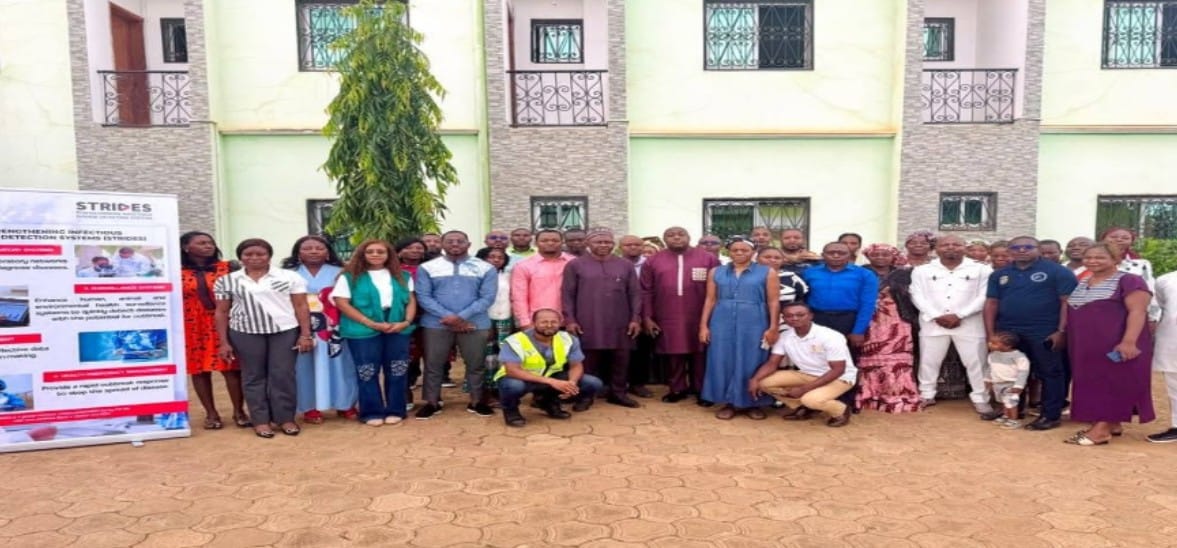
Meeting in Ambam from July 7 to 10, 2026, the Zoonoses Programme actively participated in training sector actors and regional coaches from the South Region in event-based surveillance (EBS).
Detecting unusual events before they become epidemics is the key objective of the new health defense strategy that Cameroon is deploying along its southern borders. In an interconnected world where pathogens ignore administrative boundaries, the speed of the initial alert often determines the outcome of an epidemiological battle. It is with this focus on heightened vigilance that a crucial training session on event-based surveillance (EBS) in the South Region was held in Ambam from July 7 to 10, 2026. Bringing together key stakeholders from sectoral ministries and future regional coaches under the auspices of the Ministry of Public Health, with the active participation of the National Program for the Prevention and Control of Zoonoses, this workshop marks a decisive milestone in the modernization of the country’s early warning and rapid response system.
Event-based surveillance (EBS) marks a fundamental paradigm shift from
traditional methods of health data collection. Unlike syndromic or routine surveillance systems that rely on weekly or monthly statistical reports, sometimes delayed, EBS focuses on the immediate capture of rumors, unusual phenomena, or weak signals within the community, the media, or informal networks. Whether it’s unexplained animal mortality in a border village, an unusual clustering of similar symptoms, or persistent rumors of disease cases, every piece of information becomes a potential alert requiring urgent investigation. By equipping regional coaches and sector representatives with this proactive approach, Cameroon is strengthening its capacity to capture warning signs at their source.
The choice of Ambam to host this workshop was no accident. A strategic border crossroads linking Cameroon to Gabon and Equatorial Guinea, the South Region is a high-risk area for the importation and exportation of emerging diseases and zoonoses. During these four days of intensive training, participants were trained in triage, verification, risk assessment, and rapid notification techniques for these atypical health events. The role of the regional coaches thus trained will now be to replicate these skills at the district and community levels, thereby creating a dense and responsive territorial network. By consolidating this synergy of action under the « One Health » approach, the Zoonoses Program and the Ministry of Public Health are equipping the South with a genuine epidemiological shield capable of nipping threats in the bud before they cross national borders.