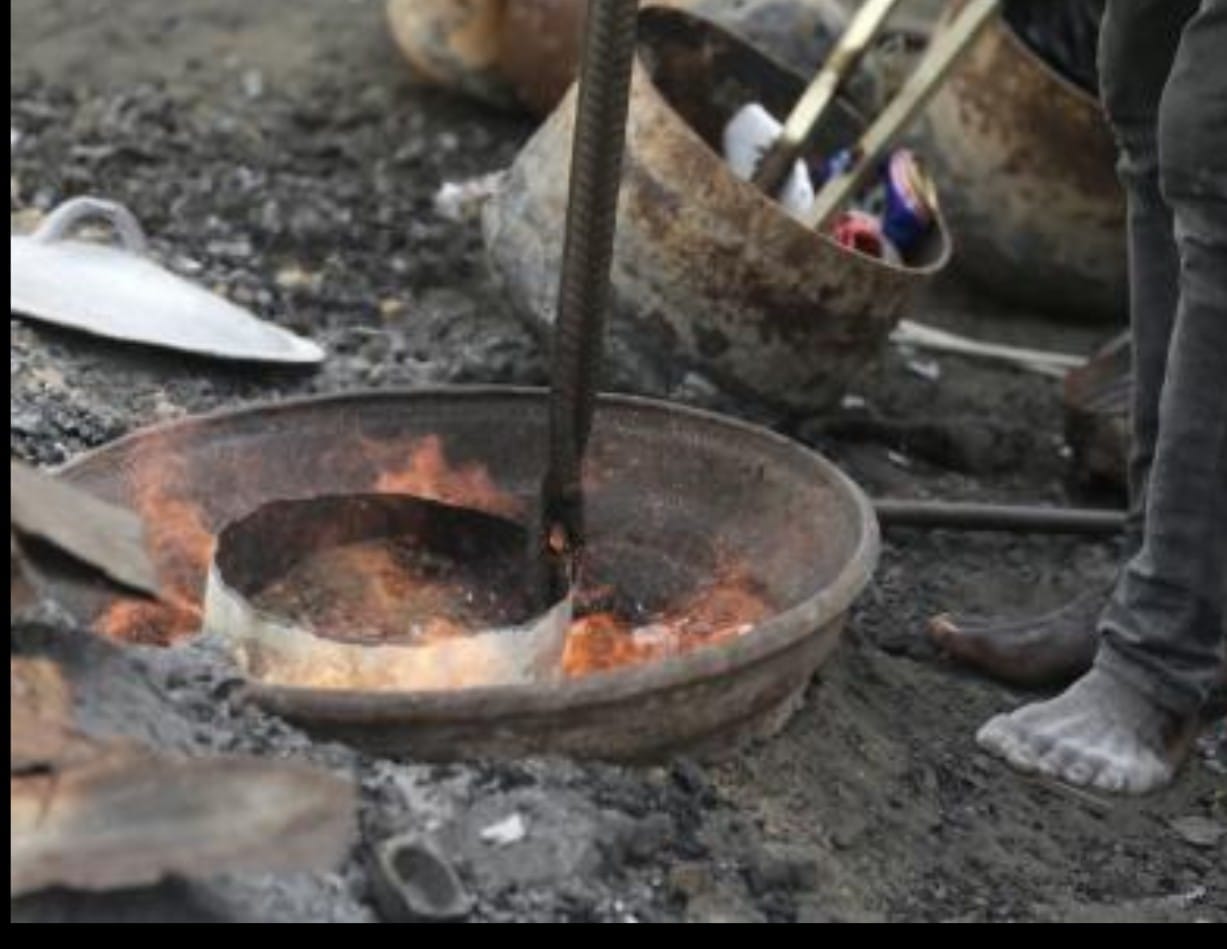
In some communities, children participate in the production of cooking pots in artisanal foundries using salvaged materials. This, according to health specialists, represents a real health threat, especially for children under five years old.
Lead is a blue-gray metallic element that occurs naturally in the Earth’s crust. Human activity has widely dispersed lead into the environment, where it persists for long periods. Today, most of the lead in the environment is linked to human activity. Lead releases have increased with activities related to industrialization, including the mining, smelting, and refining of lead for its use in products such as paints and electronic devices; the recycling of lead-containing products like batteries and aluminum; and the use of leaded gasoline in vehicles and aviation fuel.
In the Adamawa region, particularly in the city of Ngaoundéré, artisanal foundries are proliferating, and it is generally children who collect the raw materials and work in them. This exposes them to various diseases.
According to the World Health Organization (WHO), in 2016, more than 28%, or nearly 1.6 million, of all deaths of children under five were attributable to environmental factors. This constitutes a real threat to children’s health and survival. In Cameroon, a government-led study supports the WHO’s findings, according to Diane Saturnisme, a UNICEF staff member in Cameroon. She states that lead exposure can lead to growth delays, irreversible neurological diseases, and skin conditions, among other problems.
Advocacy
To limit children’s exposure to the dangers of lead, national lead prevention policies are essential to reduce and prevent irreversible neurological damage and disease. Health professionals advocate for regulations protecting children from lead in various areas, such as housing, paint, consumer products, and battery recycling. The health sector plays a vital role at all levels of lead prevention, through counseling families, incentives, and monitoring the outcomes of interventions.
Implementing expert recommendations could promote better recycling while protecting children from the dangers of lead. In artisanal foundries, such as those in the Gada-Mabanga neighborhood of the Ngaoundéré 2nd district, measures to protect children can be considered.