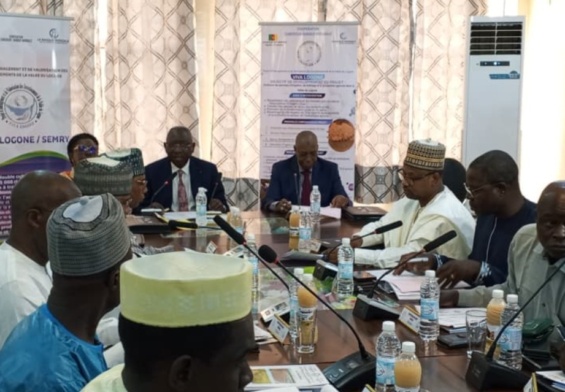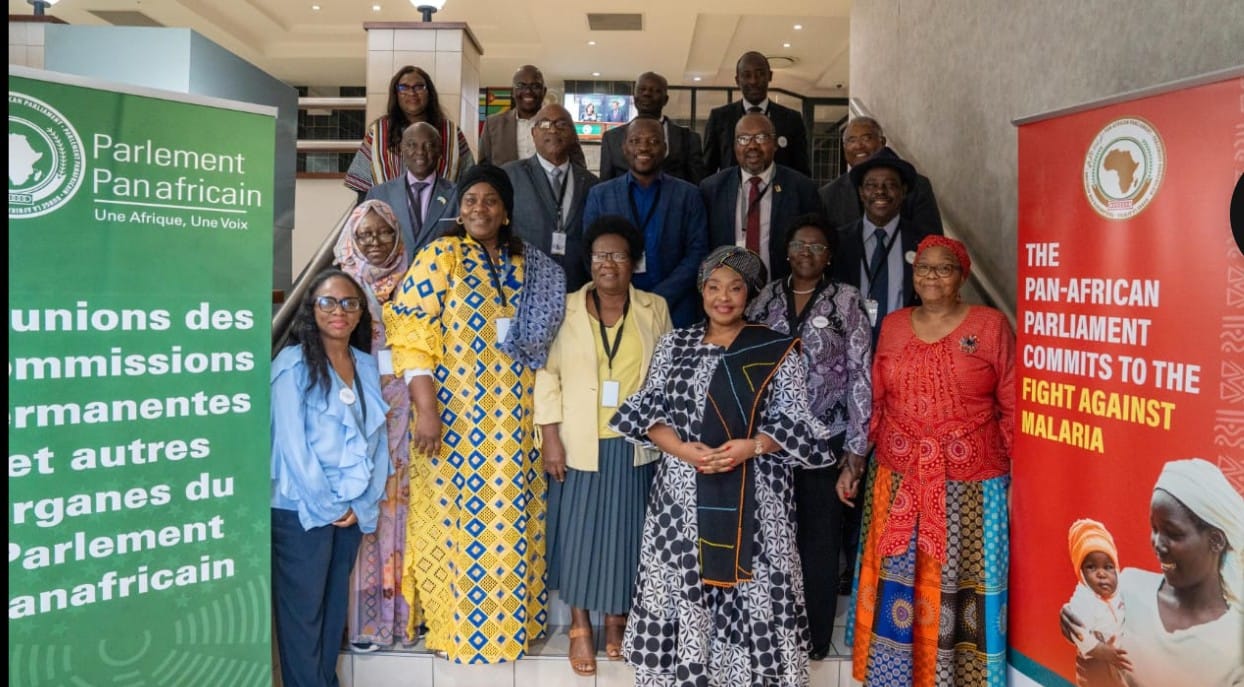
At its inaugural session at the African Parliament, COPEMA, co-chaired by the Honorable Njume Peter, affirmed its vision for the fight against malaria.This important meeting validated the 2026-2030 Action Plan to mobilize domestic financing and strengthen political accountability across the continent.
The African Parliament hosted a strategic session on Friday, July 24, 2026, dedicated to the continental response to malaria. Organized by the Coalition of Parliamentarians for the Elimination of Malaria in Africa (COPEMA), in collaboration with the African Parliament’s Committee on Health, this first-ever joint meeting laid the groundwork for a renewed political and financial effort to combat the endemic disease. Co-chaired by the Honorable Njume Peter, this meeting marks a decisive turning point in health governance in Africa. Faced with stagnant progress and emerging biological threats, elected officials across the continent intend to place the fight against malaria at the heart of member states’ budgetary and legislative priorities.
Renewed political leadership in the face of the health emergency
Africa remains the continent most affected by the disease, accounting for 95% of global cases and deaths, which primarily affect children and pregnant women. During the proceedings, the Honorable Njume Peter reiterated that the scientific tools to defeat malaria already exist and that the urgent task now is to create the political and financial conditions to make them accessible to all. This vision was supported by Global Ambassador Yvonne Chaka Chaka, as well as by representatives from Africa CDC, the WHO, and the RBM partnership. All emphasized the exorbitant socio-economic cost of this disease, which deprives the continent of more than $12 billion in GDP each year.
A 2026-2030 action plan for health sovereignty
The core of the discussions focused on validating the PAP-COPEMA Joint Action Plan 2026-2030, a roadmap centered on three major levers. The first lever aims to increase domestic financing to offset the decline in international aid by encouraging parliamentarians to vote for dedicated budget lines and innovative taxes. The
second lever concerns legislative harmonization designed to combat drug resistance and accelerate the deployment of new vaccines. Finally, the third lever establishes an accountability mechanism through a continental dashboard enabling rigorous monitoring of government commitments.
A decisive institutional alliance for Africa
By bringing together scientific experts, policymakers, and private sector partners, this session held at Gallagher Estate seals an unprecedented institutional alliance. The upcoming signing of a Memorandum of Understanding (MOU) between the African Parliament and COPEMA reaffirms the legislators’ commitment to translating political pledges into concrete budgetary actions to eliminate malaria.