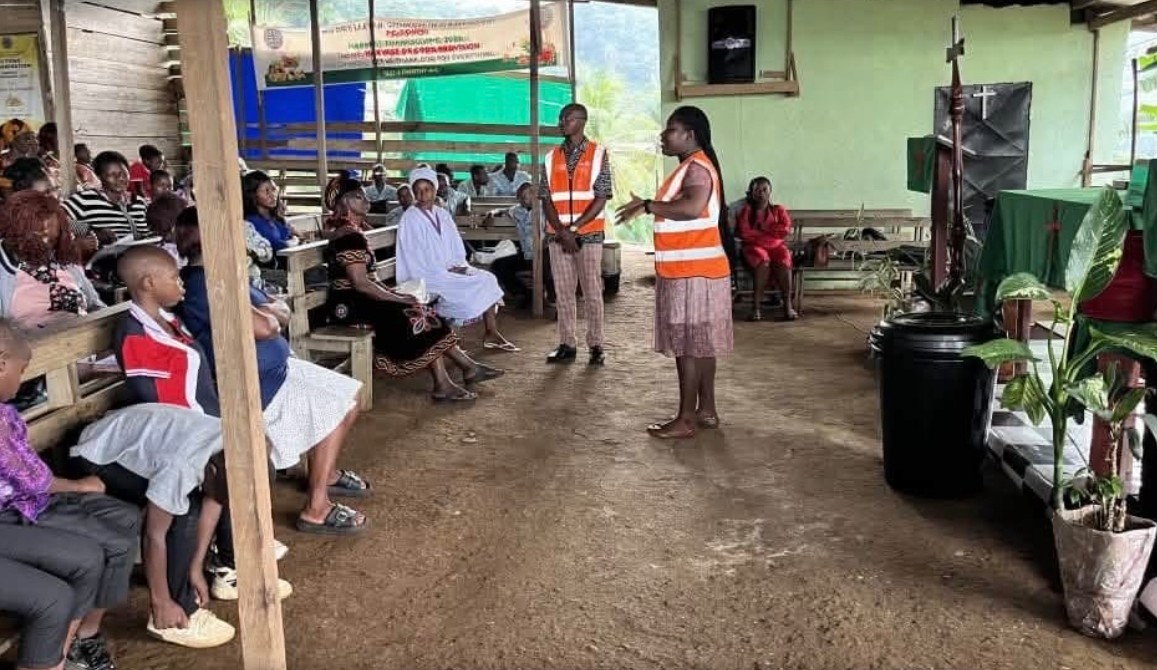
A community dialogue held on 2 August 2026 at the Presbyterian Church in Upper Towe in Limbe brought together men, women, youths and children to strengthen awareness and action against gender-based violence.
A total of 151 people have been sensitized on gender-based violence (GBV) in Limbe following a community dialogue organized on 2 August 2026 by the GBV Ambassadors at the Presbyterian Church in Upper Towe. The session focused on helping community members better understand the different forms of GBV, its causes and consequences, and ways of preventing and responding to violence.
The activity brought together 22 men, 38 women, 26 youths and 65 children. The diversity of participants provided an opportunity to address GBV as a community concern requiring the involvement of people across different age groups and social backgrounds.
Building understanding within the community
Held under the theme “Gender-Based Violence: Understanding its Forms, Causes, Consequences, and Prevention Strategies,” the dialogue provided participants with practical information on how GBV can occur, the factors that contribute to it and the impact it can have on individuals, families and communities.
The Presbyterian Church in Upper Towe was selected as the venue to facilitate broad community participation. As a familiar community space, it brought together different groups and created an environment for discussion and awareness around an issue that is often surrounded by silence and misconceptions.
The session also emphasized that preventing GBV requires collective responsibility. Participants were encouraged to challenge attitudes and behaviors that contribute to violence, promote respect and gender equality, and contribute to creating safer environments in their homes and communities.
Participants commit to action
Beyond raising awareness, the dialogue sought to encourage participants to translate the knowledge acquired into action. Participants pledged to become advocates against GBV within their families, churches, schools, workplaces and communities.
Their commitments include speaking out against violence, supporting survivors, promoting gender equality and sharing information gained during the session with others. The approach places community members at the center of prevention efforts, encouraging them to recognize warning signs, reject the normalization of violence and contribute to appropriate responses when cases occur.
The activity concluded with a renewed commitment from participants to promote safer and more inclusive communities where gender-based violence is not tolerated or normalized.
The Limbe dialogue thus combined awareness, community participation and individual commitment, with the 151 participants expected to extend the messages discussed during the session beyond the church setting and into their respective families and communities.