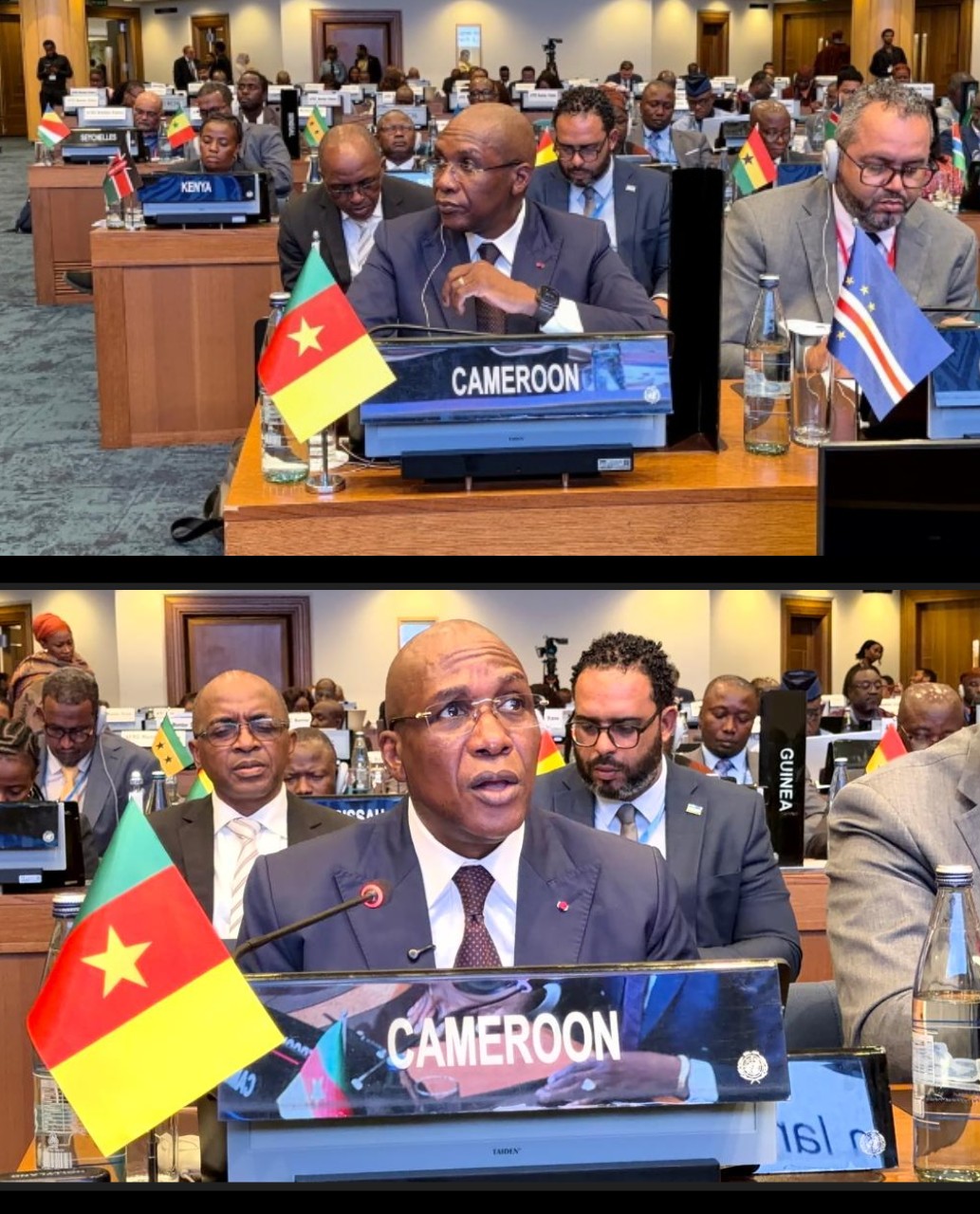
Led by Dr. Manaouda Malachie, the Cameroonian delegation delivered a very positive report at the 76th session of the Committeeereregional of the’WHO for Africa. On sovereignty andepharmaceuticalhasIn the fight against malaria, the country is strengthening its health diplomacy.
From August 24 to 28, 2026, in Addis Ababa, Ethiopia, the Cameroonian delegation, led by the Minister of Public Health, Dr. Manaouda Malachie, made its mark on the 76th session of the Committeeereregional of the’World Health Organizatione(WHO) for Africa. Commissioned on the very high instructions of the President of the Republic, the national representation deployed an offensive health diplomacy, structured around several strategic pillars: pharmaceutical regulation, emergency response, child health and health financing.
Support for local production and bilateral diplomacy
From the outset of the proceedings on August 24, Cameroon made its voice heard at the High-Level Ministerial Dialogue dedicated to pharmaceutical sovereignty. Dr. MANAOUDA Malachie presented the country’s significant progress, noting that its local production units have increased from 7 to 19 since 2020, with 239 approved products. Although local production still only covers 15% of the National List of Essential Medicines, the government reaffirmed its commitment to increasing public procurement, granting tax exemptions, and establishing a Cameroonian Medicines Agency.
Alongside the assemblies, strategic meetings strengthened bilateral ties. Discussions with the Indonesian Minister of Health, Budi Gunadi Sadikin, paved the way for technology transfers and investments in Central Africa. The Minister also met with the Executive Director of UNITAID, Dr. Philippe Duneton, reiterating Cameroon’s contribution of 200 million FCFA for 2024-2025.
Firm commitments on staff and child health
During the marathon day of August 26, the delegation advocated for a more equitable regional framework for health personnel (2026-2035) and proposed the
creation of an African observatory to monitor human resource dynamics in health. Regarding child health, Cameroon highlighted its tangible results, notably reducing wasting among children under five to 4.3% and achieving vaccination coverage exceeding 90%.
The country has also been a model in the fight against malaria, being the first African state to have integrated the malaria vaccine into its expanded routine immunization program as early as January 2024.
Surveillance, response and financial partnership
August 27 and 28 were dedicated to health security and governance issues. In plenary session, Cameroon shared its roadmap for the deployment of a national emergency medical team, the adjustment of the legislative framework related to the International Health Regulations (IHR), and the future introduction of the hexavalent vaccine to strengthen the fight against polio, a disease for which the country has gone 15 months without detecting any poliovirus.
The closing session allowed the Minister to present the performance of the Integrated Disease Surveillance and Response (IDSR 2024-2030), which was demonstrated in the second quarter of 2026 by a 96% reporting completeness rate. Looking ahead, Cameroon is committed to scaling up the 7-1-7 approach and extending community-based surveillance to more than 80% of health districts.
Finally, bilateral dialogue with the Economic Commission for Africa (ECA) laid the groundwork for further formal consultations in Yaoundé regarding the sustainable financing of hospital infrastructure. In Addis Ababa, Cameroonian health diplomacy thus demonstrated its ability to combine technical rigor and regional leadership in direct service of public health.