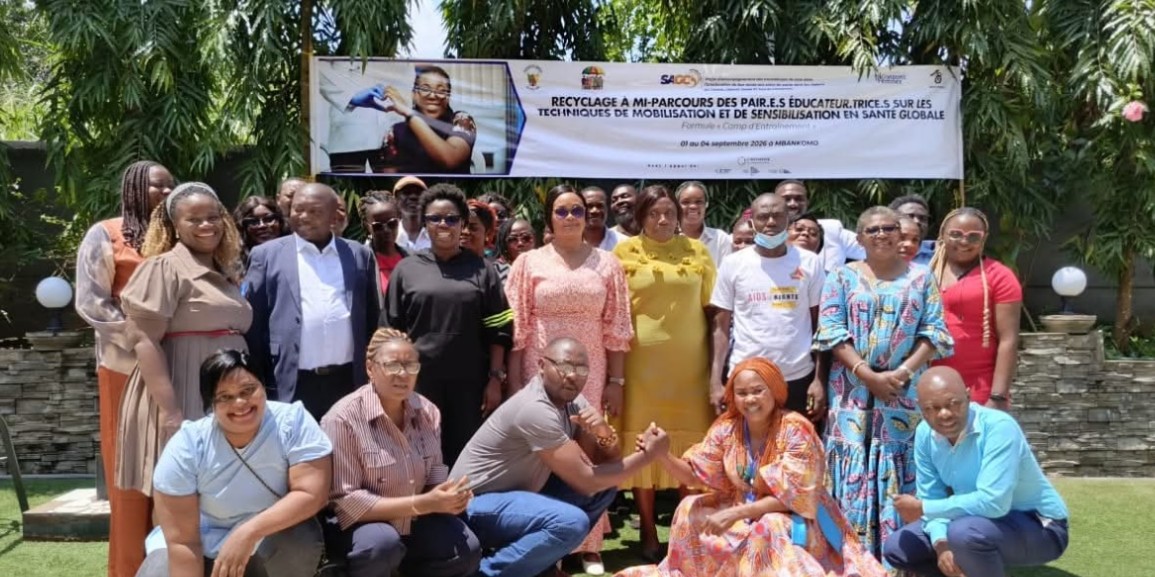
Gathered in Mbankomo by Horizons Femmes and Moto Action Cameroun, the actors of the SAGCO project strengthened their approach to the cross-cutting challenges of HIV, STIs, tuberculosis and psychological trauma.
Under the studious skies of Mbankomo, community engagement has just received a much-needed boost. From September 2nd to 4th, 2026, as the world observed Yellow September to break the silence surrounding psychological distress, the Horizons Femmes association and its partner Moto Action Cameroun orchestrated a large-scale mobilization. By inviting Peer Educators and Regional Focal Points of the SAGCO project to an intensive refresher training session, the organizations made a crucial commitment to pragmatism. The reality on the ground was undeniable: while mastery of theoretical concepts is no longer lacking, the real challenge lies in translating this knowledge into effective actions, compassionate listening, and targeted referrals to appropriate support services.
Structured around an immersive approach combining role-playing, simulations, and close coaching, this training program revisited the concept of well-being. From the prevention of HIV, STIs, and tuberculosis to the devastating effects of gender-based violence, the work incorporated mental health—a dimension long relegated to the blind spot of public health policies—as a cornerstone. In this period of mobilization against psychological distress, training frontline workers is akin to erecting an invisible yet formidable bulwark against isolation and violence. Better equipping these everyday sentinels means giving them the ability to decode the subtle signs of distress, to offer expert support where vulnerability threatens to
overwhelm, and to forcefully remind everyone that caring for a community cannot be conceived without safeguarding its mental equilibrium.
The SAGCO project, funded by Expertise France as part of the Initiative_2024 call for projects, aims to improve access to integrated healthcare services for sex workers in the Central, Littoral, Western, and Southern regions of Cameroon. This ambition is achieved through a participatory approach combining prevention, screening, holistic care, and management of multiple health conditions, including HIV, STIs, and comorbidities. Peer educators and gatekeepers are the essential link in this system, acting as living bridges between often marginalized communities and healthcare facilities. Their role is not limited to transmitting health information: they embody a reassuring presence, active listening, and the ability to refer individuals to appropriate services.
The pedagogical approach adopted during this refresher training session in Mbankomo demonstrates a clear commitment to moving beyond purely theoretical frameworks and grounding learning in real-world experience. Exchanges of experiences, case studies, and role-playing exercises allowed participants to compare their practices, harmonize their methods, and develop professional reflexes when faced with complex situations. The integration of mental health as a cross-cutting theme addresses a silent emergency: behind physical illnesses and the violence suffered, deep traumas, anxieties, and psychological distress often lie hidden, compromising healing and resilience. By training peer educators to recognize these signs, adopt a compassionate listening approach, and refer individuals to specialized care, the SAGCO project sets a crucial milestone in building holistic and human health.
The Mbankomo session is a continuation of the work carried out by Horizons Femmes and Moto Action Cameroun, which have already demonstrated their ability to mobilize communities and create spaces of trust. Strengthening the skills of peer educators and regional focal points is a strategic investment to ensure the sustainability and effectiveness of interventions on the ground. At a time when Yellow September reminds us of the importance of breaking the taboos surrounding mental suffering, this Cameroonian initiative powerfully illustrates that suicide prevention and the promotion of mental health begin with strengthening local actors. These everyday guardians, now better equipped, become the guarantors of a more resilient community, where vulnerability is no longer seen as inevitable but as an open door to solidarity and care.