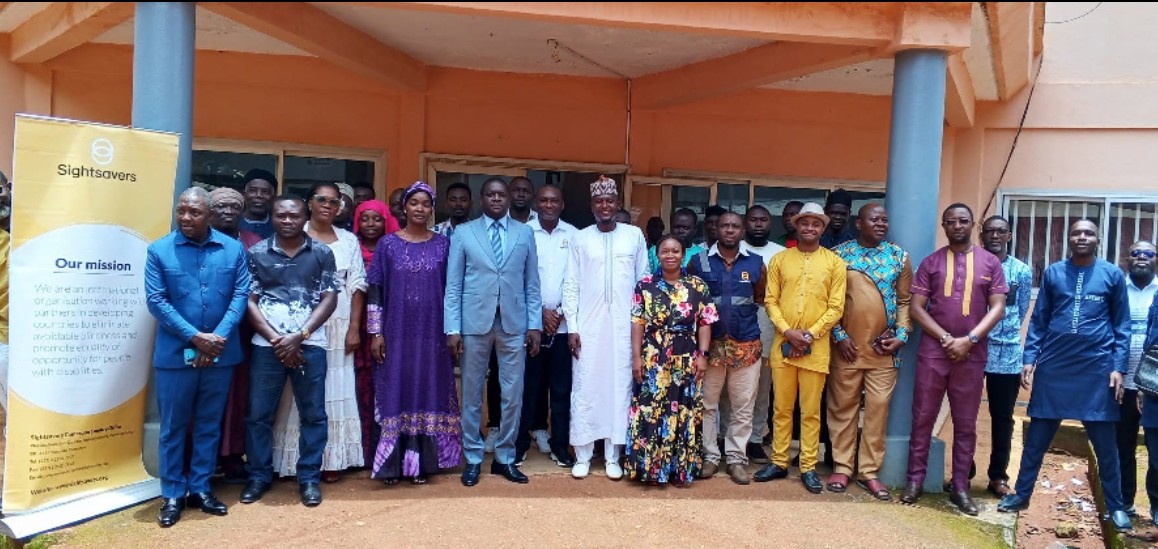
From September 10 to 11, 2026, the city of Ngaoundéré hosted a strategic capacity-building workshop dedicated to the fight against lymphatic filariasis. Initiated by the National Onchocerciasis Control Program (PNLO) with technical and financial support from the international NGO Sightsavers, this meeting aimed to equip key actors in the regional healthcare chain.
Under the coordination of Mr. Guillaume TCHEDELE, Regional Delegate for Public Health in the Adamaoua region, this intensive training session brought together the region’s management team, district health officials, and heads of health facilities. The main objective was to improve their operational skills in the early detection, monitoring, and management of serious complications associated with the disease, such as lymphedema and hydrocele.
This initiative is directly aligned with the national strategy for the elimination of Neglected Tropical Diseases, developed in accordance with the guidelines of the World Health Organization (WHO). During the proceedings, the Regional Delegate expressed his gratitude to Sightsavers for its ongoing support, while urging all stakeholders and healthcare workers to fully commit to ensuring the long-term success of this intervention.
Action based on three major axes
The joint action of the National Hydrocele Program (PNLO) and its partner is structured around three priority areas. The first area concerns strengthening local skills through in-depth training for healthcare professionals and community volunteers to accelerate the identification of early symptoms. The second area focuses on standardizing care through the dissemination of skin care protocols, the promotion of rigorous hygiene for affected limbs, and the clinical management of hydrocele. Finally, the third area aims to optimize chemoprevention by improving the preparation of mass drug administration campaigns, based on therapeutic combinations such as albendazole and ivermectin.
This regional commitment takes on its full meaning at the national level. Cameroon
has already completed 70% of the actions required by the WHO to finalize its application for validation of the elimination of this disease. The efforts undertaken in Ngaoundéré are therefore a crucial step towards reaching the remaining 30% and definitively eradicating this source of disability and stigmatization.
Understanding lymphatic filariasis
Commonly known as elephantiasis, lymphatic filariasis is a neglected tropical disease of parasitic origin caused by microscopic worms. It is transmitted to humans through the bites of infected mosquitoes, particularly those of the Anopheles or Culex genera, which deposit parasitic larvae on the skin. Once inside the body, these larvae migrate to the lymphatic system where they develop into adult worms capable of surviving and multiplying for several years. By colonizing this network, which is essential for fluid circulation and immune defenses, the worms eventually obstruct and damage the vessels. This blockage prevents lymphatic fluid from circulating normally, causing a chronic accumulation of fluid in the tissues that leads to massive, painful, and irreversible swelling of the limbs or genitals.