
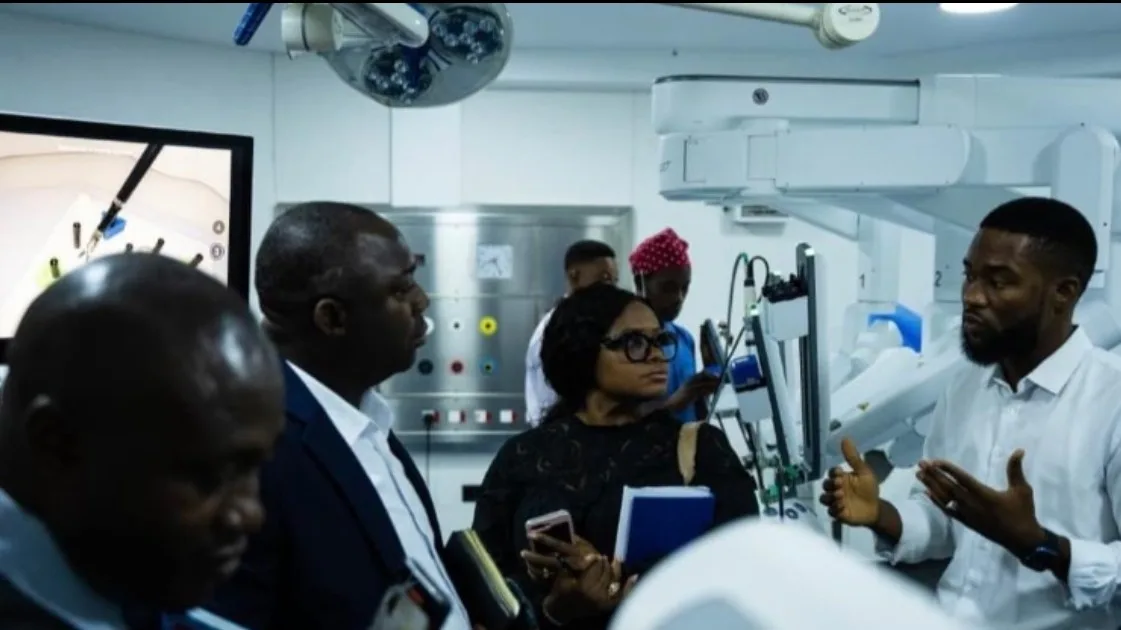
A Nigerian medical team has carried out what has been described as West Africa’s first tele-robotic surgery, allowing a surgeon to operate on a patient in Abuja from a different hospital in real time. The procedure, performed on September 19, involved the removal of a cancerous kidney and highlights the growing potential of remote surgery to expand access to highly specialized medical expertise.
Nigeria has carried out what has been described as West Africa’s first tele-robotic surgery, with the surgeon operating remotely from another hospital in Abuja.
A surgeon operating from another hospital
The procedure was performed between Redeemer’s Health Village (RHV) and Nisa Premier Hospital in Abuja. While the patient was undergoing surgery at Nisa Premier Hospital, the surgeon operated remotely from RHV using a Toumai robotic surgical system.
Unlike conventional robotic surgery, in which the surgeon remains in the same operating facility as the patient, tele-robotic surgery allows the surgeon to control the robotic instruments from a separate location. Movements made at the surgeon’s console are transmitted to the robotic system performing the procedure.
The operation involved a right radical nephrectomy, a procedure in which the affected kidney is removed, in this case because of a cancerous tumor.
Three hours of remote surgery
The operation lasted approximately three hours. According to reports on the procedure, brief pauses were made during the intervention to check the performance of the equipment and ensure that the systems were functioning properly.
The surgery was led by Professor Obi Ekwenna-Davis, a professor of urology and transplantation and co-founder of RoboMed Global. The patient was reported to be in stable condition following the operation and was expected to be discharged within 24 hours.
The procedure brought together Redeemer’s Health Village, RoboMed Global and Nisa Premier Hospital as part of an initiative aimed at expanding robotic surgery in Nigeria.
When distance becomes less of a barrier
Beyond its technological dimension, the operation raises a broader question for healthcare systems: could remote surgery eventually help patients access specialists who are not physically available in their area?
In countries where highly specialized medical expertise is concentrated in a limited number of urban centers, tele-robotic surgery could potentially allow specialists to intervene in procedures performed in other hospitals without traveling to the patient’s location.
However, the Abuja operation remains a demonstration of what the technology can achieve under controlled conditions. Wider use would require reliable telecommunications networks, sophisticated surgical equipment, trained local teams and strict safety protocols.
Building local expertise
The Nigerian initiative also places emphasis on training. Redeemer’s Health Village and RoboMed Global have announced plans for a robotic surgery academy aimed at developing the skills of surgeons, nurses, biomedical engineers and other healthcare professionals.
The objective is not only to introduce robotic systems but also to build the human capacity needed to operate, maintain and integrate the technology into healthcare services.
Nigeria has already taken steps towards robotic surgery. Nisa Premier Hospital commissioned a Toumai robotic surgery platform in 2025, laying part of the technological groundwork for the latest tele-surgery milestone.
From technological feat to access to care
The first tele-robotic surgery in West Africa marks a new stage in the development of advanced surgical care in the region. Yet the long-term significance of the technology will depend on whether it can move beyond highly specialized facilities and become accessible to more patients.
For African health systems, the challenge will therefore be twofold: adopting advanced technologies while ensuring the infrastructure, skills and financing required to make them useful beyond a handful of major medical centers.