
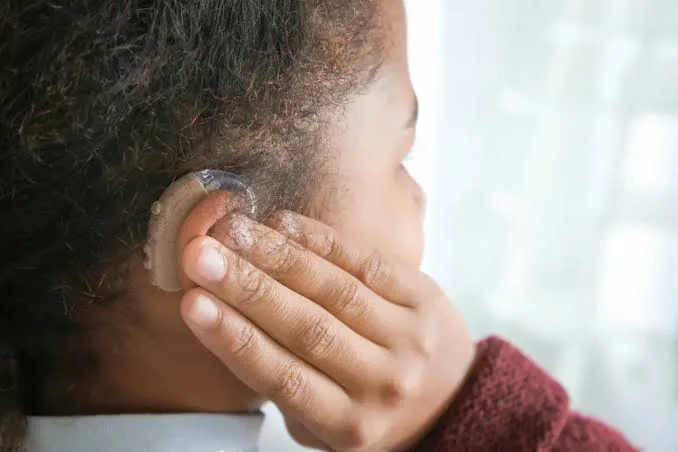
Hearing loss is silently affecting thousands of Cameroonian citizens, from children neglected in rural areas to young people in urban centers exposed to excessive noise. Between delayed diagnosis, inadequate infrastructure and prohibitive treatment costs, Dr. Maurice Mpessa is calling for an absolute emergency: strengthening prevention and ensuring universal access to hearing care.
In Cameroon, hearing loss and hearing impairment constitute, according to Dr. Maurice Mpessa, an ENT specialist at Laquintinie Hospital in Douala, “a silent but major public health problem, and the most common form of sensory disability.” While the specialist points to a contrasting reality between chronic ear infections neglected in rural areas and “the explosion of noise-induced hearing loss among young people” in cities, he insists that “the major problem lies in late diagnosis.” Behind these clinical observations are disrupted lives, such as that of Adama, 42, a resident of a village in the Far North Region, who says: “I put traditional drops in my son’s ear after a persistent ear infection. The pain went away, but today, he cannot hear anything on that side.”
A dual epidemiological reality: between rural and urban areas
Analyzing the country’s epidemiological profile in the absence of a national registry, Dr Maurice Mpessa highlights striking figures: a prevalence of hearing loss of 3.6% among children in Yaoundé and 8.4% congenital hearing loss among children screened in major cities between 2018 and 2023. Regretting that “the average age at diagnosis remains late, at 36 months, when it should be at 1 month,” he warns that this “compromises language acquisition because the child repeats what they hear.” Highlighting the disparities, he notes that in rural areas, “the absence or near-ineffectiveness of ENT healthcare services pushes people to resort to traditional products instilled into the ear,” while in urban areas, “exposure to noise is greater.” In both settings, “the high cost of equipment prevents people from obtaining hearing aids.” This financial barrier is confirmed by Stéphane, 24, a student in Douala and an avid music lover: “With my earphones turned all the way up on public transport and in clubs on weekends, I never expected to lose my hearing so quickly. I was prescribed a device costing nearly 800,000 CFA francs, an amount my parents simply cannot afford”.
Prevention at the heart of the strategy: 60% of cases are preventable
Recalling that “according to the World Health Organization, 60% of hearing loss in children is preventable,” Dr Maurice Mpessa stresses that “it is essential to first address poorly treated ear infections, as well as maternal-fetal infections such as rubella, toxoplasmosis and cytomegalovirus.” The practitioner also calls for action against “the uncontrolled use of ototoxic medicines, such as gentamicin, which is often administered without strict medical supervision,” as well as for “an end to risky household practices such as aggressively cleaning the ear with cotton swabs.” Regarding young people in urban areas exposed to loud earphones and environmental noise, he warns: “I see audiograms of 22-year-olds that resemble those of 45-year-old workers. We must remember that once the cells of the inner ear are destroyed, they never grow back.” These lasting consequences are experienced daily by Marcel, 68, a retired man in Yaoundé: “As I have grown older, sounds have become blurred. Presbycusis isolates me from my grandchildren because in the noise of the family, I can no longer understand anything, and I am ashamed to keep asking people to repeat themselves”.
Challenges in care and the need for broad mobilization
Describing a worrying situation regarding infrastructure, Dr. Maurice Mpessa deplores the fact that “infrastructure is severely lacking,” with “fewer than 30 speech therapists for a population of 28 million inhabitants,” while the cost of hearing aids ranges “between 500,000 and 1.5 million CFA francs, with no reimbursement available.” He also describes cochlear implantation as “exceptional” because of its cost, which exceeds “15 million CFA francs,” and regrets that Universal Health Coverage (UHC) remains ineffective in this area because “only basic ENT consultations are covered, excluding audiometry, neonatal screening, hearing aids and speech therapy.” To reverse this situation, he concludes that “joint mobilization by authorities, healthcare professionals and the population is essential,” urging public authorities to “establish a national hearing health program, make neonatal screening mandatory and train qualified hearing-aid specialists”.