
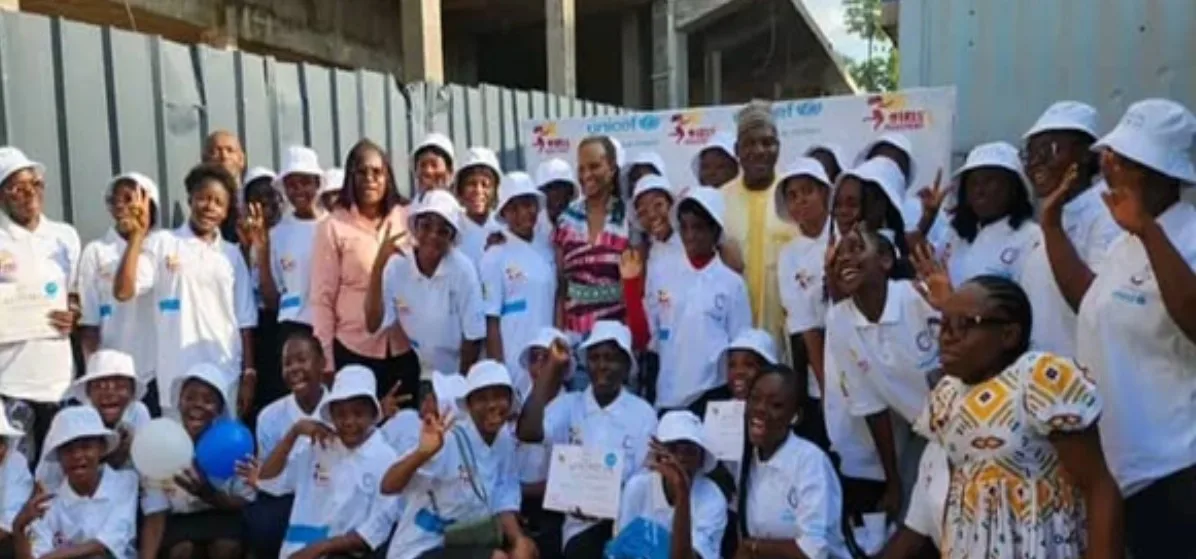
In Bertoua, in the East Region, thirty adolescent girls have joined the second cohort of the Adolescent Girls Advisory Board (AGAB), an initiative supported by UNICEF. For two years, they will serve as the voice of their peers and drive change within their communities.
They no longer want to be merely consulted; they want to actively participate in the decisions that shape their future. In Bertoua, thirty young girls have been called upon to make their voices heard through the second cohort of the Adolescent Girls Advisory Board (AGAB), an initiative backed by the United Nations Children’s Fund (UNICEF). The official launch, held in the presence of a representative of the Mayor, regional officials from the Ministry of Women’s Empowerment and the Family, and the Ministry of Youth Affairs and Civic Education, marks the beginning of a two-year mandate dedicated to advocacy, defending girls’ rights, and promoting their participation in decision-making processes that affect them.
Transforming Adolescent Girls into Decision-Makers
The ambition of this group is to transcend traditional frameworks in which young girls are primarily viewed as passive program beneficiaries. Through AGAB, they are empowered to become key interlocutors capable of expressing the challenges faced by their peers, proposing solutions, and contributing to the enhancement of interventions designed for them.
The Adolescent Girls Advisory Board (AGAB) aligns with UNICEF’s strategic approach to strengthening girls’ leadership and their active engagement in relevant programming. This mechanism enables adolescent girls to take part in the design, monitoring, and evaluation of initiatives aimed at improving their living conditions. The topics addressed span multiple dimensions of their daily lives: access to education, prevention of child marriage and early pregnancies, sexual and reproductive health, menstrual hygiene, protection against violence and abuse, and climate change. These issues directly touch upon their rights, safety, and future prospects. For the 30 members of Bertoua’s new cohort, the challenge will be to transform their lived experiences in their families, schools, and communities into actionable proposals capable of enriching dialogue with public officials and partners.
Building on the Achievements of the First Cohort
The launch of this second cohort also serves as an opportunity to acknowledge the remarkable work accomplished by the adolescent girls who preceded them. Their dedication helped open spaces for expression and participation for girls within their communities. At the national level, UNICEF reports that advisory boards have led key awareness-raising campaigns on child marriage, gender-based violence, mental health, early pregnancy, human papillomavirus (HPV) vaccination, and menstrual hygiene. Community micro-projects focused on girls’ education, health, and protection were also successfully implemented.
These experiences illustrate the tangible capability of adolescent girls to raise awareness among their peers and drive tailored solutions to their challenges. They also highlight the value of involving them directly in programs that affect them. The new Bertoua cohort must build on this legacy to advance this ongoing work while taking into account the unique realities of communities in the East Region. The presence of administrative authorities and partners at the launch reflects the high importance placed on this consultative process.
From Voicing Concerns to Concrete Change
For UNICEF, the objective extends beyond providing adolescent girls with a platform to express themselves. It is about creating the necessary conditions for their recommendations to be heard, reviewed, and, wherever possible, integrated into decisions and policies that influence their daily lives. This ambition mirrors the aspirations expressed by girls through the Girls’ Movement of Cameroon. In 2025, consultations conducted across the country’s ten regions mobilized more than 5,600 adolescent girls around their rights and expectations. The manifesto drafted on that occasion called for expanded opportunities in education, training, protection, and participation in decision-making.
In Bertoua, the next two years must translate this desire for participation into local action. The group’s success will depend on its ability to elevate the concerns of adolescent girls, formulate realistic proposals, and maintain a continuous dialogue with relevant stakeholders. By entrusting 30 adolescent girls with the responsibility of carrying the voice of their peers, the second AGAB cohort in Bertoua opens a new chapter of advocacy for girls’ rights. The challenge now is to ensure that this voice extends far beyond official ceremonies to drive meaningful decisions and concrete actions across their communities.
Marie Chantale FAIDA