
According to the Ministry for the Promotion of Women and the Family, with over 1,599 cases of gender-based violence (GBV) recorded in Cameroon between January and April 2026, the WIFI association is sounding the alarm from Yaoundé: violence cannot be fought solely in the courts, but must be eradicated from our mindsets. Education in sisterhood, positive masculinity, gender complementarity, and the deconstruction of stereotypes from a young age remain the keys to a non-violent society.
Childhood, the first mold of inequalities
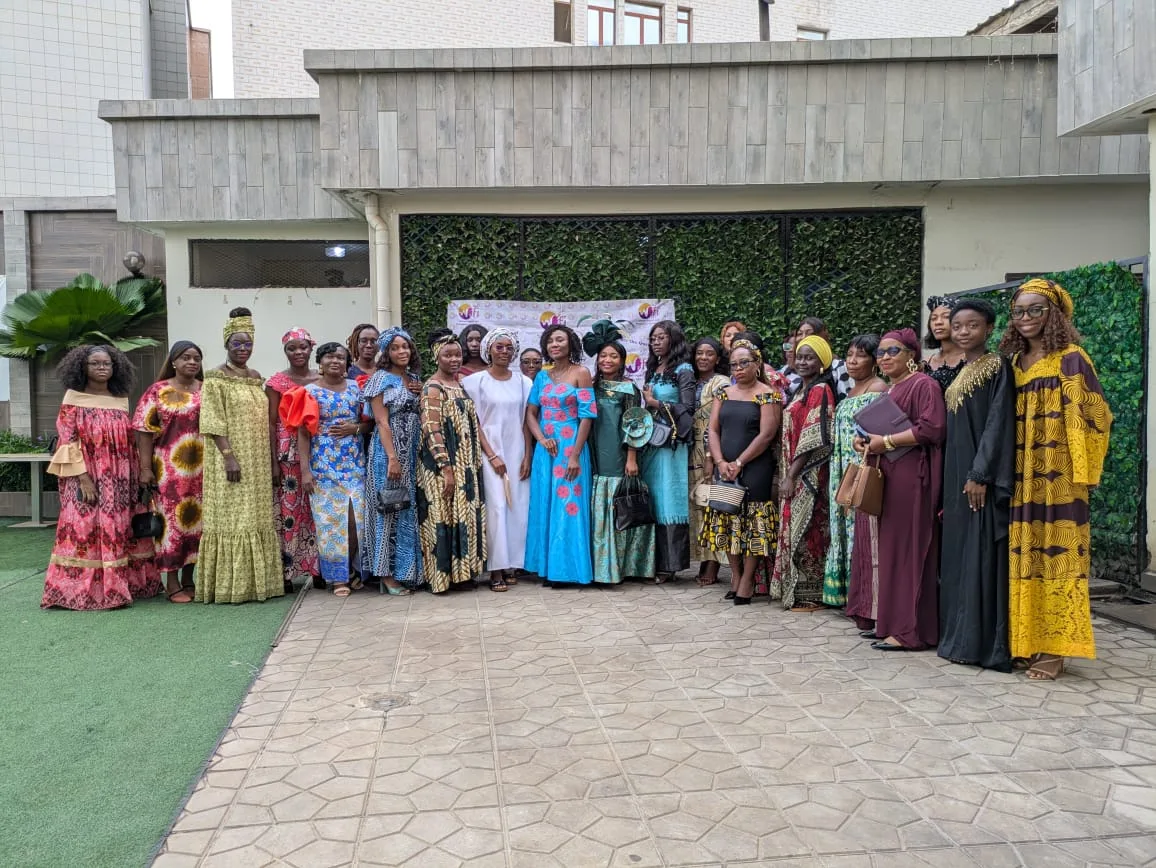
Far from the usual institutional commotion, the conference-debate held in Yaoundé from July 31 to August 1, 2026, highlighted how early stereotypes shape adult behavior. For Dr. Jeannette Afounde, a public health physician and author of « The Silence of Violence, » the trap closes well before adulthood. « We often wonder how a society creates violence. It doesn’t begin dramatically with a rape or a crime, but is rooted in primary socialization. From a very young age, children are shaped: they don’t just learn to speak or walk at home; they also learn what they think they should be. Girls are often encouraged early on to care for others and take on certain responsibilities, while boys sometimes receive the message that they must above all be strong and not show their emotions. Yet, learning to express fear, sadness, or anger is an essential skill. » A child who is denied this emotional education risks becoming an adult less equipped to cope with frustration, conflict, and human relationships.
Historian Dr. Lucie Zouya Mimbang also pointed out that historically, traditional African societies were based on a logic of economic complementarity between men and women, and not on a relationship of domination.
The persistence of conflicts between custom and law, the aspects of incivility not sufficiently taken into account by the penal code, the persistence of conflicts between custom and law,” as highlighted by Magistrate, Mr. Ovono Urich, in his remarks,limit access to justice for survivors, leading to a devastating societal silence: 39% of victims never speak out and 36% of those who do speak out face rejection or harassment of all kinds, including repeat offenses, very often with other women actively or passively complicit.
Also, an alarming report by Dr. Kemme Kemme, an addiction specialist, states that 43% of women aged 15 to 49 report having suffered physical or sexual violence (EDSC-V, 2018) while 53% of Cameroonian women report having suffered emotional violence (NKAFU Policy Institute, 2022).
Re-educating without confrontation: complementarity as a solution
Faced with this reality, the struggle championed by the Women Impact and Femininity Improvement (WIFI) association during the celebration of International African Women’s Day is not based on a binary confrontation between the sexes, but rather on educational and moral empowerment to restore mutual respect and non-violence. Dr. Patricia Mendjime, the association’s founding president, emphasized the need to re-engage the entire family in this paradigm shift. « Men are not adversaries. We are not engaged in an inquisitorial gender war, but in a quest for cohesion and complementarity. African women are the guardians of values and the foundation of education. If we want a healthy society, we must begin to instill behavioral change in our children. Girls, like boys, must be taught responsibility, empathy, respect, and non-violence from the cradle. » It is by acting at the root of the problem, in our homes, that we can say a lasting STOP to violence. Let each of us be the change we hope for.
From awareness to digital action
Present on the ground since 2021, committed to supporting women and girls in their full development and fulfillment so that they can effectively contribute to building society to the best of their abilities, the WIFI association positions itself in the prevention and management of GBV.
Furthermore, the WIFI association is taking a new step. Recognizing that the education, development, and fulfillment of young girls and women now also depend on new technologies, the organization is strengthening its digital skills and
technological autonomy training program to empower women to « Succeed ethically in the digital age. »
To extend the impact of these two days of reflection and offer concrete protection to victims who are often silenced, WIFI officially launched an electronic network for prevention, alerts, listening, and support. This initiative, named « Renaissance, » aims to transform the voices that have been raised into a lever for lasting action, so that today’s education becomes the bulwark against tomorrow’s violence.
Reaction : « Gender-based violence is violence that affects both men and women. »

What I want everyone to remember today is that gender-based violence affects all of society. It can affect women as well as men, even though women and girls remain its primary victims worldwide. It is therefore important not to reduce this debate to a conflict between women and men. The objective is simple: no one should experience violence because of their sex or the norms imposed upon them. Prevention begins very early. From childhood, at home, but also at school and in the community, we must teach children respect for others, equality in dignity, empathy, emotional regulation, and the rejection of all forms of violence. This learning builds more respectful adults and healthier relationships. This does not mean that the legal framework is secondary. On the contrary, laws are essential to protect victims, punish perpetrators, and uphold societal values. Education prevents, while the law protects and deters. The two are complementary. That is why we must continue our efforts to ensure that our country has, as quickly as possible, a solid and fully operational legal framework to prevent and combat gender-based violence.