
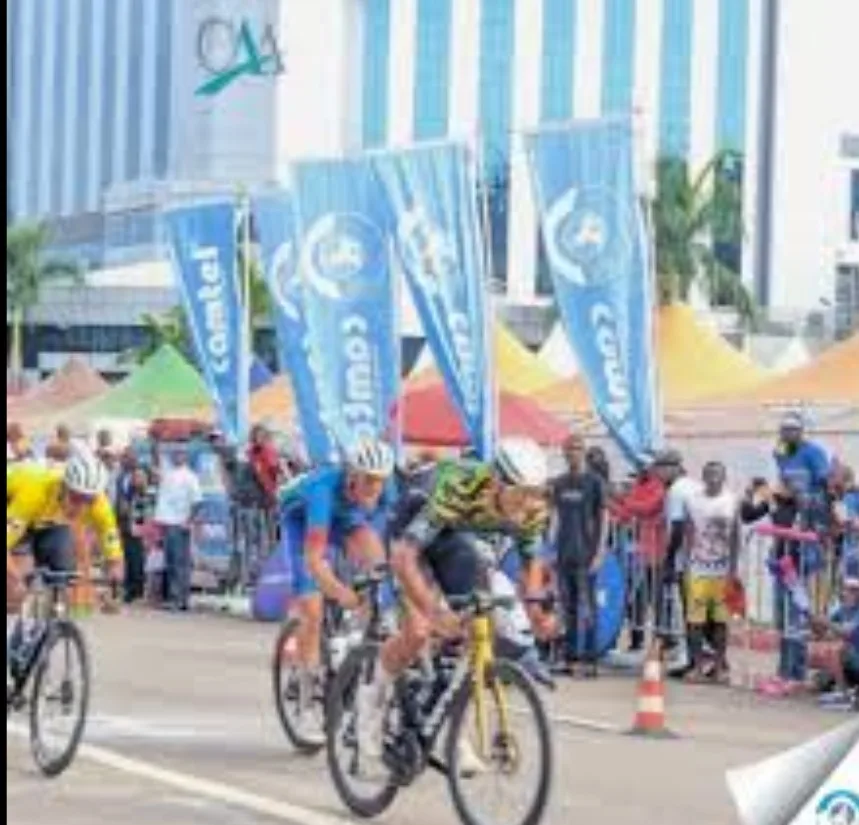
The 26th edition of the Chantal Biya International Cycling Grand Prix concluded with highly satisfactory health and safety outcomes. Thanks to a highly responsive emergency system and medical teams present throughout the 744 km race, the riders’ safety was fully ensured, with no serious incidents reported.
The curtain has fallen on the 26th edition of the Chantal Biya International Cycling Grand Prix, held from September 2 to 6, 2026. Beyond the feats on the road and the final victory of Algeria’s Hamza Amari—achieved after more than 744 kilometers of intense effort across the Center and East regions—one crucial aspect played a major role in the event’s success: medical coverage. Mobilizing significant logistical and human resources, the medical system deployed across the five stages proved its worth on the road with outstanding results.
A preventive safety network within the peloton
In an international-class stage race sanctioned by the UCI, the speed of the peloton, dizzying descents, and the intensity of final sprints create a constant risk of injury. To handle any eventuality, the organizing committee in collaboration with emergency health services and the Red Cross established an impressive support
system.
State-of-the-art medical ambulances, seasoned emergency physicians, and nurses specializing in sports trauma escorted the race caravan and cyclists from start to finish. This strategic positioning allowed for record-fast interventions during mass crashes or rider mishaps, ensuring immediate care right alongside the athletes. Minor injuries and risk management: the medical team ensured a smooth, safe operation
While the competition lived up to every expectation regarding intensity and sporting drama, the medical commission’s report is particularly reassuring. The usual « road rash » (skin abrasions from sliding on asphalt), muscle contusions, and a few minor sprains resulting from repetitive exertion certainly required attention from first responders, but there were no severe head injuries or major fractures among the international peloton.
Exhausted riders received immediate care upon crossing the finish line thanks to rapid recovery and rehydration units allowing them to tackle the following day’s stages in optimal condition. This logistical responsiveness prevented complex hospital evacuations and ensured that almost all competitors remained in the race right up to the grand finale on the Boulevard du 20-Mai in Yaoundé.
Ultimately, the success of the 2026 edition is measured not only by the race results but also by the impeccable management of participant health and safety. It was a perfect performance that confirms Cameroon’s growing stature in organizing major international sporting events.