
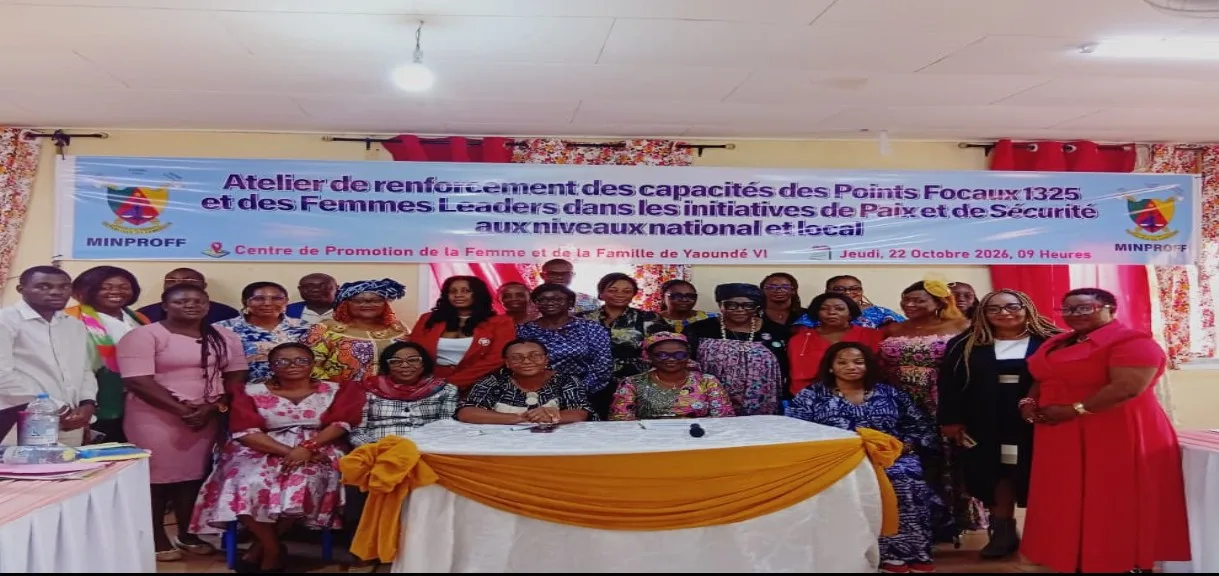
The Women and Family Empowerment Centre of Yaoundé VI hosted a strategic capacity-building workshop for key actors driving UN Security Council Resolution 1325. From mastering legal frameworks to community-level advocacy and gender-responsive budgeting, the meeting aimed to sustainably anchor inclusive peace within communities.
A shared conviction and unwavering determination filled the room. In the main hall of the Women and Family Empowerment Centre (CPFF) of Yaoundé VI, an atmosphere of purpose prevailed this morning. Gathered around the table, focal points for UN Security Council Resolution 1325 and women leaders actively engaged in peace and security initiatives—at both national and local levels—participated in an intensive training session. The strategic objective of this meeting was clear: to enhance their technical and operational skills in order to make the « Women, Peace and Security » agenda a measurable, efficient, and deeply rooted reality in the daily lives of populations.
The opening ceremony immediately set high expectations. Speaking on behalf of the Minister of Women’s Empowerment and the Family, Mrs. Francesca Moto, Personal Representative of the Minister and Director of Social Promotion of Women, warmly commended the full commitment of the participants. Reaffirming with conviction that the promotion of sustainable peace cannot
be separated from the active promotion of women’s rights, security, and effective participation in decision-making bodies, she emphasized the central role of female leadership in conflict prevention: « You are not passive beneficiaries; you are frontline actors in conflict prevention, mediation, and peacebuilding. »
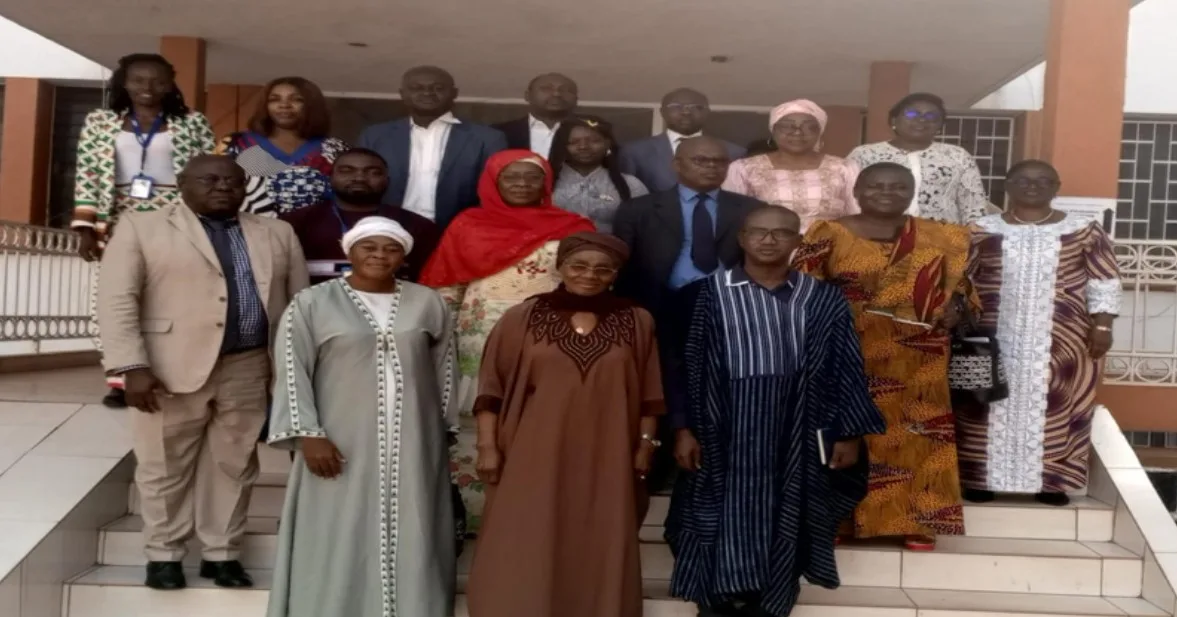
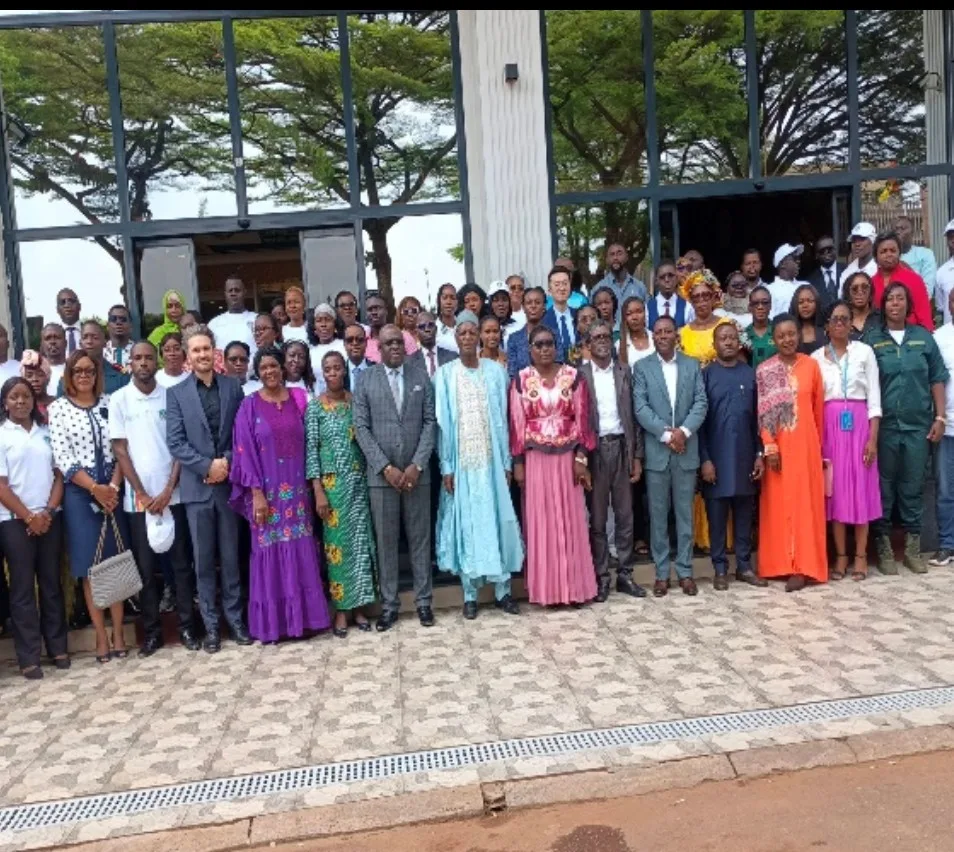
Following the presentation of practical workshop arrangements and the traditional group photograph symbolizing collective unity, the technical phase opened with three complementary learning modules.
Mastering the Legal Framework and Boosting Field Advocacy
The first presentation, delivered by Mr. Joseph Bonaparte Ngoro, Senior Gender Expert, revisited the international and national legal foundations of the 1325 Agenda. The expert structured his presentation around the resolution’s four core pillars: women’s participation in decision-making, conflict prevention, protection against violence against women and girls, and relief and recovery post-conflict. Mastering these instruments is a sine qua non condition for claiming them, implementing them, and translating them into concrete public policies.
The second highlight focused on the posture, role, and action levers of the 1325 Focal Point. Far from being a mere administrative cog, the focal point was redefined as a true social catalyst capable of informing, coordinating, advocating, mobilizing, and networking actors. Discussions explored strategic communication methods, the building of influential coalitions, and the systematic transmission of women’s grass-roots concerns up to decision-making spheres. « Advocacy begins with listening to the ground, » summarized one participant during the debates.
From Theory to Results: Budget, Data, and Early Warning
The third session tackled the crucial issue of operationalization: how to ensure that resources allocated to peace programs genuinely integrate gender equity? The solution lies in gender-responsive budgeting, establishing clear performance indicators, and setting up early warning mechanisms that identify specific threats facing women and girls before conflicts escalate. The conclusion was unequivocal: without empirical data, dedicated budgets, and monitoring indicators, gender integration remains an intention; equipped with these tools, it becomes a high-performing public policy.
Closing the proceedings on behalf of the ministry, Mrs. Françoise Bernadette Bekono, Sub-Director for the Promotion of Women’s Rights, invited each participant to leave with an operational roadmap to better inform, advocate consistently, and measure results. The workshop concluded with a solemn commitment to transform Resolution 1325 into visible, concrete actions, from institutions down to the heart of local communities.