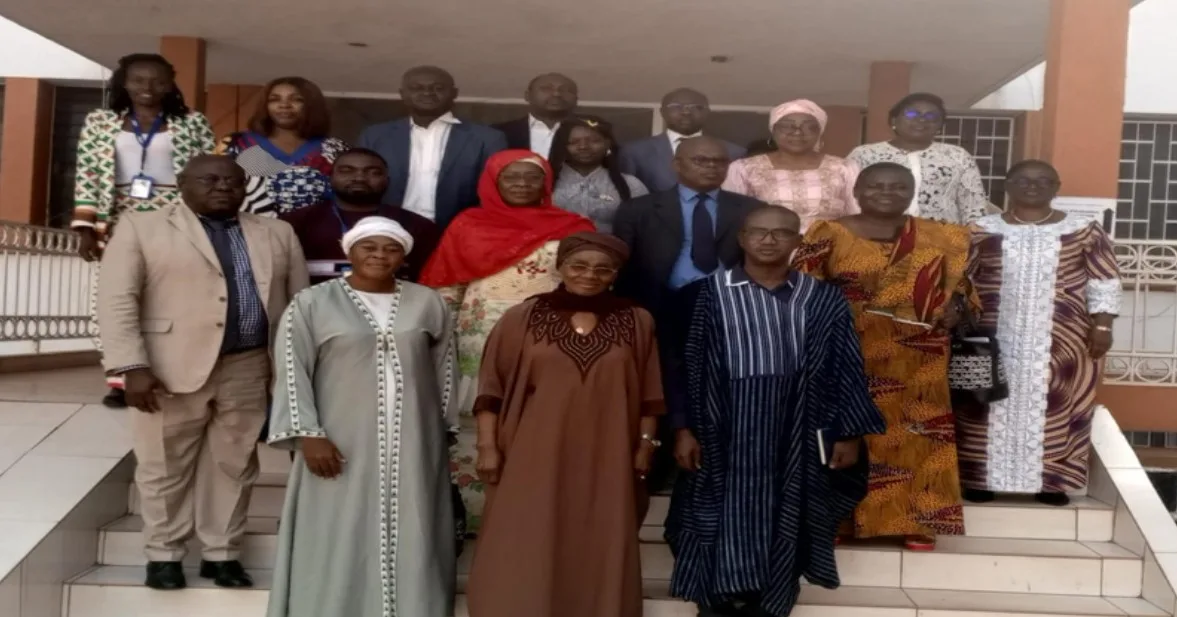

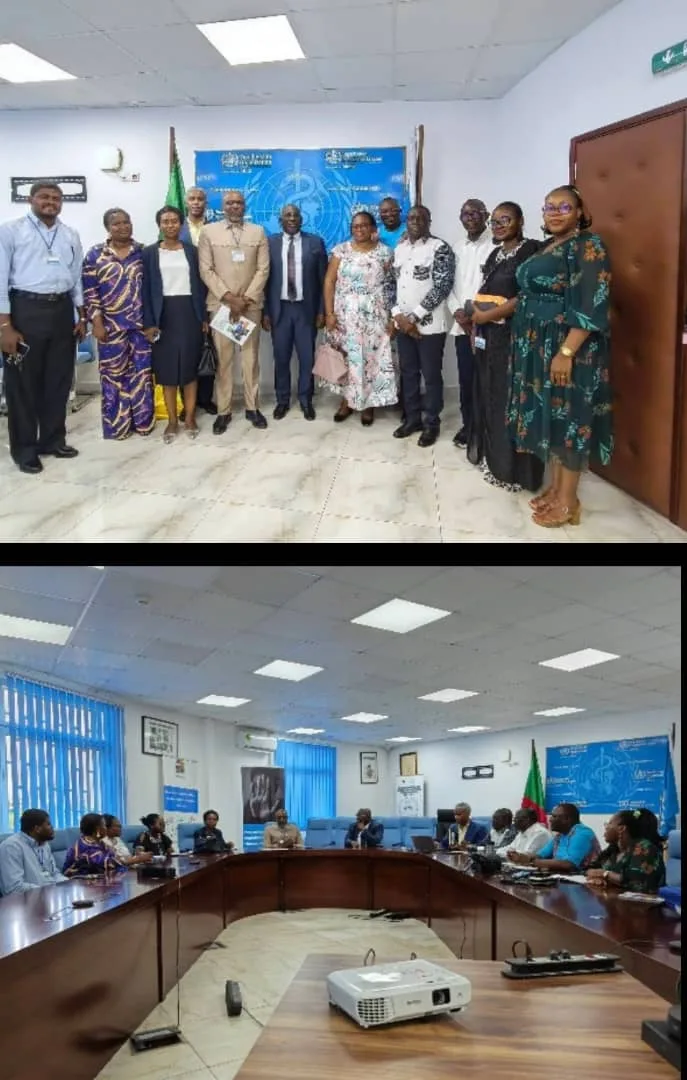
Dr. Albert Maka Mambo, Regional Delegate of Public Health for the Centre Region, met with Dr. Magaran Monzon Bagayoko of WHO Cameroon. The discussions focused on health priorities, technical support, and enhanced coordination, with the goal of building a more effective and resilient health system.
As part of an ongoing commitment to institutional collaboration and the pursuit of excellence in public health, the World Health Organization (WHO) representation in Cameroon recently hosted a high-level strategic meeting. Dr. Magaran Monzon Bagayoko, the WHO Representative in Cameroon, welcomed Dr. Albert Maka Mambo—the Regional Delegate of Public Health for the Centre Region—and his robust technical team to his office. What began as a cordial courtesy visit quickly evolved into a productive working session, characterized by constructive dialogue and a shared commitment to concerted action for the well-being of the population.
A strategic visit for the health of the Centre Region’s population
The Centre Region, which encompasses the political capital, Yaoundé, and holds one of the country’s largest population concentrations, faces complex, multidimensional health challenges. In this context, the proactive approach taken by Dr. Albert Maka Mambo is of critical importance. By initiating this visit to the UN’s lead health agency, the Regional Delegate has reaffirmed his vision of inclusive leadership—one that remains open to international synergies. The significance of this meeting lies primarily in its ability to align local interventions with global WHO standards. For Dr. Maka Mambo, effective public action requires rigorous technical support, forward-looking expertise, and strategic guidance from key institutional partners like the WHO. The visit underscores the clear determination of regional health authorities to forge a united front in addressing health emergencies and the challenges of sustainable development.
At the heart of the discussions: Priorities, technical support, and innovation
The talks between the delegation from the Ministry of Public Health and the WHO Cameroon team covered a broad spectrum of issues of vital importance to the people of the Centre Region. The discussions focused on prioritizing regional health emergencies—specifically assessing the needs for combating communicable diseases, conducting epidemiological surveillance, and promoting maternal and child health. For its part, the WHO reiterated its commitment to mobilizing experts to provide enhanced technical support, assisting the regional delegation in developing and evaluating evidence-based operational action plans. Both parties also emphasized the need for harmonized coordination of interventions to create synergy among all sector stakeholders, avoid duplication, and maximize impact on the ground, in alignment with the National Health Strategy. Finally, the meeting paved the way for new, innovative avenues of collaboration, including the digitalization of health data, the strengthening of community resilience, and the continuous improvement of care quality within peripheral health facilities.
Towards a more efficient and resilient health system in Cameroon
This high-level meeting illustrates the vitality of the partnership between Cameroon and the World Health Organization. By joining forces, national health authorities and the WHO send a powerful message: an unwavering determination to ensure that every citizen in the Centre Region has equitable access to quality healthcare. As public health challenges demand constant agility and responsiveness, the WHO’s steadfast commitment to supporting Cameroonian authorities serves as a fundamental pillar. Through this ongoing dialogue and shared vision, the Centre
Region is equipping itself with the tools necessary to build a resilient health system one capable of responding effectively to current crises.while ensuring the long-term well-being and prosperity of its population.