
To curb the spread of formidable pathologies such as peste des petits ruminants (PPR), anthrax, brucellosis, bovine tuberculosis, or contagious bovine pleuropneumonia, the livestock sector is now relying on real-time data reporting.
Faced with the persistent threat of epizootics that undermine the pastoral economy and food security, the livestock sector is undergoing a technological transformation. From now on, the health response relies on cutting-edge digital tools to track the most devastating pathologies in real time. The objective is clear: to detect formidable conditions faster—such as peste des petits ruminants (PPR), anthrax, brucellosis, bovine tuberculosis, or contagious bovine pleuropneumonia (CBPP)—in order to contain any outbreak before it decimates herds.
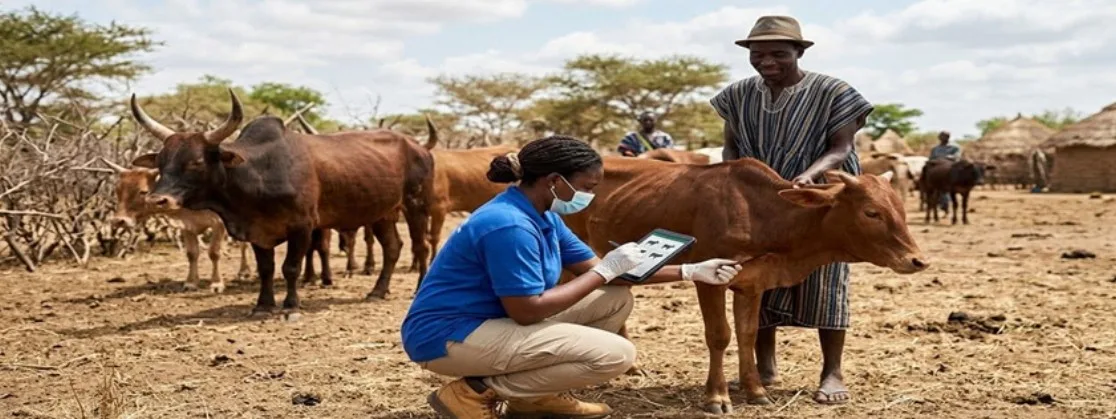
For a long time, relaying health information from remote livestock-rearing areas to national decision-making centers suffered from administrative delays and logistical constraints. Paper forms and delayed transmissions often gave pathogens time to spread along transhumance corridors and across livestock markets. With the advent of digital epidemiological surveillance platforms, this paradigm is changing radically. Equipped with dedicated mobile applications, veterinary officers, livestock auxiliaries, and even sentinel herders can now instantly report any suspected case or unusual mortality observed in the field.
This digital network allows for precise geolocation of infectious outbreaks as soon as the first symptoms appear. Whether it involves the respiratory signs of contagious bovine pleuropneumonia, the characteristic abortions of brucellosis, or the sudden deaths caused by anthrax, every alert triggers an immediate chain reaction. Central veterinary services and diagnostic laboratories receive data in real time, facilitating the targeted deployment of response teams, the rapid isolation of sick animals, the rollout of emergency vaccination campaigns, and the establishment of quarantine perimeters.
Beyond preserving the economic capital of herders alone, this digital vigilance aligns fully with the « One Health » approach, which recognizes the close interdependence between animal health, human health, and ecosystem balance. Several of the diseases targeted by this system—notably anthrax, brucellosis, and tuberculosis—are indeed major zoonoses transmissible to humans through direct contact or the consumption of contaminated animal products such as raw milk or undercooked meat. Intercepting the disease in animals therefore directly protects human populations against serious health risks.
For this digital revolution to fulfill all its promises, capacity building for field actors and improving rural connectivity remain absolute priorities. By pairing veterinary expertise with the
power of digital data, Cameroon is equipping itself with a modern health shield, essential for sustainably securing its animal production and safeguarding public health.