The tomato is also a powerful ally for health (anti-cancer lycopene, vitamins, cardiovascular protection) and a silent architect of the biotope (fighting erosion, providing refuge for biodiversity, natural regulation of pests).
Behind its vibrant red color and juicy flesh, the tomato hides an unsuspected wealth of medicinal properties. Cameroonians who consume it daily in sauces, salads, or juices benefit from natural protection against numerous diseases. Lycopene, an anti-cancer shield: This powerful antioxidant, responsible for the tomato’s red color, is recognized by the scientific community for its ability to neutralize free radicals. Regular consumption significantly reduces the risk of prostate, lung, stomach, and colon cancers. Experts recommend consuming cooked tomatoes with a fat (oil) for optimal lycopene absorption.
A cardiovascular ally: Thanks to its high potassium and fiber content, the tomato helps regulate blood pressure and lower bad cholesterol (LDL). People suffering from hypertension, a rapidly growing problem in Cameroon, would do well to increase their consumption. An immune system booster: The vitamin C in tomatoes (nearly 25 mg per 100 g) strengthens the body’s natural defenses against common infections. Combined with vitamin A and B vitamins, it also contributes to the health of the skin, mucous membranes, and eyes. In other words, eating tomatoes provides your body with natural and accessible health insurance.
The tomato, silent architect of the biotope
Tomato cultivation, when practiced wisely, is more than just farming. It actively contributes to maintaining and regenerating the biotope – that is, the set of physical, chemical, and biological conditions that support life in an ecosystem. A bulwark against soil erosion: In the highlands of western Cameroon, where the slopes are steep, the dense root system of the tomato plant acts like a net, holding the soil in place. It prevents nutrient leaching by torrential rains and limits soil degradation. Without this crop, thousands of hectares would become barren land. A haven for functional biodiversity: The yellow flowers of the tomato attract a myriad of pollinating insects: honeybees, wild bumblebees, hoverflies, and butterflies. These valuable allies, by foraging, ensure not only the fertilization of the tomato plants but also that of neighboring crops. They thus contribute to maintaining a flourishing biodiversity within agricultural landscapes. A well-managed tomato plot can host up to twenty species of beneficial insects, forming a small self-sustaining ecosystem.
A natural pest regulator: Tomatoes naturally produce volatile compounds (terpenes) that attract predators of aphids and caterpillars. Thus, they contribute to a biological balance where pests are controlled without chemical pesticides. In a companion planting system (tomato-basil, tomato-marigold), this effect is amplified.
A virtuous cycle for organic matter: Crop residues (stems, leaves, damaged fruit) are not waste. Enriched with nitrogen, potassium, and phosphorus, they constitute top-quality compost that nourishes the soil for subsequent seasons. Many Cameroonian farmers already practice this natural recycling, thus reducing their dependence on imported chemical fertilizers.
A welcome economic windfall
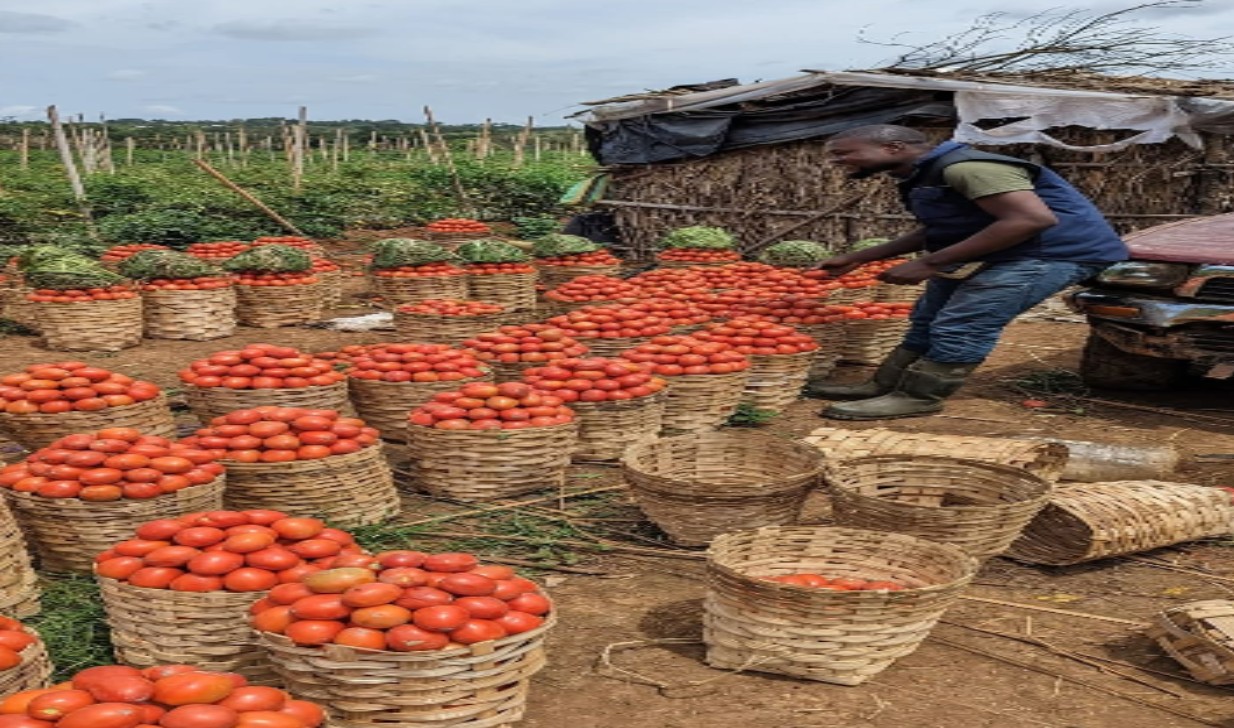
That said, the economic dimension remains undeniable. With a crate selling for 12,000 FCFA in the markets of Yaoundé and Douala, tomatoes have become a precious commodity. This has lifted many families out of poverty, allowed them to send their children to school, and enabled them to invest in modern equipment. The producers’ joy is therefore well-deserved, as this price represents months of hard work under a sometimes scorching sun.
In Cameroon, the tomato is much more than just a side dish. It is simultaneously a preventative medicine (thanks to lycopene and vitamins), a guardian of the ecosystem (through its anti-erosion role and contribution to biodiversity), and an economic driver (providing substantial income for farmers). At a time when a crate of tomatoes can fetch over 12,000 FCFA, let’s celebrate this red treasure in all its facets. And let’s remember: planting a tomato is taking care of your body, your land,
and your wallet all at once.
ESN