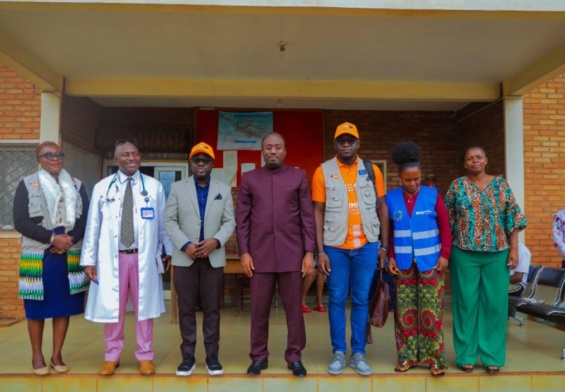
As floods continue to affect communities across Cameroon, researchers, humanitarian actors and public institutions gathered in Yaoundé on June 23 and 24 for the Post-Research and Social Innovation Workshop (APRIS) to explore how scientific knowledge can be transformed into practical solutions for flood prevention and response.
Experts and humanitarian actors meet in Yaoundé to strengthen flood risk management through science and innovation.It is against this backdrop that the Cameroon Red Cross and the French Red Cross Foundation are convening researchers, humanitarian actors, technical partners and institutional representatives in Yaoundé for the Post-Research and Social Innovation Workshop (APRIS), dedicated to flood management.The two-day meeting seeks to create a space for dialogue and co-construction where scientific evidence can be translated into practical and innovative solutions. By bringing together experts from different sectors, organizers hope to strengthen collaboration and promote approaches that are better adapted to the realities faced by communities exposed to climate-related hazards.Opening the workshop, Cameroon Red Cross National President Cécile Akame Mfoumou emphasized the importance of fostering stronger synergies among stakeholders involved in disaster risk reduction. She expressed confidence that the recommendations emerging from the discussions would serve as a catalyst for innovation and contribute to protecting populations most vulnerable to the impacts of climate change.The initiative comes at a critical time. Floods remain among the most frequent and destructive natural disasters in Cameroon. Regions such as the Far North, Littoral and Center are particularly exposed, while urban flooding has become a recurring concern in cities including Yaoundé and Douala. Beyond the immediate loss of life and property, floods often damage schools, health facilities, roads and agricultural land, disrupting livelihoods and deepening existing vulnerabilities.Despite years of humanitarian response, many challenges persist. Rapid urbanization, inadequate drainage infrastructure, settlement in flood-prone areas and limited early-warning systems continue to increase exposure to risk. As climate change contributes to more intense and unpredictable rainfall patterns, the need for preventive and evidence-based solutions has become increasingly urgent.Participants at APRIS are therefore exploring how research can better inform action on the ground. From risk mapping and climate forecasting to community preparedness and early-warning mechanisms, scientific knowledge offers valuable tools to help authorities and humanitarian organizations anticipate disasters and reduce their impact.For organizers, the ultimate goal is not simply to generate recommendations but to ensure that research findings lead to tangible improvements in the lives of vulnerable populations. As floods continue to test the resilience of communities across the country, transforming knowledge into action may prove to be one of the most effective ways of saving lives and reducing future losses.