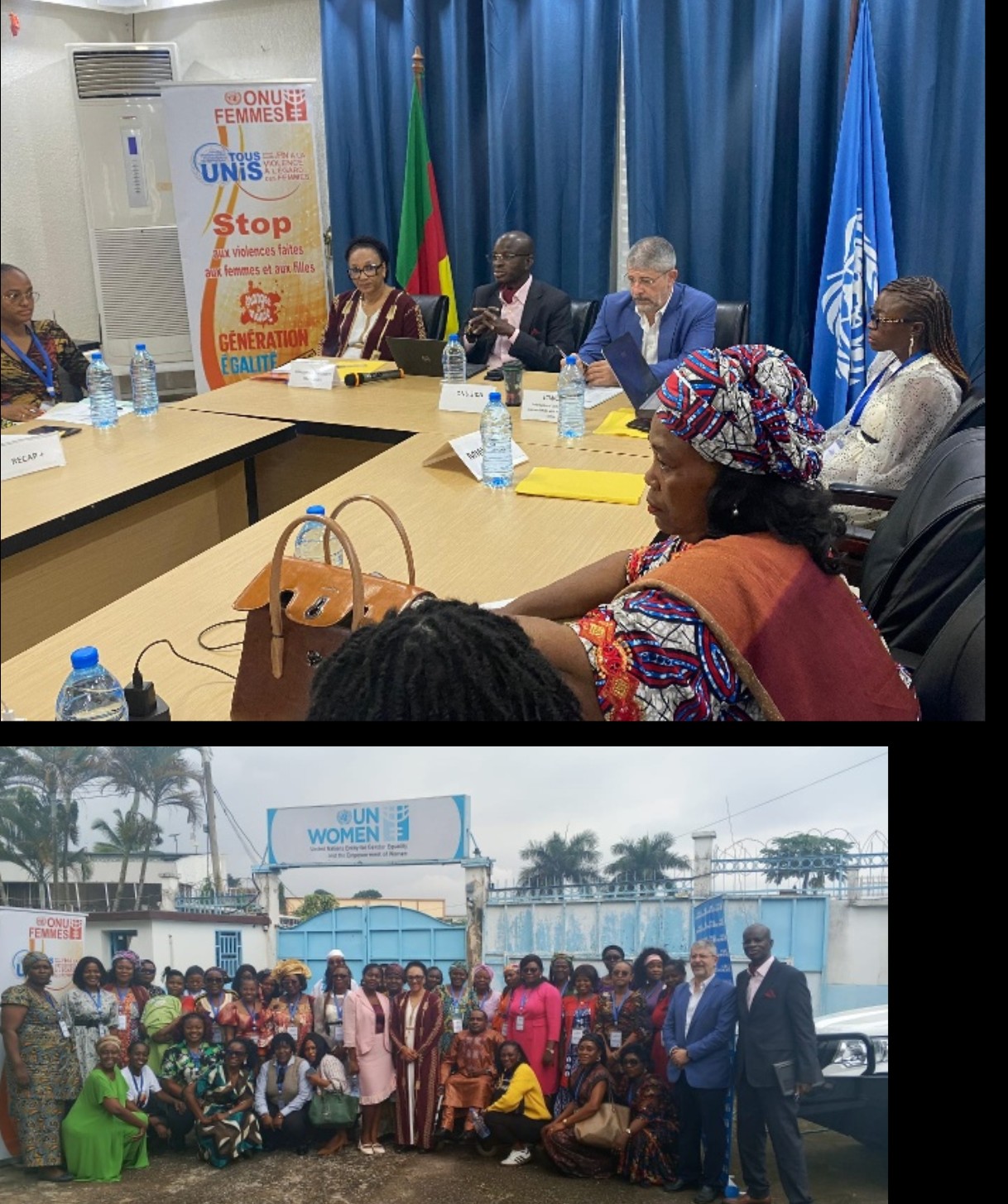
As a prelude to the implementation of the 2027-2031 five-year strategic plan, UN Women Cameroon convened women living with HIV from several regions of the country in Yaoundé on Monday, June 29, 2026. This direct and frank dialogue, supported by UN agencies and relevant ministries, aimed to transform realities on the ground into drivers of inclusive public policy.
The fight against HIV/AIDS continues.
This is a major step forward in the HIV/AIDS response in Cameroon. Active listening is now replacing theoretical discussions. At the initiative of UN Women Cameroon, a high-level consultation was held on June 29, 2026, in Yaoundé, bringing together women living with HIV to share their experiences, challenges, and aspirations. The event saw the strategic participation of the UNAIDS Resident Representative, Taoufik Bakkali, as well as experts from the WHO, the Ministry of Women’s Empowerment and the Family (MINPROFF), and the Ministry of Social Affairs (MINAS).
Breaking the cycle of socio-economic vulnerability
In Cameroon, vulnerability to the virus remains inextricably linked to gender
inequality. Epidemiological data is unequivocal: the HIV infection rate is twice as high among women as among men, with the 10-25 age group bearing the brunt of the crisis. This vulnerability is exacerbated by discrimination, financial insecurity, and gender-based violence (GBV).
“These are societal factors. We all know, unfortunately, the place women occupy in our societies, where they tend to be subordinate to men. They are not in a position of power, and this makes them much more vulnerable because they are economically dependent,” explains Dr. Ahmet Secka, Chief Physician at the United Nations Dispensary in Yaoundé. Given this situation, economic empowerment is essential to restoring women’s decision-making power and reducing their exposure to health risks.
An inclusive platform for the next five-year plan
For UN Women, this day of discussions constitutes the strategic foundation for the next cycle which will begin in 2027. The objective is to build a roadmap rooted in the real needs expressed by those most directly affected, bypassing the usual filters that stifle the voices of marginalized groups.
“The challenge is to ensure that we give a voice to the real players. Women don’t often have the opportunity to speak when they are in circles with men. Often, they are not heard. So, for us, it was important to create a dedicated space where women can speak with confidence.”explains Marie-Pierre Raky Chaupin, resident representative of UN Women Cameroon.
A major appeal aimed at the highest levels
For several hours, barriers fell away. The participants spoke candidly about the realities of medical stigmatization, the obstacles to accessing quality care, and the precariousness that complicates treatment adherence. This liberation of speech breathes new legitimacy into the national advocacy effort.
Lucie Tsobgni Zambou, chair of the board of directors of the Cameroonian Network of People Living with HIV (RECAP+), welcomed this historic opportunity: “This is a long-awaited opportunity. HIV-positive women living in precarious situations have seen that their concerns have not fallen on deaf ears. We hope that these priorities will be brought to the highest institutional levels.”
From listening to concrete action
The strong mobilization of the international community and key government ministries reflects a desire to break down silos. The integration of the recommendations from this workshop into UN Women’s five-year plan marks a paradigm shift: the HIV response can no longer be purely clinical; it must integrate human rights, social protection, and gender justice. Listening was only the first step; the challenge now lies in the political implementation of these commitments.