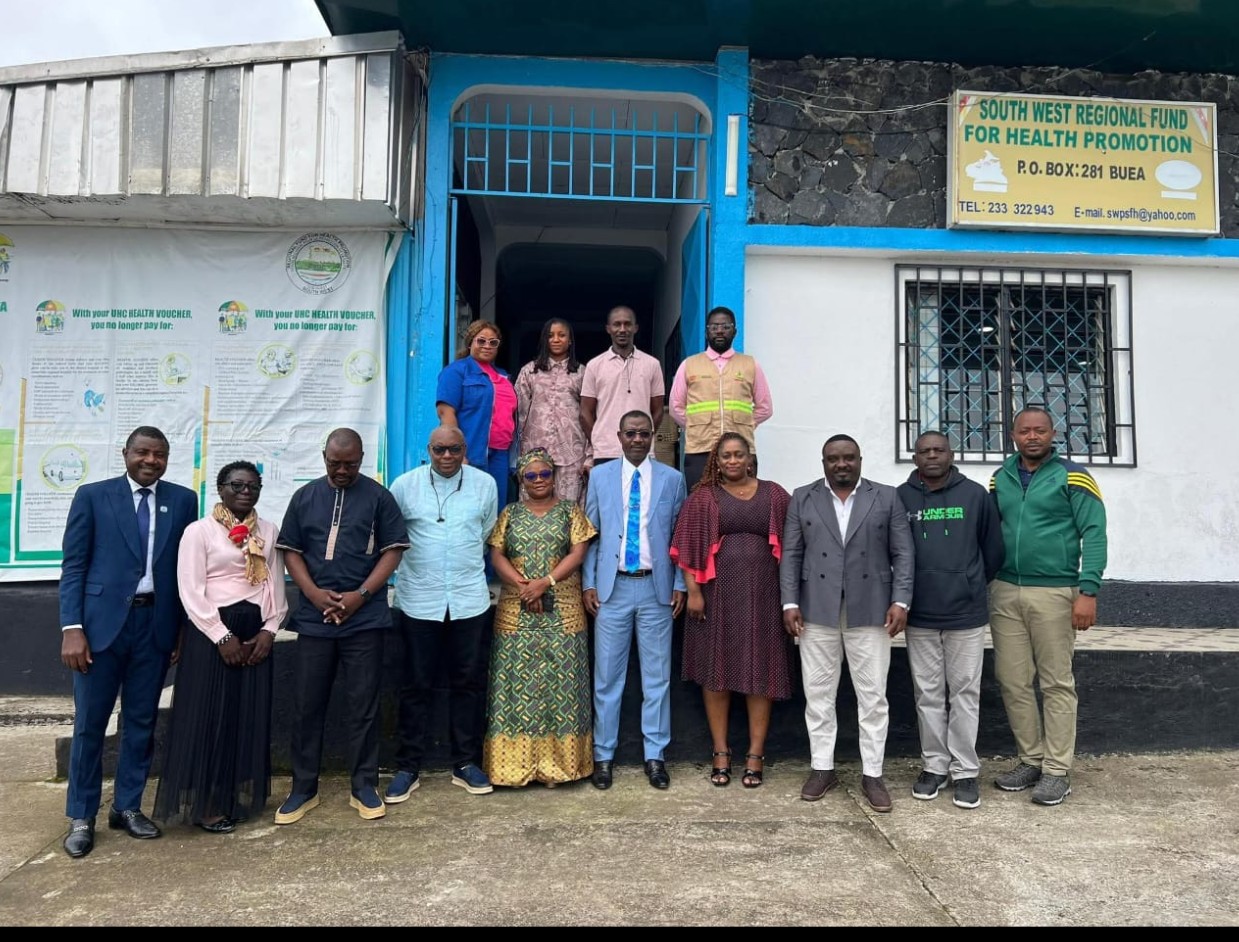
Key stakeholders from the Southwest Regional Public Health Delegation aim to harmonize their strategies against neglected tropical diseases (NTDs). Discussions focused on community engagement, the digitalization of payments, and motivating field workers.
Good things ahead.
A decisive milestone has been reached in the fight against neglected tropical diseases (NTDs) in the Southwest Region. As the launch of the 2026 Community-Directed Treatment with Ivermectin (CDTI) campaign approaches, the Regional Public Health Delegation organized a strategic preparatory meeting. This event brought together key regional stakeholders, united by a common goal: to refine operational procedures and validate the implementation schedule to ensure optimal health coverage.
This roundtable also provided an opportunity to review the progress of the ANEW project, reinforcing the need for multisectoral coordination and cross-border collaboration between districts to maximize the impact of interventions on the ground.
Modernization and Logistics: Challenges on the Ground
One of the most stimulating discussions at this meeting focused on the digital transition, specifically the method of remunerating field staff. Faced with the
challenges of transparency and efficiency, participants weighed the pros and cons of physical versus electronic payments.
The key recommendation: The MTN program is urged to conduct a rigorous comparative study, based on data from programs already using mobile payments, to choose the method best suited to the sometimes complex geographical, security, and contextual realities of the Southwest.
Furthermore, to ensure rigorous monitoring of operations across the region’s 21 health districts, stakeholders recommended the deployment of additional regional supervisors. This measure aims to guarantee the traceability of medications and the quality of the data collected. Recognizing the Unsung Heroes
Aware that the campaign’s success hinges on the final link in the chain, the assembly unanimously advocated for a financial increase in the compensation of community distributors (CDDs). These volunteers, who travel through villages administering treatments door-to-door, were hailed as the indispensable pillars of this health initiative.
By reaffirming their unwavering commitment, health workers in the Southwest region are sending a powerful message: in 2026, the fight against NTDs will reach a new milestone toward the complete elimination of these diseases, for the long-term well-being of the population.