As the United Nations calls for stronger global governance of artificial intelligence, health experts are warning that the technology’s greatest threat may not come from the machines themselves, but from the people who misuse them. Across Africa and beyond, the growing reliance on AI-generated medical advice is raising serious concerns over patient safety and public trust.
Artificial intelligence is transforming healthcare, but without ethical oversight and human expertise, it can also fuel misinformation, misdiagnosis and unsafe medical practices. Experts say the future of AI in medicine depends on responsible use that always puts patients first.
Artificial intelligence is rapidly transforming healthcare. From detecting cancers on medical images to predicting disease outbreaks and accelerating drug discovery, AI is reshaping the way medicine is practiced. Yet, as its capabilities expand, so do the risks associated with its misuse.
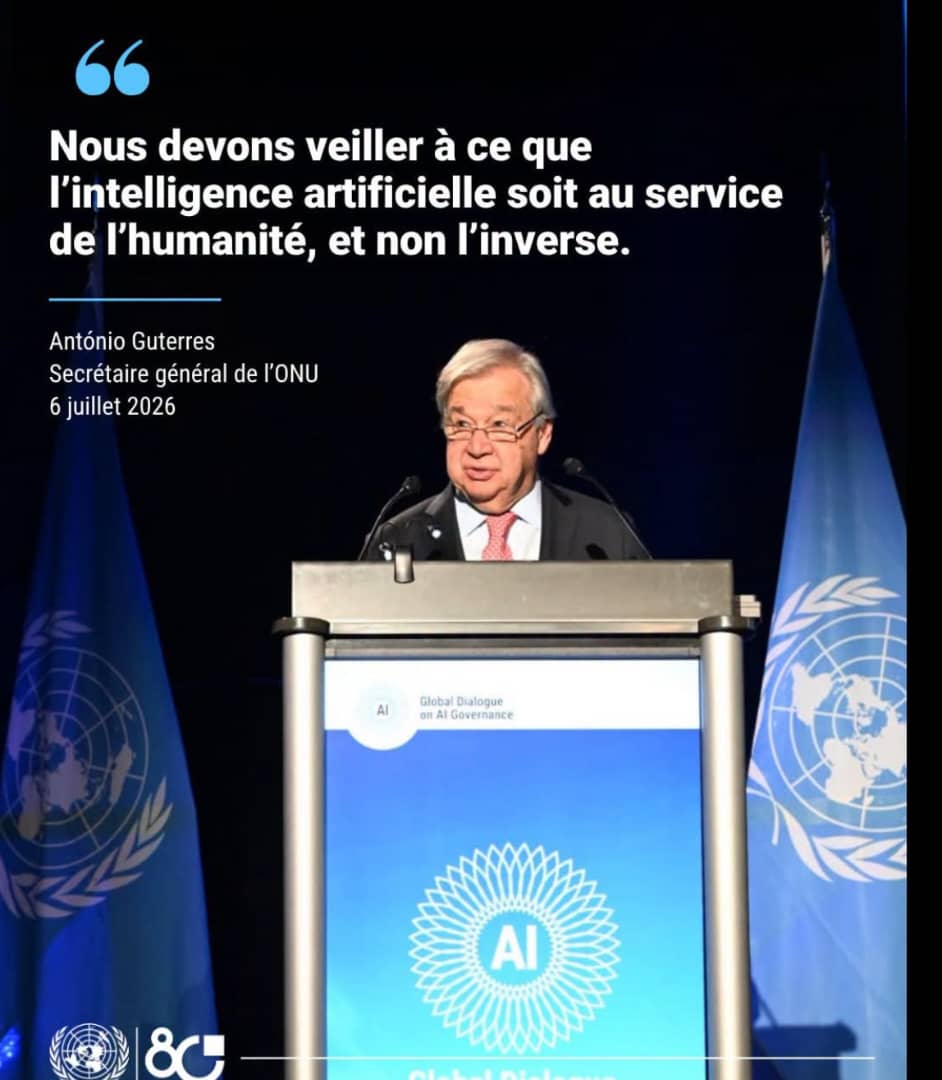
Speaking at the first United Nations Global Dialogue on AI Governance in Geneva, UN Secretary-General António Guterres warned that humanity may be the last generation able to define the conditions under which people and intelligent machines coexist. His message was unequivocal. Artificial intelligence must serve humanity, not replace human judgment.
The warning carries particular weight in healthcare, where every decision has the potential to save lives or place them at risk.
Across the world, more people are presenting themselves online as healthcare professionals while relying almost entirely on generative AI to diagnose illnesses, recommend treatments or answer medical questions. Much of the information they provide appears convincing because it is written in fluent, authoritative language. However, appearances can be deceptive. Some recommendations are inaccurate, incomplete or simply false, exposing patients to potentially serious consequences.
Researchers have repeatedly shown that AI systems can generate convincing but incorrect information, a phenomenon commonly known as hallucination. When such responses are accepted without verification by qualified medical professionals, they can lead to delayed diagnoses, inappropriate self-medication or the abandonment of effective treatments. In the most serious cases, these errors may contribute to severe complications and even loss of life.
The challenge is particularly significant across many African countries, where shortages of healthcare professionals and unequal access to medical services encourage people to seek health advice on social media and messaging platforms. This environment has allowed some individuals to exploit artificial intelligence to create fake medical content, forged prescriptions and misleading health advice that can easily be mistaken for legitimate professional guidance.
At the same time, artificial intelligence has enormous potential to strengthen healthcare when used responsibly. Hospitals are using AI to help radiologists detect diseases earlier and more accurately. Researchers are employing it to accelerate the discovery of new medicines and vaccines. Public health authorities increasingly rely on AI to monitor disease outbreaks, analyze health data and improve emergency preparedness. In several African countries, the technology is also helping expand telemedicine services and improve access to specialist care for people living in remote communities.
The difference between benefit and harm depends on responsible use. Artificial intelligence should support healthcare professionals rather than replace them. Every diagnosis, treatment recommendation or clinical decision generated with the assistance of AI must remain under the supervision of qualified practitioners who are accountable for patient care.
This is precisely the vision promoted by the United Nations. As governments work towards international rules for artificial intelligence, the objective is not to slow innovation but to ensure that technology improves health systems while protecting patient safety, medical ethics and human dignity. The future of healthcare will undoubtedly involve artificial intelligence. Whether it becomes one of medicine’s
greatest achievements or one of its greatest risks will ultimately depend on the choices humanity makes today.