Health experts and policymakers from 26 West and Central African countries have committed to accelerating the expansion of rights-based mental health services, strengthening community care and integrating mental health into primary healthcare as the region works toward the World Health Organization’s 2030 targets.
Health leaders from across West and Central Africa have renewed their commitment to transforming mental health care, agreeing on a series of actions aimed at improving access to quality, rights-based services for millions of people across the region.
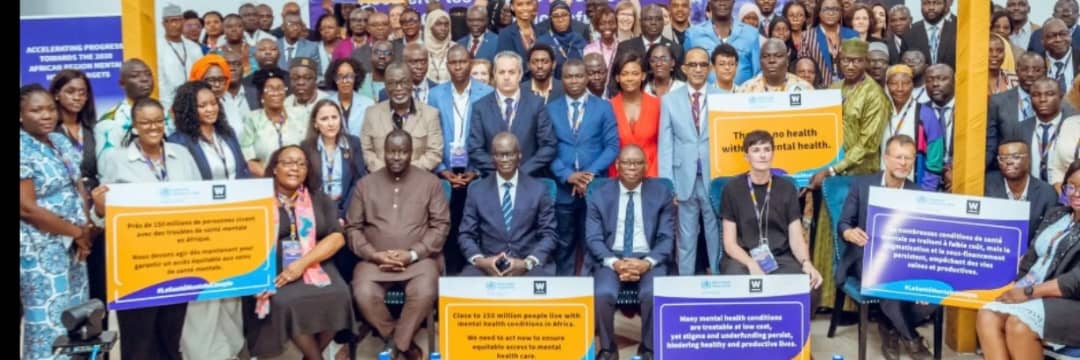
The commitment was made during the Intercountry Learning Meeting on Mental Health in West and Central Africa, held in Lomé and organized by the WHO Regional Office for Africa with support from Akwaaba Trust. Representatives from 26 countries gathered to assess progress, exchange experiences and identify practical solutions for strengthening national mental health systems.
Participants emphasized that people living with mental health conditions deserve care delivered with dignity, respect and compassion. They agreed that expanding
community-based services and ensuring mental health becomes an integral part of primary healthcare are essential to improving access, particularly in underserved communities.
Despite growing political commitment, delegates acknowledged that major challenges remain. Across the WHO African Region, 29 countries have adopted national mental health policies or strategies, yet only 17 have aligned them with international human rights standards. Progress in integrating mental health into primary healthcare has been even slower, with only seven of the region’s 47 Member States currently providing such services effectively at the primary care level.
These gaps continue to limit access to treatment, leaving many people without timely support while stigma and discrimination discourage others from seeking care.
During the four-day meeting, participants called for stronger legal and policy frameworks to protect the rights of people living with mental health conditions. They also stressed the need for closer collaboration between the health, education, social protection and justice sectors to provide more comprehensive support.
Another priority identified was the wider implementation of the WHO Mental Health Gap Action Program (mhGAP), which equips non-specialist health workers to diagnose and manage common mental, neurological and substance use disorders in settings where specialist services remain scarce.
Delegates further highlighted the importance of sustainable financing, urging governments to increase domestic investment while continuing to leverage support from development partners to strengthen mental health systems over the long term.
Lessons from recent Ebola outbreaks and other humanitarian emergencies also shaped discussions. Participants agreed that mental health and psychosocial support should be systematically incorporated into emergency preparedness and response plans to better protect affected communities before, during and after crises.
Children’s and adolescents’ mental health also received particular attention, with young advocates contributing directly to discussions on policies and services better suited to their needs.
The Lomé meeting was the second in a series of WHO subregional consultations following a similar gathering for Eastern and Southern Africa in Johannesburg in May 2026. These consultations are helping countries measure progress toward the WHO African Region’s 2030 mental health objectives, including universal adoption of national mental health policies, stronger financing mechanisms, improved
reporting systems and broader integration of mental health services into primary healthcare, ensuring more people can access quality care grounded in human rights.