After two days of intensive training, young peer educators engaged in the “HIV-Free Holidays” initiative are now actively reaching out to communities across Bamenda and its surroundings. Their mission is clear: bring HIV prevention messages closer to the population and promote voluntary HIV testing.
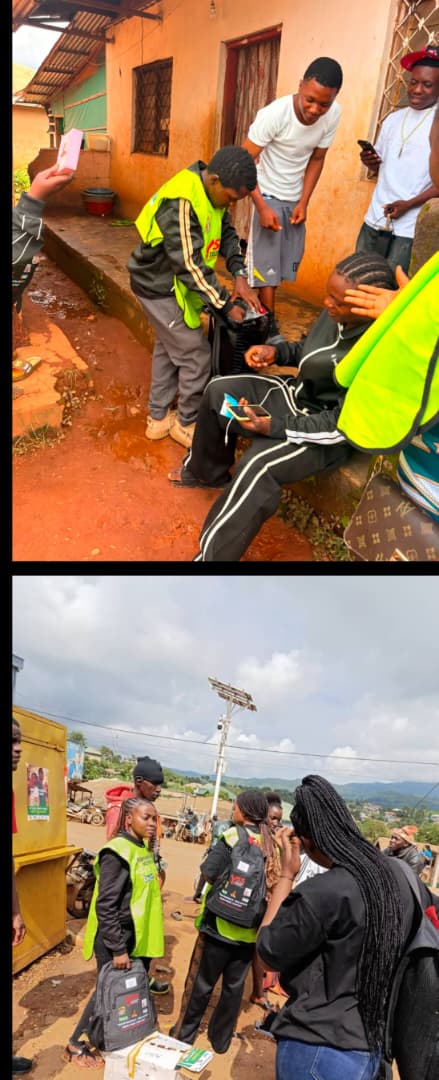
Easily identifiable by their lime-green aprons, the peer educators are moving through streets and neighborhoods, reaching even hard-to-access areas and targeting busy public spaces. Markets, junctions, neighborhoods and other gathering points have become strategic locations for engaging communities and delivering HIV prevention messages.
Through interpersonal communication, supported by communication materials such as posters and flyers, these young people are educating their peers and communities about HIV. Particular emphasis is placed on adopting healthy and responsible behaviors, preventing new HIV infections, fighting stigma and discrimination, and encouraging people to know their HIV status.
Beyond awareness-raising, peer educators are also playing an important role in linking people to HIV testing services. Individuals who voluntarily express interest in knowing their HIV status are referred either to mobile HIV testing teams deployed in the communities or to the nearest health facility offering HIV testing services.
According to the Regional Coordinator of the HIV/AIDS Control Programme, Dr Yem Engelbert, this community-based mobilization is expected to contribute significantly to increasing HIV testing uptake across the North West Region.
“The activities carried out by peer educators throughout this month are expected to boost HIV testing uptake and consequently increase the number of people who know their HIV status in the North West Region,” he said.
The mobilization goes beyond face-to-face community activities. Peer educators who demonstrate strong communication skills will also participate in radio programs, helping to amplify prevention messages and reach populations living beyond the areas directly covered by community outreach activities.
Social media platforms are another important communication channel. Peer educators use them daily to share HIV-Free Holidays messages, increase the visibility of field activities and reach a wider audience, particularly young people.
To make communication more accessible and responsive to local realities, several languages are being used. While English remains an important
medium, particular attention is given to Pidgin English and local languages, enabling peer educators to communicate effectively with diverse groups within the communities.
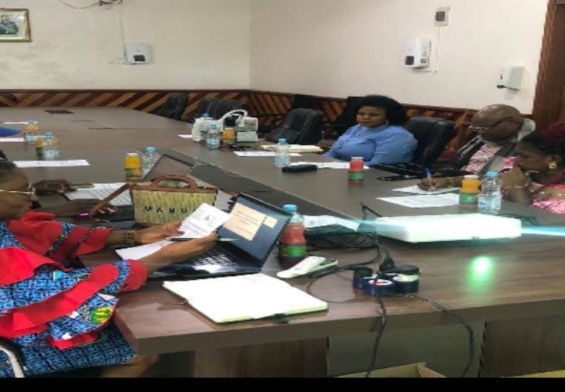
The deployment of peer educators is accompanied by regular monitoring and supportive supervision. Joint teams from the Regional Technical Group for HIV/AIDS Control (RTG HIV/AIDS) and partner organizations are conducting field supervision to ensure the quality of interventions, compliance with the guidance provided during training, and progress towards achieving the objectives of the HIV-Free Holidays initiative.
By combining interpersonal communication, community mobilization, HIV testing referrals, radio programs, social media and communication in local languages, the HIV-Free Holidays initiative is turning the holiday period into an opportunity to strengthen HIV prevention and encourage more people to know their status.
From the streets and communities to radio airwaves and digital platforms, young peer educators are positioning themselves as key frontline actors in the HIV response across the North West Region.
JNK/Raoul SAHO