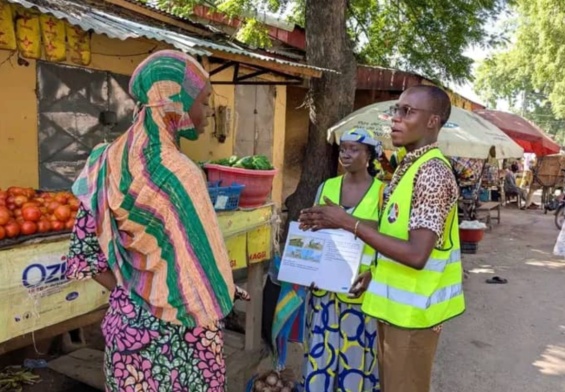
While malaria accounts for 57% of child deaths in northern regions, the third cycle of the Seasonal Malaria Chemoprevention (SMC) Campaign took place from August 7 to 9, 2026.
In Cameroon, malaria remains a persistent and formidable threat to public health, hitting the most vulnerable particularly hard. Between January and September 2025, 2,128,394 confirmed cases of malaria were reported by health facilities and community health workers out of 8,204,656 consultations for the disease, representing a morbidity rate of 25.9%, according to the World Health Organization. According to the National Malaria Control Program (PNLP), the total number of deaths from this infectious disease in the country is 1,274, with the North and Far North regions accounting for 57% of child deaths. Dr. Albert Zeh Meka, Permanent Secretary of the PNLP, specifies in the report on the epidemiological situation among children under five that these two regions, followed by the Centre and Adamawa regions, account for more than half of the deaths in this age group. The National Malaria Control Program (PNLP) also reports that 923 children under the age of five died last year, representing 72% of child mortality related to the disease. Malaria is the most widespread endemic disease, responsible for more than two million reported cases and school and work absenteeism each year. As one of the eleven countries participating in the WHO’s High Burden to High Impact global initiative, the country faces a significant burden, with 50% of hospitalizations stemming from this disease, 65% of which involve young children.
Faced with this health emergency, the Seasonal Malaria Chemoprevention Campaign is currently underway in the North and Far North regions, officially launched for the 2026 season. As part of this campaign, Cycle 3 is scheduled from August 7th to 9th, 2026, in the Far North and North regions. Let us extend a warm welcome to the healthcare workers. This strategy, recommended by the WHO, consists of administering a complete course of antimalarial treatment preventively to children aged 3 to 59 months during the rainy season, a period of high transmission. The northern regions experience very pronounced seasonal transmission over a few months, making SMC highly cost-effective and relevant compared to areas with perennial transmission. « The Seasonal Malaria Chemoprevention Campaign is everyone’s responsibility: traditional and religious authorities, community stakeholders, health facility managers, and other associated sectors. Challenges may arise in the field. » “Let’s face them head-on so we can better protect our children,” says Dr. Bomba Dominique, head of prevention at the PNLP. Treatment relies on administering a safe, effective, and completely free medication, SPAQ, which combines antimalarial drugs to protect young children from severe illness and death.
However, the implementation of this large-scale public health operation is encountering realities on the ground that must be addressed collectively. On the family side, recurring difficulties include the absence of parents or children when the health worker visits, the failure to administer the second and third doses at home, and parents’ delays in bringing sick children to the nearest health facility, notes Dr. Vougmo Clémence, pediatrician and president of the Viallaite Cameroon association. On the operational side, Thérèse Tchoussi of the National Malaria Control Program (PNLP) points to the failure of some health workers to follow guidelines and insufficient supervision to guarantee the quality of services. To meet these challenges, everyone’s commitment is essential: families must remain available and meticulously administer all three doses, health workers must rigorously and compassionately implement the strategy, and supervisors must maintain a visible presence to immediately correct any discrepancies observed in the field.
The mid-term review of this campaign demonstrates encouraging momentum thanks to the involvement of multi-skilled community health workers who travel door-to-door throughout neighborhoods and villages. Nearly two million children have thus been able to benefit from the first treatment cycles in a climate of trust, illustrating the importance of synergy between parents, communities, and healthcare personnel. The National Malaria Control Program (PNLP) plays a catalytic role in harmonizing national efforts. This combined effort allows for
effective coverage of the country and maximizes the impact of the Integrated Palliative Care (IPC) program, which saves lives by drastically reducing severe cases in children under five. Each monthly cycle is crucial, and every targeted child must receive all the scheduled doses between June and October to guarantee optimal immunity. As Dr. Jean-Pierre Kidwang concludes, now that the campaign is underway, every action counts, and every child counts in making a difference and building a malaria-free future in Cameroon.