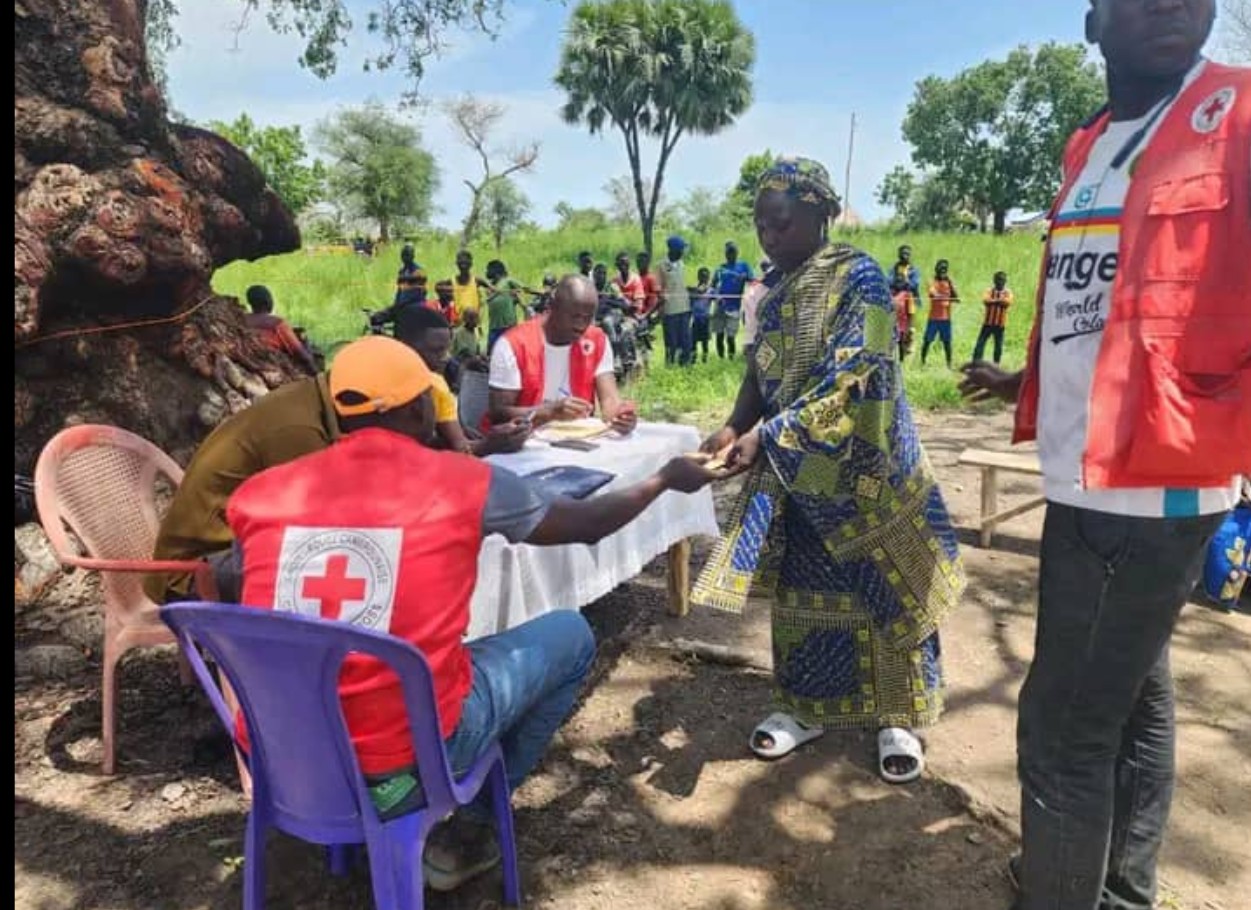
In the Far North Region, the Cameroon Red Cross is providing direct financial assistance to vulnerable families as food insecurity continues to threaten household livelihoods and access to adequate nutrition.
3,000 households receive support
The Cameroon Red Cross Society is completing a new phase of cash assistance for vulnerable households affected by food insecurity in the Far North Region.
In Yagoua, Mayo-Danay Division, 900 households are receiving a total of 114,000 CFA francs each, covering the second and third rounds of assistance. This latest
operation forms part of a wider intervention reaching 3,000 households across three divisions. The program targets 900 households in Mayo-Sava, 1,200 in Mayo-Tsanaga and 900 in Mayo-Danay.
The assistance is being provided with the support of the International Federation of Red Cross and Red Crescent Societies and humanitarian partners.
Cash to address urgent needs
Instead of receiving food parcels, beneficiaries receive direct financial support, giving families greater flexibility in deciding how to use the funds.
For households facing depleted food stocks and reduced incomes, the assistance can help cover essential food purchases and other priority expenses. It can also reduce the pressure to sell livestock or other productive assets in order to survive.
The approach is particularly relevant in communities where families depend heavily on agriculture. In Mayo-Danay, for instance, floods have previously destroyed farmland and weakened the livelihoods of farming households. The IFRC recently highlighted the experience of families in the division who have struggled to recover after losing their crops.
A growing food security challenge
The intervention comes as food insecurity continues to affect millions of people across Cameroon. An assessment conducted by the Cameroon Red Cross with support from the IFRC network and involving nearly 6,000 households found that more than 3.3 million people were struggling to access enough food. In some of the most affected areas, families reported skipping meals, selling livestock and taking on debt to cope with the crisis.
The situation is driven by several overlapping pressures, including climate shocks, insecurity, displacement and rising food prices. The Far North remains exposed because many households depend on particularly agricultural activities that can be severely affected by floods, drought and irregular rainfall.
The consequences extend beyond food consumption. Limited access to sufficient and nutritious food can increase the risk of malnutrition, particularly among vulnerable groups and children
From relief to resilience
For the Red Cross, cash assistance is not only about helping families meet immediate needs. It is also part of a wider effort to protect livelihoods and
strengthen household resilience.
The IFRC’s 2026 emergency appeal for Cameroon seeks 9.6 million Swiss francs to support vulnerable communities through food assistance, cash transfers, nutrition interventions and livelihood support. The broader operation aims to reach 330,000 of the most vulnerable people affected by the food crisis.
For the 3,000 households covered by this phase, the financial support offers immediate relief at a time when access to food and income remains difficult. But as the crisis persists, humanitarian assistance will need to go hand in hand with longer-term efforts to restore agricultural production, protect livelihoods and strengthen communities against future shocks.