

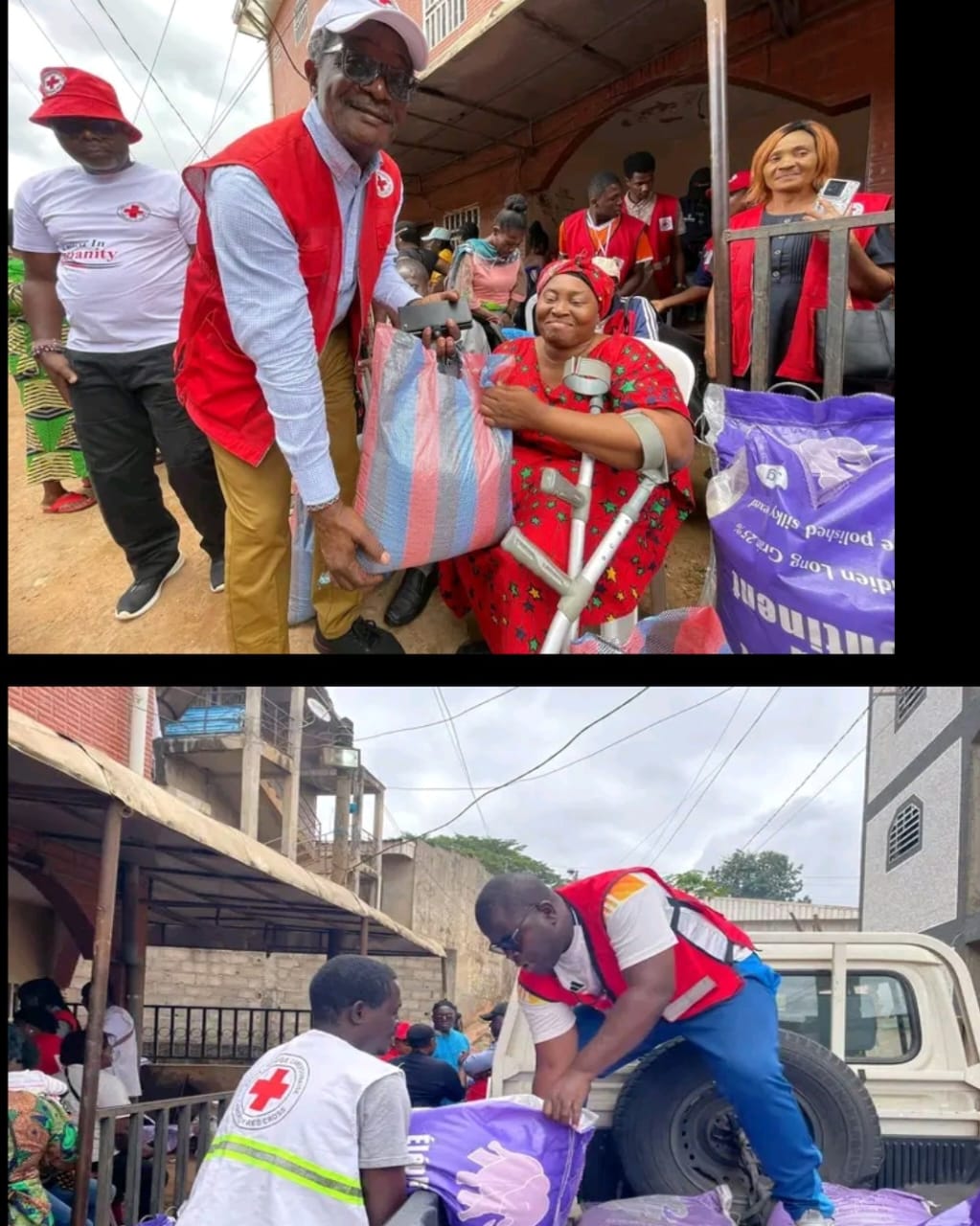
In Biyem-Assi, 200 internally displaced persons received food aid from the Cameroonian Red Cross on Saturday, September 12, 2026. This was part of a solidarity operation carried out with the Rescue and Hope Giving association.
In Biyem-Assi, behind every face lies a story of departure, loss, and rebuilding. These internally displaced people had to leave their homes and familiar surroundings to seek refuge in Yaoundé, far from their former lives. In the capital, they are now trying to rebuild their lives, despite the ongoing challenges they face. It is in this context that the Cameroonian Red Cross organized a food distribution operation in the Yaoundé III district. The activity, carried out in partnership with the Rescue and Hope Giving (RHOG) association, targeted 200 internally displaced people living in the area. The initiative aims to provide a concrete response to the food insecurity faced by people who have had to leave their home areas. This situation often forces them to start from scratch, find new livelihoods, and meet essential expenses with limited resources.
Three tons of rice to support households
For this operation, 60 bags of rice, each weighing 50 kg, were mobilized, representing a total of 3,000 kg of rice. The distribution was made at a rate of 15 kg per beneficiary household. While this quantity does not resolve all the difficulties faced by these families, it provides direct support for their food needs. This action is part of an ongoing effort to assist vulnerable populations. For the Cameroonian Red Cross, the aim is to contribute to meeting an immediate need while maintaining a presence among internally displaced persons residing in the capital. The rice distributed as part of this operation came from a donation by KOYA SA to the Cameroonian Red Cross. This donation was then directed to beneficiaries in Yaoundé III, allowing the humanitarian organization to transform this contribution into direct aid to families. The RHOG association, for its part, supported the implementation of the distribution on the ground.
Beyond the distribution of food, this operation reflects the mobilization of several actors around the needs of internally displaced persons. Food assistance helps alleviate, even temporarily, some of the burdens these households face and provides them with a concrete solution to their daily lives. For these families, who are gradually trying to regain some stability in Yaoundé, every bit of support counts. The contents of a bag of rice may seem ordinary, but when it arrives in a household facing the hardships of internal displacement, it also represents a few days’ worth of food and a small measure of relief.
In Biyem-Assi, solidarity is thus translated into concrete aid to families who continue, far from home, their difficult journey towards stability.
Marie Chantale FAIDA

