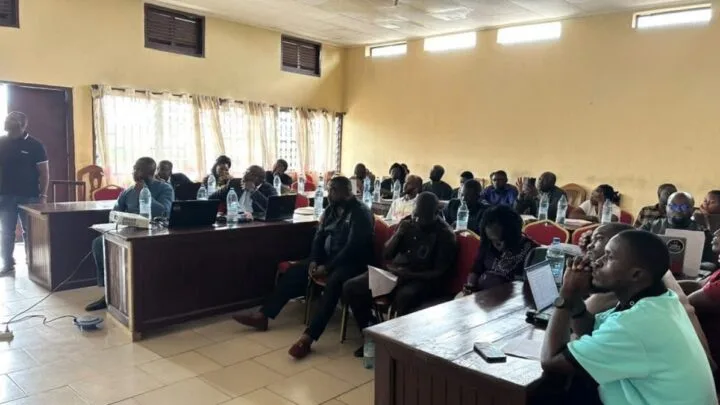

Meeting from September 17 to 18, 2026, at Laquintinie Hospital in Douala, health officials from the Littoral region are assessing maternal and infant mortality indicators. Despite the decline in the mortality rate between 2021 and 2025, constraints related to equipment, logistics, and personnel necessitate an acceleration of interventions to achieve the 2030 targets.
The Laquintinie Hospital in Douala will host the regional coordination meeting from September 17th to 18th, 2026. The meeting will focus on reducing maternal and infant mortality in the Littoral region. This event will bring together health stakeholders to discuss the challenges, current situation, and future prospects.
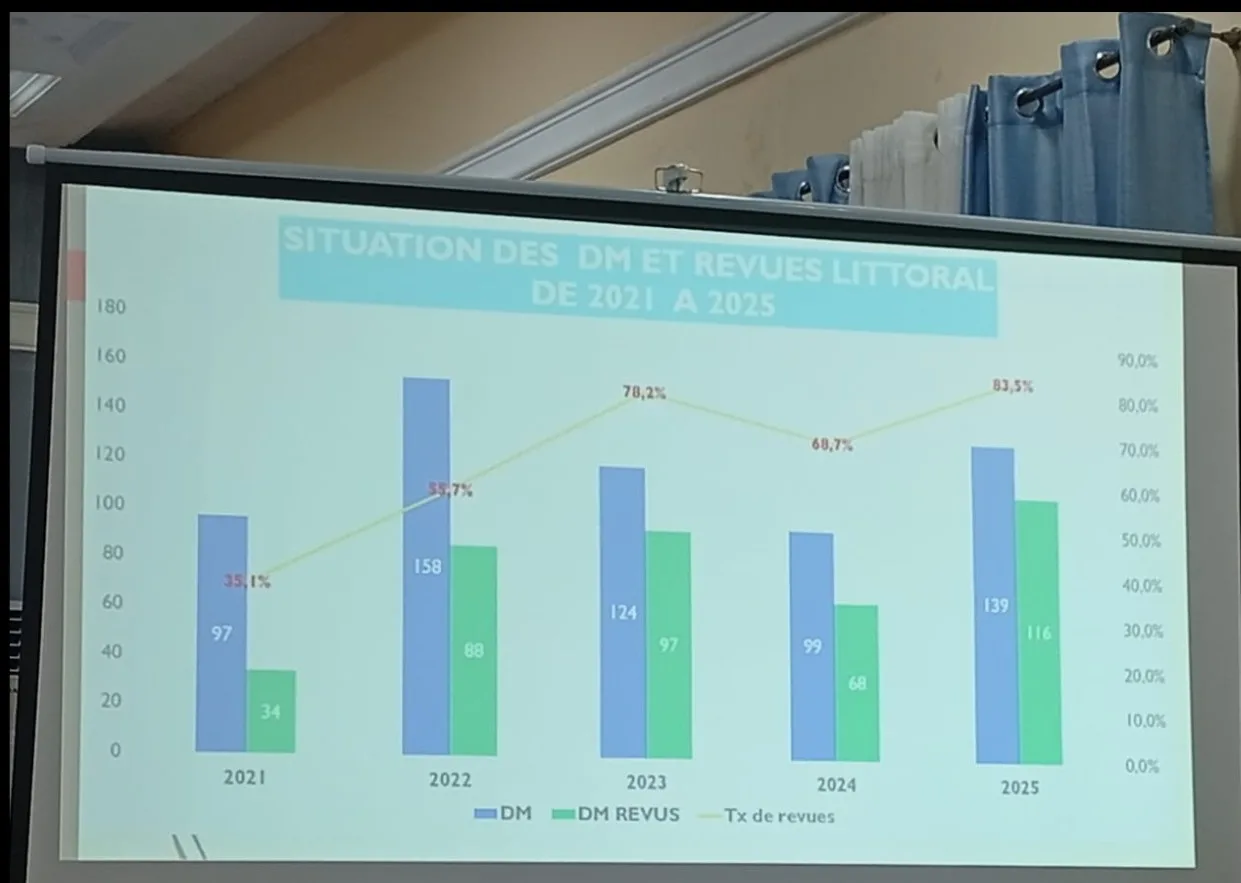
The analysis of health indicators presented yesterday reveals trends in figures for the period 2021-2025. The maternal mortality ratio per 100,000 inhabitants in the Littoral region rose from 137.56 in 2021 to 147.52 in 2022. It stood at 130.1 in 2023, then decreased to 127.47 in 2024 and reached 118.27 in 2025. The data shows a decline in mortality. Although the curve continues to fall, the regional health delegation for the Littoral is still awaiting the next demographic and health survey to confirm this trend.
With the global ambition to reduce the maternal mortality rate to below 70 deaths per 100,000 live births by 2030, Cameroon is far from meeting these targets. « The focus now is on accelerating the reduction because we have a target of below 70 deaths per 100,000 births by 2030, » says Dr. Charles Yopndoi, Regional Delegate for Public Health for the Littoral region.
The urgent need for acceleration in light of the three delays
In the Littoral region, mortality is explained by three levels of delays. The first delay concerns the decision to seek medical attention. This obstacle stems from low participation in prenatal care, gaps in public information, and reliance on traditional medicine. The influence of beliefs and self-medication hinder access to healthcare. The second delay, according to the delegate, affects access to healthcare facilities. This results from the isolation of certain areas, communication breakdowns, and a lack of transportation.
The third delay occurs during the patient’s access to healthcare facilities. It stems from financial constraints, a lack of supplies, a scarcity of blood products, and staff shortages. It is also explained by patients being held in facilities lacking equipment, late referrals, the proliferation of unregulated medicine, and the sale of counterfeit drugs.
Dr. Bechem, a gynecologist-obstetrician and director of the Cité des Palmiers District Hospital, details these obstacles: “On the ground, we encounter many challenges related to the third delay. This refers to the third delay that falls on healthcare personnel. Firstly, there are issues with patient care, referrals and counter-referrals, communication among healthcare staff, the availability of certain supplies and medications, and especially the availability of blood and blood products. Because, in obstetrics, blood is essential for the care of a woman giving birth. So, the third delay remains a problem in relation to these challenges.”
Responses to the challenges
Faced with these challenges, strategies are emerging to correct the system. Priority areas include universal health coverage, cost control, vaccination, and the supply of kits and blood products. The roadmap incorporates streamlining the health map, improving referrals between hospitals, raising awareness about family planning, and strengthening human resources.
The actions of support partners strengthen the response on the ground. Dr. Grace Nyem, technical advisor at the Elisabeth Glaser Pediatric AIDS Foundation in Cameroon, explains this partnership: “We decided to collaborate, to continue the collaboration with the leadership, that is to say, the delegation and the agreement of the GTR, to encourage all these actors working in health facilities. Because it’s not just about identifying the positive patient. It’s work, it’s a chain of interventions. They need counseling, they need treatment, they need education, they need encouragement. We cover 52 health facilities. We support them with human resources. We have both clinical and monitoring and evaluation teams.”
The alignment of regional actors and partners aims to eliminate logistical and medical bottlenecks to protect mothers and children.
The data presented in this study indicate that the region’s population is 4,756,498. The number of women of reproductive age is 1,259,349. Projections indicate 126,387 pregnancies and 119,180 births. The territory has 581,716 children aged 0 to 59 months. The health system is comprised of 24 health districts, 191 health areas, and 1,550 health facilities. The medical
personnel include 736 physicians, 177 gynecologists, 86 pediatricians, 2,657 nurses, and 702 midwives.