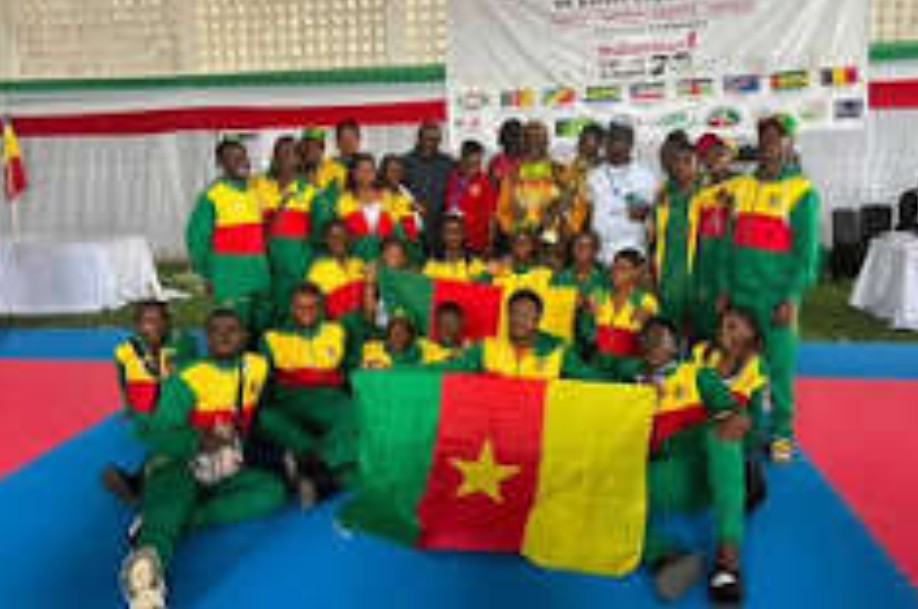
Team Cameroon distinguished itself at the African Karate Championships thanks to elite sports-medical support. From rigorous prevention to a virtually empty medical room, discover the keys to this health-related success.
The participation of the Cameroonian national karate team in the African Championships (UFAK – Central Region / Zone 4) resulted in a historic triumph on the tatami, marked by overwhelming dominance (notably securing 37 podium finishes, including 28 gold medals, at the most recent benchmark event in Bujumbura). Behind this high-level physical and technical performance lies a key, often invisible factor for success: rigorous and proactive sports-medical support, designed to place the athlete’s health and physical well-being at the heart of the quest for continental excellence.
The medical care provided to Team Cameroon relied on a multidisciplinary strategy focused on sports medicine, emergency trauma care, and functional recovery. This approach was structured around pre-competition safeguards, including systematic health assessments, medical fitness checks for both sparring (kumite) and forms (kata), and the updating of athletes’ biological and nutritional profiles. This organization translated into on-site operational coverage featuring a permanent emergency medical unit at the edge of the tatami—comprising sports physicians, physiotherapists, and paramedics—to manage acute injuries (impacts, dislocations, sprains) immediately. It also involved the implementation of close-contact post-bout recovery protocols, including cryotherapy sessions, muscle-relaxing massages, controlled hydration, and rigorous monitoring of neuromuscular fatigue. The standout feature of this medical assessment is the absence of serious or debilitating injuries within the Cameroonian delegation, reflecting the robustness of their athletic preparation. There were no major injuries; notably, no cases of severe traumatic brain injury, compound fractures, or ligament ruptures (such as cruciate ligament tears, which are common in combat sports) were recorded. The medical team primarily treated minor ailments typical of contact sports, such as muscle contusions and superficial hematomas (managed with ice and topical NSAIDs), mild finger or ankle sprains (stabilized with soft supports and preventive taping), and minor skin abrasions (disinfected immediately to prevent infection).
This excellent health outcome is the result of several strategic choices made jointly by the medical and technical teams. A culture of prevention played a pivotal role, with prophylactic muscle strengthening and proprioception training carried out before hand, drastically reducing the incidence of sprains. Rigorous weight management was another cornerstone, involving strict nutritional monitoring by the medical team; this the avoided drastic, sudden last-minute weight loss that often compromises the renal and immune health of karatekas. Finally, prompt first aid and immediate intervention by medical staff after bouts helped curb inflammation and accelerate recovery between preliminary rounds and the final stages.
Overall, the medical report for the Cameroonian karate team is excellent. The perfect alignment between physical preparation and rigorous medical care enabled the athletes to perform at 100% of their physical potential without compromising their physical well-being. This virtually empty infirmary confirms that sustained performance in combat sports relates fundamentally on medical excellence dedicated to the athlete, opening up promising prospects for upcoming international competitions.