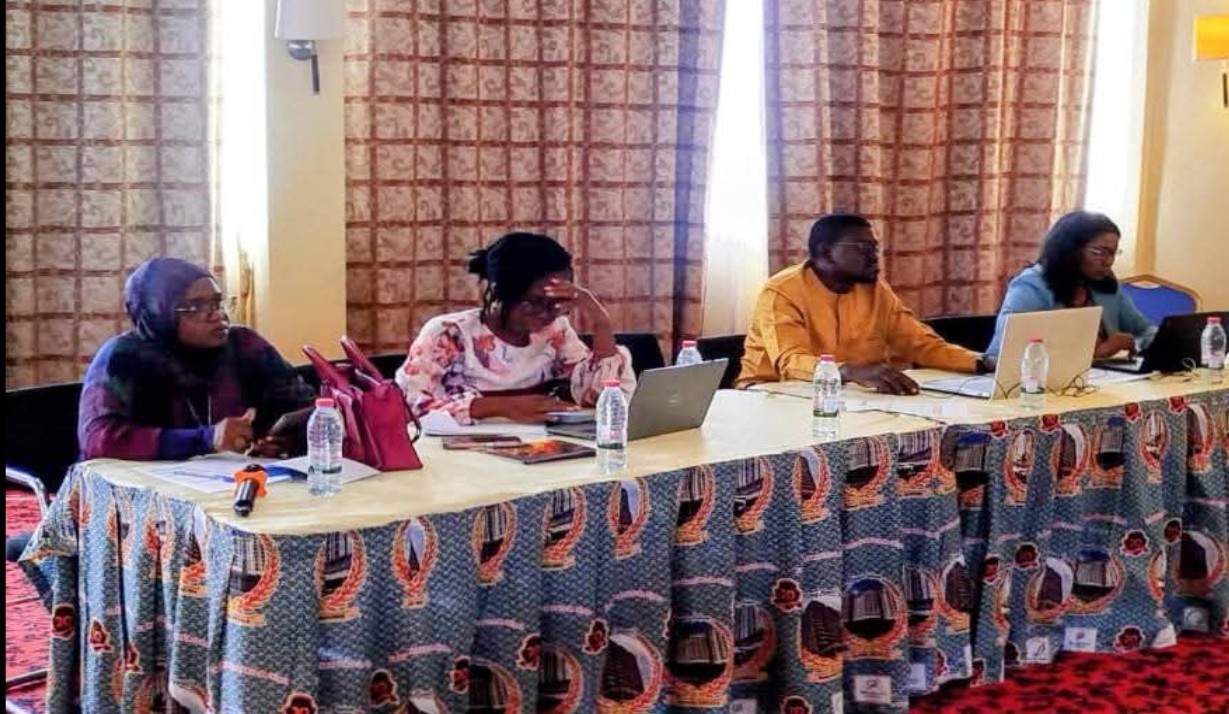
From September 14 to 18, 2026 in Yaoundé, a strategic workshop on budgeting the National Health Security Action Plan (PANSS), organised by the National Public Health Observatory, mobilized experts, marking a decisive turning point in equipping the country with sustainable and funded response tools.
They arrived with data, observations, and a conviction: health security cannot be decreed; it must be financed. From September 14 to 18, 2026, in Yaoundé, representatives of the Zoonoses Program participated in the budgeting workshop for Cameroon’s National Health Security Action Plan (PANSS), organized by the National Public Health Observatory. Five days of intensive work to transform a strategic document into a financial roadmap. Five days to answer a question that seems simple but is actually quite complex: how much will health protection in Cameroon cost over the next five years?
The context lends this exercise a particular gravity. Zoonoses, diseases transmissible from animals to humans, now account for 75% of emerging pathogens. Cameroon, a crossroads country in Central Africa, is on the front
line. Porous borders, population pressure, and close proximity between humans and wildlife in forested areas: all these factors make the country fertile ground for the emergence of new threats. The COVID-19 crisis, the Mpox outbreak, and the resurgences of Ebola and Marburg in the sub-region have acted as wake-up calls. The message is clear: anticipation is less costly than reaction.
The National Health Security Action Plan (PANSS), whose development was launched in June 2026 in Mbalmayo, rests on three fundamental pillars: prevention, early detection, and response to public health emergencies. Nineteen areas of intervention have been identified, covering epidemiological surveillance, governance, risk communication, and food safety. But a plan, however ambitious, remains a dead letter without funding. This is precisely the challenge of the Yaoundé workshop: to translate these ambitions into budget lines, human resources, equipment, and logistics.
For the Zoonoses Programme, this participation is not unprecedented. In April 2026, its experts had already taken part in the micro-planning workshop for the HeSP and Pandemic Fund projects in Ebolowa. This serves as a reminder that budgeting is not an isolated exercise, but the culmination of a process that begins well in advance. The Programme, established by decree of the Prime Minister in 2014, works to promote the « One Health » approach in Cameroon. It leads the National One Health Platform, coordinates intersectoral efforts across human, animal, plant, and environmental health, and ensures the surveillance of priority zoonoses such as rabies, anthrax, avian influenza, Ebola/Marburg, and bovine tuberculosis.
One of the major challenges identified during the preparatory work remains funding. Cameroon has surveillance systems in the human and animal health sectors, but the resources allocated remain insufficient. The situational analysis carried out for the National Health Surveillance Program (PANSS) highlights « the lack of funding and technical assistance, » « the inadequacy of integrated plans, » and « the weak capacity for sectoral and multisectoral response at the regional and departmental levels. » These are all shortcomings that budgeting must help to address.
The National Public Health Observatory, organizer of the workshop, plays a pivotal role. By bringing stakeholders together, it facilitates coordination between sectoral ministries, specialized agencies, and technical and financial partners. Health security, by its very nature, is an area where silos are detrimental. A community health worker who detects a suspected case of hemorrhagic fever needs a functional alert system. A veterinarian who identifies
an epizootic must be able to share the information with human health authorities. A laboratory analyzing a sample must have the necessary reagents and supplies. Each link in this chain has a cost.
At the end of the five-day workshop, the budgetary outlines of the 2027-2031 National Health Security Plan (PANSS) are gradually taking shape. The final document will have to be submitted to government decision-making and international partners. The stakes go beyond just health. Health security has become a pillar of national sovereignty. A country unable to detect and contain an epidemic within its borders exposes itself to devastating economic, social, and diplomatic consequences. Cameroon understands this. The challenge now is to find the resources to achieve its ambitions.