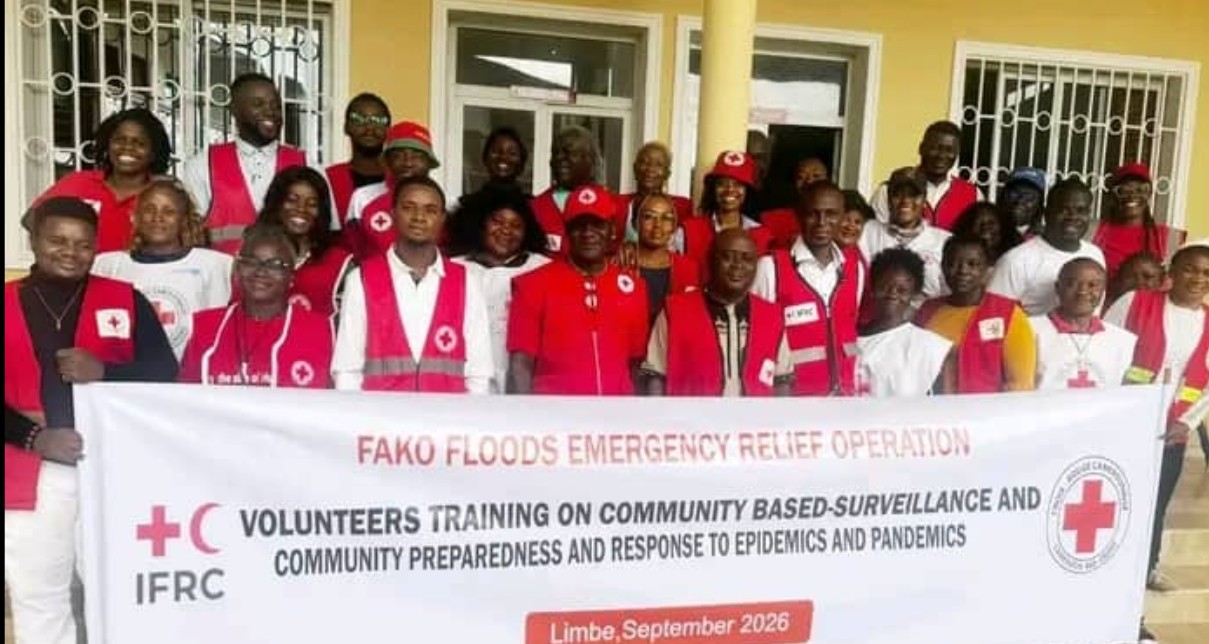
Organised within the framework of the Fako Floods DREF, with the support of the IFRC and the European Union, the Cameroonian Red Cross trained 34 volunteers in epidemic preparedness and response, in order to strengthen surveillance and early warning in communities affected by the recent floods.
In Limbe, in the Fako department, the situation resulting from the torrential rains of August 5, 2026, continues to require a humanitarian and health response. The event, which also included a landslide, affected more than 12,000 people, while nearly 2,000 were left homeless. In the affected communities, deteriorating hygiene conditions, potential contamination of water sources, and the presence of stagnant water raise concerns about a resurgence of certain
diseases. It is in this context that the Cameroonian Red Cross, with the support of the International Federation of Red Cross and Red Crescent Societies (IFRC) and funding from the European Union’s Humanitarian Aid and Civil Protection programs, is deploying a five-month DREF Fako Floods operation.
34 volunteers trained in alerting
An integrated training session on Community-Based Epidemic Preparedness and Response (CBEPR) and Community-Based Surveillance (CBS) brought together 34 participants. These included members of the local Cameroon Red Cross committee, volunteers, supervisors, and facilitators. The objective was to provide them with the knowledge and skills necessary to detect diseases with epidemic potential early, report them, and contribute to their prevention in affected communities. The CBEPR component focused on knowledge of priority diseases, including their symptoms, modes of transmission, and means of prevention. Participants also received training in communication for behavior change, Protection, Gender, and Inclusion (PGI), the use of Epidemic Response for Volunteers (ERV), Community Engagement and Accountability (CEA), and community-based psychological first aid. Community-Based Surveillance complements this training. Volunteers learned to identify health alerts based on community case definitions and to transmit signals in real time via SMS using the Nyss platform. Supervisors were also trained to analyze and interpret the collected data. Theoretical presentations, group work, and practical exercises are used to bring health surveillance closer to affected households.
500 households benefited from the cash
In the program « Red Cross in Action, » broadcast on September 19, 2026, on CRTV National Station, Ronald Frank MVENG AKOA, Cash Focal Point for the DREF Fako Floods operation, presented the various components of the response implemented by the Cameroonian Red Cross following the floods. According to him, DREF is an IFRC emergency financing mechanism that allows for the rapid mobilization of resources to support National Societies during small- and
medium-scale emergencies. The operation targets 12,000 people, including 500 of the most vulnerable households. Approximately 4,000 people whose homes have been partially or totally destroyed are particularly affected. The assistance includes cash transfers of 9,500 CFA francs per month for three months to each member of the targeted households, in order to cover priority needs such as nutrition, shelter, education, water, hygiene, and sanitation. The transfers will be carried out via the One to One platform, developed by the Dutch Red Cross and used in this operation.
Water, hygiene and malaria prevention
Ronald Frank Mveng Akoa also indicated that the response includes 500 WASH kits, 60,000 Aquatabs tablets for household water treatment, and 1,500 insecticide-treated mosquito nets—three per targeted household. In addition, 1,484 dignity kits are being distributed to women and girls of reproductive age. On the environmental front, six wells affected or contaminated by the floods, the market, and the medical center are to be disinfected and cleaned. The removal of waste and stagnant water is also planned to reduce health risks. According to the Cash Focal Point, communities are urged to use only treated water, observe hygiene practices, and avoid areas prone to landslides, particularly hillsides and drainage canal beds. Assistance is provided free of charge, and a community feedback mechanism allows affected populations to raise their concerns.
Through this training, the Cameroonian Red Cross is strengthening the capacity of its teams to quickly detect epidemic risks and to intervene with communities affected by floods.
Marie Chantale FAIDA