

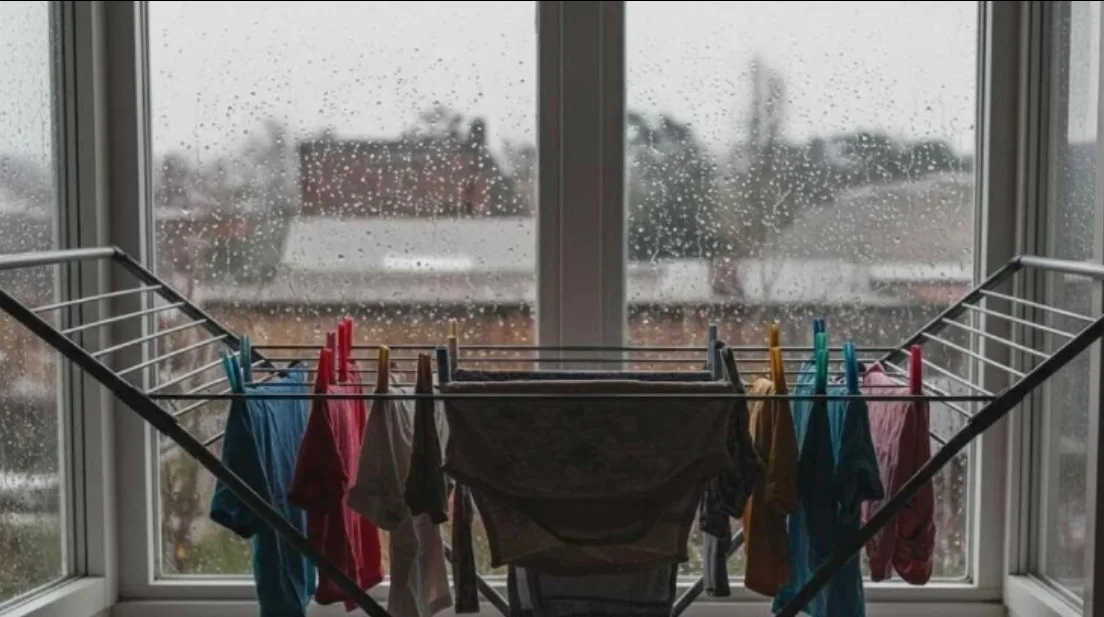
Poor ventilation, persistent dampness and mould growth can turn an everyday household chore into a potential health concern. Knowing how to dry laundry safely indoors can help protect the respiratory health of the whole family.
During the rainy season, when sunshine is scarce and clothes take longer to dry outdoors, hanging laundry inside the house may seem like the most convenient solution. In many Cameroonian households, clothes are placed on chairs, door frames, indoor racks or near windows. Although this practice is not inherently dangerous, repeated drying in poorly ventilated rooms can increase indoor humidity and create conditions that favour mould growth.
When moisture becomes a problem
Wet clothes release water vapour into the surrounding air as they dry. When this happens regularly in an enclosed room, moisture can accumulate, particularly when windows remain closed and air circulation is limited. Condensation on windows, damp patches on walls, peeling paint and a persistent musty smell may indicate excessive indoor moisture.
The problem is not simply the presence of wet clothes, but the inability of the room to release the moisture they produce. Indoor relative humidity should ideally remain between 30 and 50 per cent, and consistently high humidity should be avoided. A simple hygrometer can help monitor moisture levels at home.
How damp air affects health
Excess moisture encourages the growth of mould and dust mites, both of which can trigger health problems in susceptible people. Exposure to mould may cause nasal congestion, sneezing, coughing, wheezing and eye irritation. People living with asthma, allergies or other respiratory conditions may experience worsening symptoms.
Children, older adults and people with weakened immune systems may be particularly vulnerable to the effects of damp or mouldy indoor environments.
However, drying clothes indoors does not automatically cause respiratory disease. The main concern is prolonged exposure to excessive moisture and the biological agents that may develop when dampness persists.
Simple ways to dry clothes more safely
Whenever the weather permits, dry laundry outdoors in a well-ventilated area. If clothes must be dried inside, choose a room with good airflow and open windows when outdoor conditions allow. Avoid placing wet laundry in bedrooms, especially when several people sleep in a small, poorly ventilated space.
Spread clothes out on a drying rack rather than piling them together. This allows air to circulate and helps them dry faster. If available, an electric fan can improve air movement, while a dehumidifier can help remove excess moisture. Ensure that ventilation does not introduce more humid air when outdoor conditions are particularly damp.
Avoid drying clothes directly on heaters or near open flames, as this can create fire hazards. Never leave wet laundry against walls or furniture, where trapped moisture can encourage mould growth.
Know when to take action
If condensation, damp patches or musty smells persist, investigate the source rather than relying on air fresheners. Repair water leaks, improve ventilation and clean small areas of mould safely. Extensive mould growth or recurring dampness may require professional assessment.
Drying clothes indoors is sometimes unavoidable, particularly during prolonged rainfall. The key is to prevent moisture from accumulating over time. By improving airflow, monitoring humidity and addressing dampness early, households can make this everyday practice safer for everyone.