
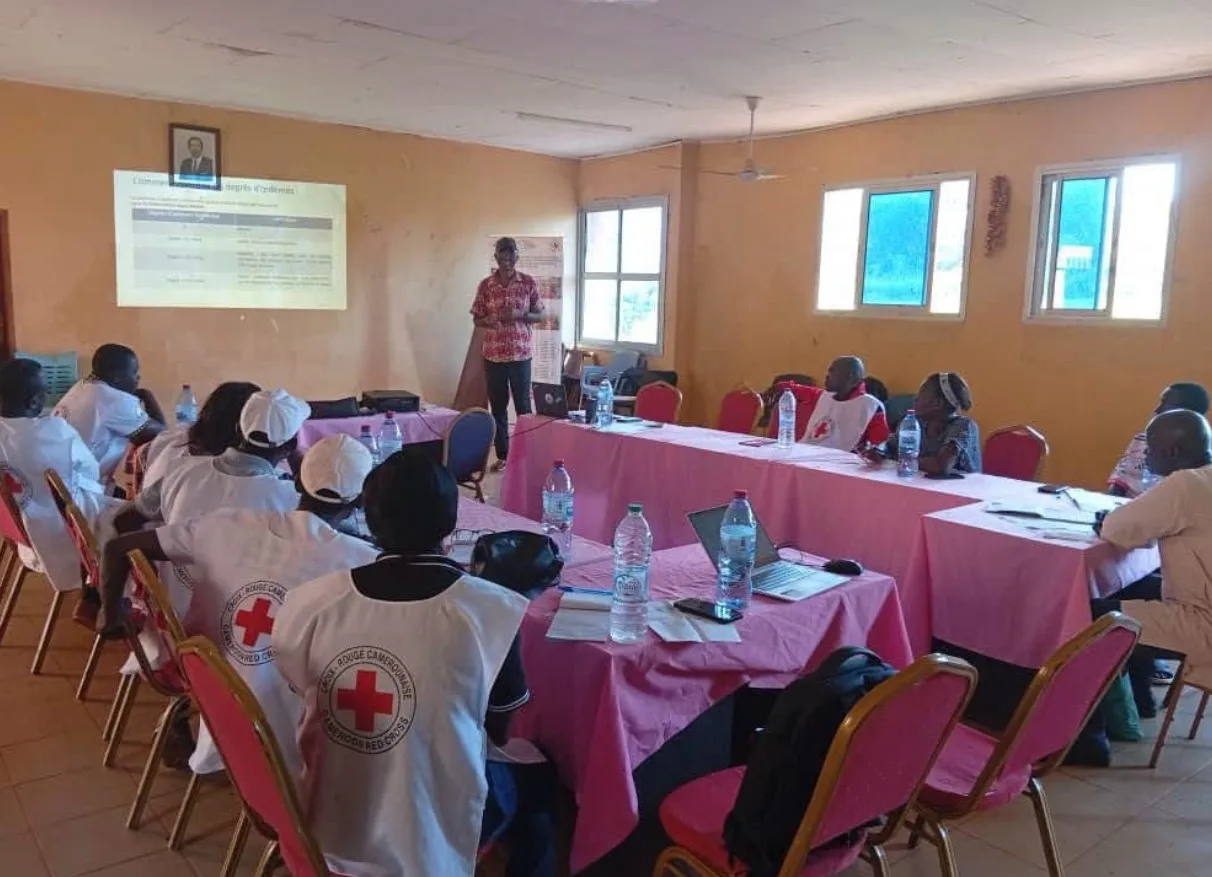
The fight against child malnutrition is increasingly extending beyond health facilities, with families being encouraged to play a more active role in identifying early warning signs. In Ketté, Kadey Division of the East Region, the Cameroon Red Cross is promoting this approach through the training of 12 community volunteers in family-based mid-upper arm circumference screening, known as the PB-Family approach.
Training community relays
Organised on October 20, 2026, with support from the Ketté Health District, the training falls under the RESINA-Cam project. It seeks to equip community volunteers with the knowledge and practical skills needed to teach parents how to detect early signs of malnutrition among children aged 6 to 59 months. The initiative covers four health areas: Ketté Urbain, Bédobo, Gbiti and Timangolo.
The 12 volunteers are expected to link health services with households. They will guide parents on using the screening tool, monitoring children’s nutritional status and recognising signs that require referral. Their involvement is intended to bring screening closer to families.
A simple tool for early detection
At the centre of the PB-Family approach is the measurement of the mid-upper arm circumference (MUAC), a simple technique used to identify children at risk of acute malnutrition. Using a colour-coded measuring tape, parents can check their children’s arm circumference and identify readings that may indicate a nutritional problem. The training also covered the identification of nutritional oedema, which can appear as abnormal swelling, particularly in the feet.
The tape’s colour zones help indicate nutritional risk and the need for further assessment.
However, home screening is not a medical diagnosis. A concerning reading or the presence of oedema requires prompt assessment by qualified health personnel.
The method gives caregivers a practical way to watch for changes between routine visits to health facilities. It can help prompt action, but only a health professional can assess the child’s condition and determine the care required.
Making families part of prevention
By introducing this practice into households, the PB-Family approach seeks to make nutritional screening more regular and accessible. Rather than relying exclusively on health workers or occasional community campaigns, parents are encouraged to monitor their children and seek assistance as soon as a warning sign is detected. Early identification can help reduce delays in accessing care, particularly in communities where distance and other barriers may prevent families from reaching health facilities quickly.
Community volunteers are also expected to encourage regular checks and timely referral of children at risk across the four targeted health areas. Through awareness-raising and guidance, they will help parents understand the importance of monitoring their children’s nutritional status and responding promptly to warning signs.
A wider nutrition resilience effort
The activity is part of RESINA-Cam, a project implemented by the Cameroon Red Cross in partnership with the French Red Cross to strengthen the resilience of vulnerable communities to food and nutrition insecurity. Its community-based activities seek to improve local capacities and encourage practices that can help protect the health and development of young children.
In Ketté, the training of 12 volunteers marks a step towards placing families closer to the frontline of malnutrition prevention. The impact of the approach will depend on how effectively the volunteers reach households, how consistently families use the screening method and how quickly children identified as being at risk are referred for appropriate care.