

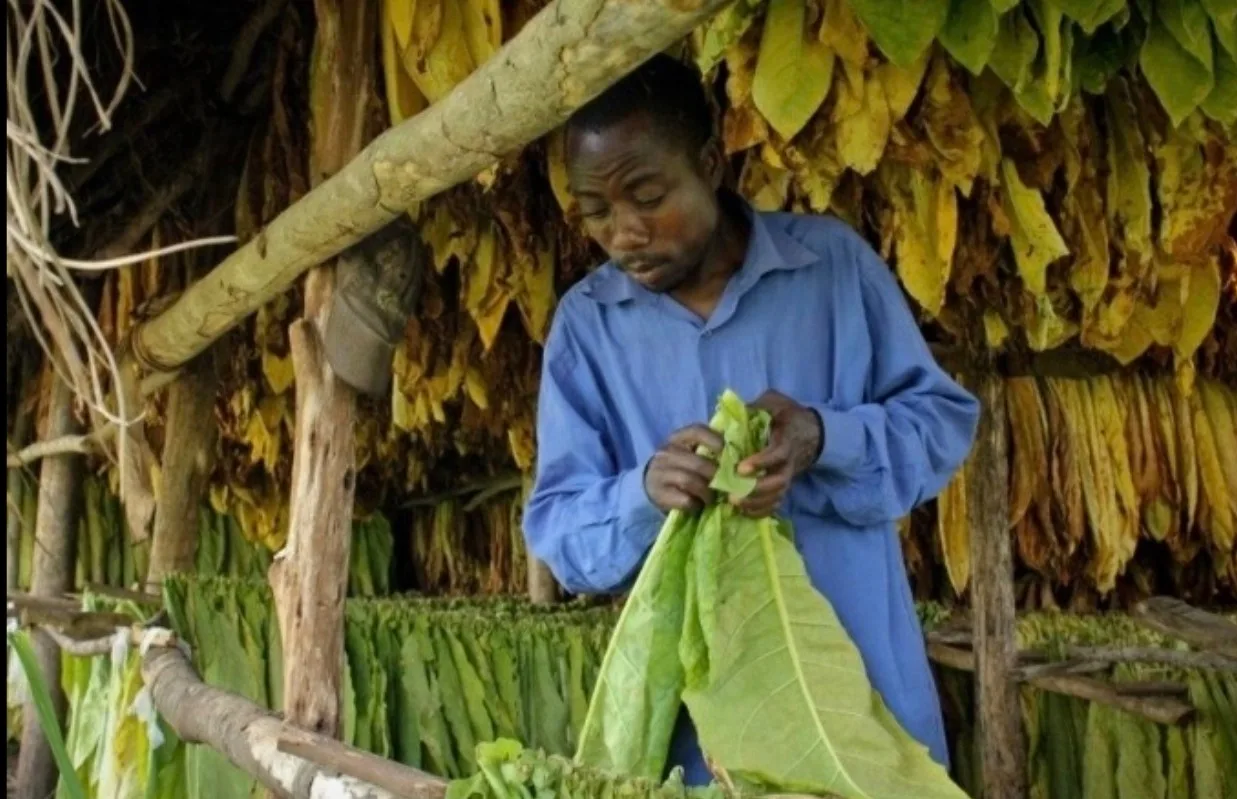
Uganda’s tobacco production is raising concerns over occupational health, environmental degradation and food security, as new World Health Organization (WHO) data reveal a growing gap between global and African production trends. While worldwide tobacco leaf production fell by 18.8% between 2012 and 2024, Africa recorded an 8.61 per cent increase, placing the continent under growing pressure to address the consequences of tobacco cultivation.
In 2024, Uganda produced nearly 32,000 tonnes of tobacco leaves, making it one of Africa’s five leading producers. Yet, despite this production volume, tobacco leaf exports accounted for only 0.43 per cent of the country’s total exports, while cigarette exports represented another 0.28 per cent. The figures raise questions about the economic benefits of an agricultural activity whose health and environmental costs are increasingly documented.
Farmers exposed to occupational hazards
Behind tobacco production are agricultural workers exposed to nicotine and potentially harmful chemicals throughout the cultivation and harvesting process. One of the most immediate occupational risks is Green Tobacco Sickness, a form of nicotine poisoning that occurs when workers absorb nicotine through their skin while handling wet tobacco leaves.
Symptoms may include nausea, vomiting, headaches, dizziness, abdominal cramps and excessive sweating. Exposure can be particularly significant during harvesting, when workers come into direct contact with freshly picked leaves. The use of pesticides and other agricultural chemicals adds another layer of risk, especially where protective equipment and safe handling practices are inadequate.
These hazards extend beyond individual workers. Families living and working on tobacco farms may also be exposed to chemical residues carried on clothing, footwear and equipment. Women and children involved in agricultural activities can face additional vulnerabilities when occupational safety measures are insufficient.
Environmental costs and pressure on food production
The health concerns are closely linked to the environmental impact of tobacco cultivation. Land clearing for plantations and the use of wood to cure harvested leaves contribute to deforestation. Intensive cultivation can also weaken soil fertility, while pesticides and fertilisers may contaminate water sources and affect surrounding ecosystems.
These pressures have implications for communities whose livelihoods depend on agriculture and natural resources. Soil degradation and water pollution can undermine long-term agricultural productivity, while the conversion of farmland to tobacco cultivation raises concerns over competition with food crops.
The issue is particularly important in rural communities where access to sufficient and nutritious food depends heavily on local agricultural production. When land, labour and resources are committed to commercial tobacco farming, opportunities to grow food for household consumption and local markets may be reduced. The consequences therefore extend beyond farmers’ incomes to the wider food security of their communities.
A transition towards alternative crops
To address these challenges, the WHO, the Food and Agriculture Organization (FAO), the World Food Programme (WFP) and relevant Ugandan ministries are supporting efforts to help farmers move away from tobacco cultivation. Through the Tobacco-Free Farms initiative, the partners promote alternative agricultural activities and seek to improve farmers’ opportunities to earn sustainable livelihoods.
The transition involves more than replacing tobacco seeds with food crops. Farmers need access to suitable seeds, agricultural training, inputs, reliable markets and stable sources of income to make diversification economically viable. Without these conditions, abandoning tobacco may expose farming households to financial difficulties.
Uganda’s experience reflects a broader African challenge. The continent’s rising tobacco production, despite the global decline, calls for greater attention to the conditions under which agricultural commodities are produced and traded.
The WHO’s findings place occupational health, environmental protection and food security within the same debate. Reducing the risks associated with tobacco farming will therefore require coordinated agricultural, health and environmental policies that protect farmers while ensuring that alternative livelihoods remain economically sustainable.