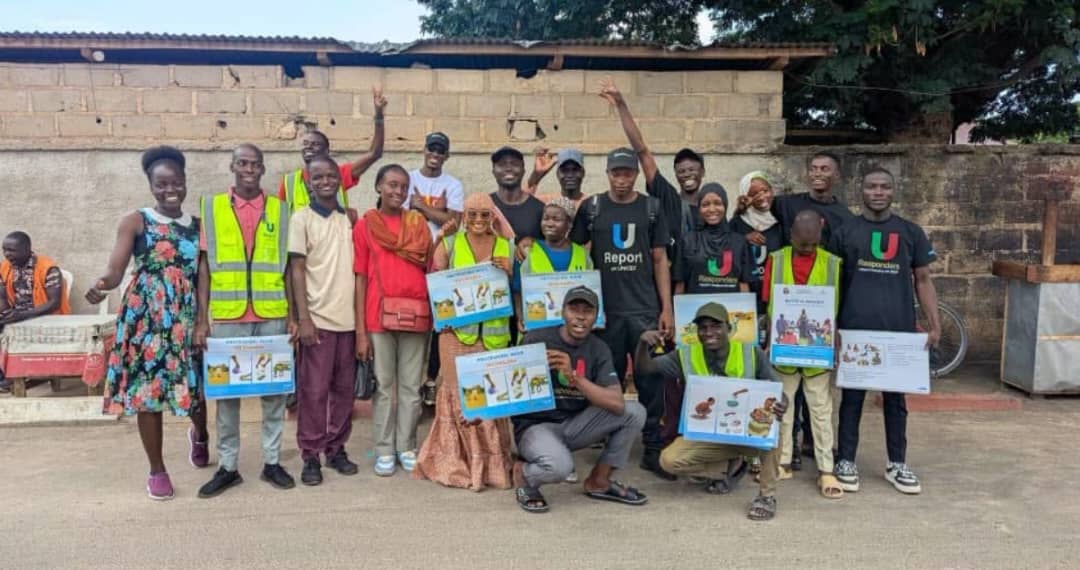
As cholera continues to spread across Cameroon’s Far North Region, young volunteers are stepping up where prevention matters most. Through door-to-door outreach, market campaigns and hospital visits, U-Reporters are helping communities adopt life-saving hygiene practices in a bid to slow transmission before more lives are lost.
With hundreds of suspected cholera cases and more than a dozen reported deaths, Cameroon’s Far North Region is facing one of its most serious public health emergencies in recent years. The outbreak has affected several health districts, including Mada, Fotokol and Kousseri, prompting health authorities and humanitarian partners to intensify response efforts. While treatment centers continue to receive patients, another battle is unfolding outside hospital walls, one focused on prevention.
Across the region, young volunteers from U-Report Cameroon have become an essential part of the response by bringing health information directly to communities. Their mission is straightforward but urgent: encourage people to adopt simple hygiene measures that can stop the disease from spreading.
In Maroua, volunteers gathered at Ouro Tchédé market, one of the city’s busiest commercial hubs, where they engaged shoppers and traders in conversations about cholera prevention. More than 200 people received practical advice on proper handwashing, safe drinking water, food hygiene and the importance of seeking medical care at the first signs of severe diarrhea or vomiting.
The outreach left a lasting impression on many residents. “I didn’t know cholera had already reached our area. Now I will be much more careful,” one woman told the volunteers after the awareness session.
Similar activities were carried out in Garoua’s Wastang market, where volunteers found food displayed on the ground and stalls located close to waste disposal sites; conditions that can increase the risk of contamination. More than 500 traders and customers were sensitized to safer food handling, improved sanitation and environmental cleanliness.
The campaign also extended to Pitoa, where U-Reporters visited health facilities to support caregivers looking after cholera patients. Beyond delivering prevention messages, the visits offered encouragement to families coping with the emotional and physical burden of the disease.
Health experts stress that community awareness remains one of the most effective tools against cholera. The disease spreads mainly through contaminated water and food, making hygiene practices essential to interrupt transmission. Frequent handwashing with soap, drinking treated or boiled water, covering food and using sanitary latrines are among the measures consistently promoted by health authorities.
The mobilization of young volunteers demonstrates how community engagement
can strengthen the public health response during an outbreak. As Cameroon works to contain cholera in the Far North, these grassroots initiatives are helping transform prevention messages into everyday actions. In a region where every new infection can trigger another chain of transmission, informed communities may prove to be one of the strongest defenses against the disease.