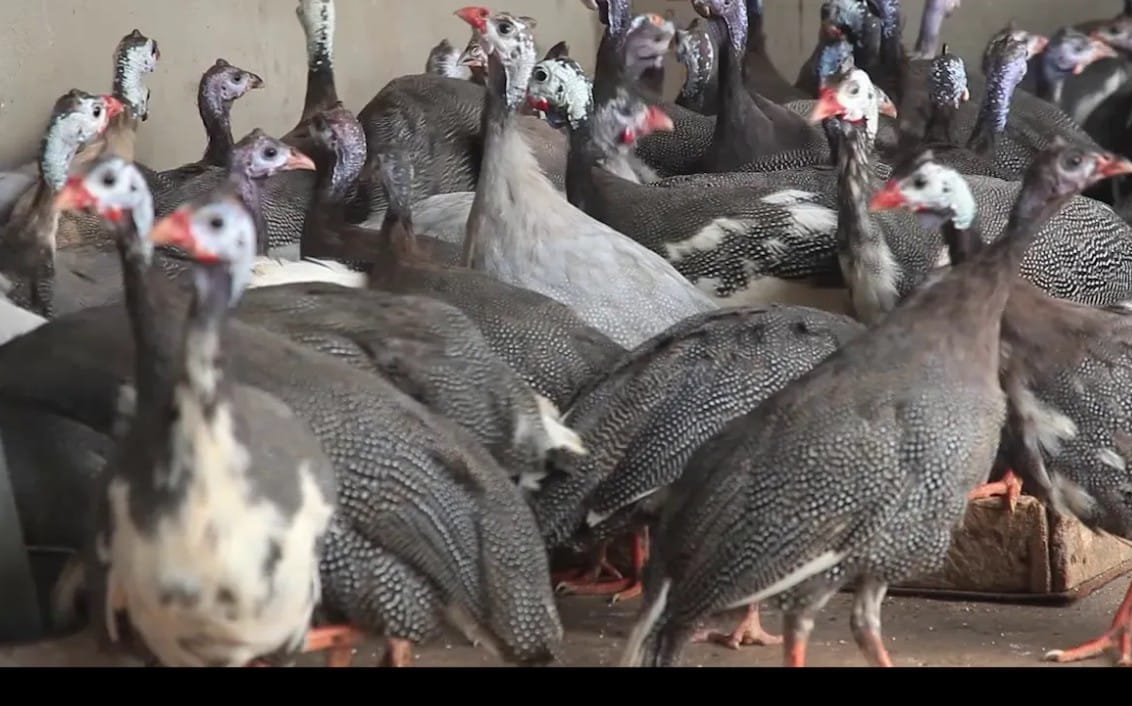
Endowed with remarkable natural qualities, this poultry offers significant advantages that deserve to be highlighted for its development.
Guinea fowl farming is not limited to these two fundamental advantages. Its meat, renowned for its gamey flavor, and its eggs are prized products in local markets and can also open up export opportunities.
One of the guinea fowl’s major strengths lies in its exceptional resistance to disease. Unlike other domestic poultry species that require rigorous health protocols and significant veterinary investments, guinea fowl exhibit a natural resistance to many common ailments. This characteristic is a considerable economic advantage for farmers, as it significantly reduces expenses related to disease treatment and prevention. In a continent where access to veterinary care can sometimes be limited, this self-defense capability makes the guinea fowl a wise choice for more self-sufficient and less expensive farming.
Beyond its disease resistance, the guinea fowl is distinguished by its high adaptability to climatic conditions. Native to Africa, this poultry is particularly well-suited to the hot, dry climates that characterize much of the continent. It tolerates high temperatures better than other species, making it an ideal candidate for farming in regions where intense heat can pose a major challenge to animal survival and productivity. Its ability to find some of its food by pecking and to drink from natural water sources during the rainy season demonstrates this resilience to its environment. This characteristic allows farmers to minimize the need for complex and costly infrastructure for temperature control, thus simplifying farm management.
Guinea fowl farming offers more than just these two fundamental advantages. Its meat, prized for its gamey flavor, and its eggs are sought-after products in local markets and can also open up export opportunities. Furthermore, guinea fowl are ecological allies, consuming harmful insects and weeds, thus contributing to a natural balance on farms. Their droppings, moreover, make excellent organic fertilizer, reducing reliance on chemical fertilizers.
In short, guinea fowl farming offers a sustainable and economically viable alternative for many farmers and livestock breeders, particularly in Africa. By promoting this poultry with its exceptional intrinsic qualities, it is possible to develop a resilient, profitable, and environmentally friendly poultry sector, thereby contributing to food security and the incomes of local populations.