The Democratic Republic of Congo is turning to Ervebo as the country battles a Bundibugyo virus outbreak, even though the vaccine was not specifically approved for this strain. The move reflects both the urgency of the outbreak and the need to generate evidence on whether the vaccine can provide protection.
The use of Ervebo in the Democratic Republic of Congo’s current Ebola response may appear contradictory. The vaccine is licensed for the prevention of Ebola virus disease caused by the Ebola virus, also known as Zaire ebolavirus. The current outbreak, however, is caused by Bundibugyo virus, a different species of orthoebolavirus. No vaccine is currently specifically licensed against Bundibugyo virus disease.
Yet on August 20, the World Health Organization WHO and Africa Centers for Disease Control and Prevention Africa CDC welcomed the allocation of 70,000 doses of Ervebo to the DRC. The decision follows a request from the Congolese government for vaccines from the global Ebola stockpile managed by the
International Coordinating Group on Vaccine Provision.
A vaccine without proven protection against Bundibugyo
The key point is that scientists do not yet know whether Ervebo protects humans against Bundibugyo virus.
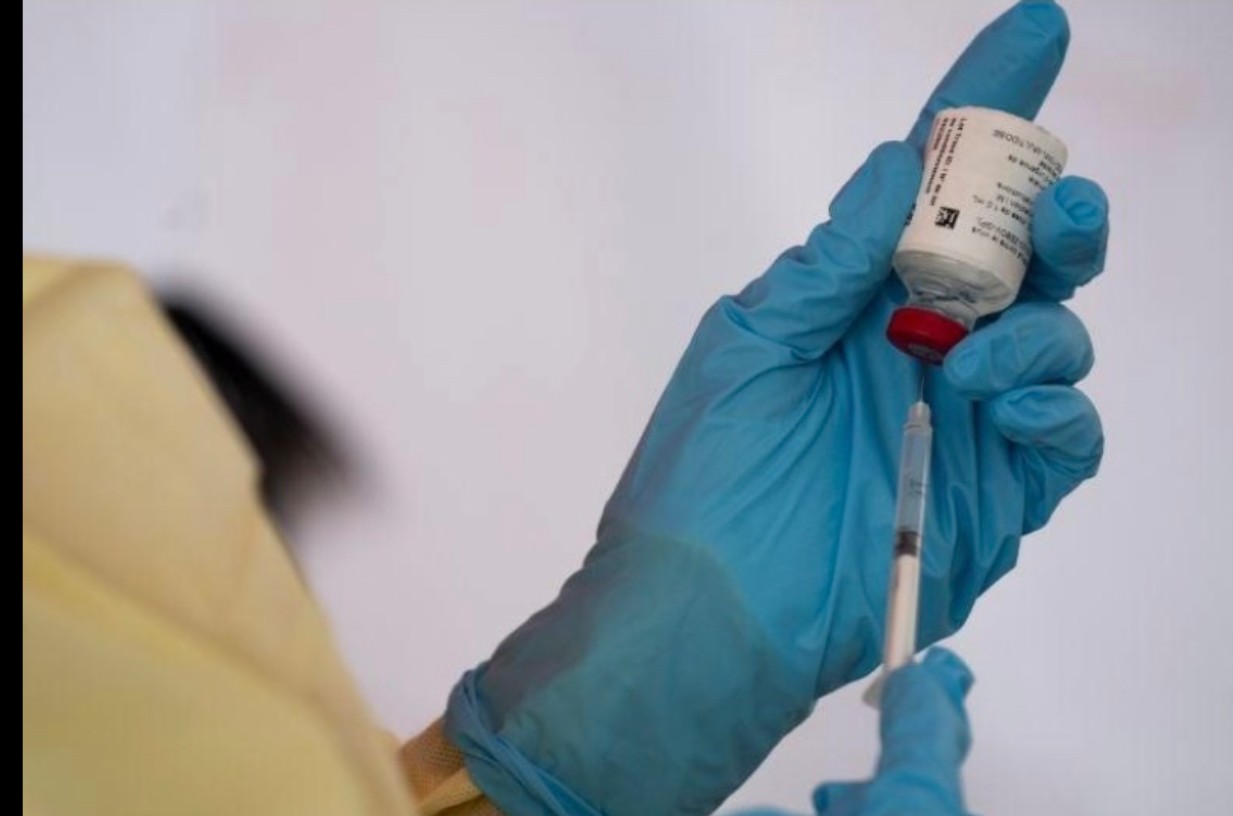
Ervebo was developed using a weakened vesicular stomatitis virus engineered to carry the surface glycoprotein of Ebola virus. Because Bundibugyo is related to Ebola virus, researchers have investigated whether the immune response generated by Ervebo could offer some degree of cross-protection.
Laboratory and animal studies have provided early indications that this may be possible. However, these findings cannot establish that vaccinated people will actually be protected against Bundibugyo infection or severe disease. The WHO therefore stresses that the evidence in humans remains insufficient.
This distinction is crucial. Ervebo is not being presented as a proven Bundibugyo vaccine. Instead, its deployment is taking place alongside efforts to determine whether it can work against the virus responsible for the current outbreak.
20,000 doses for a clinical trial
Part of the 70,000-dose allocation has a specific scientific purpose.
According to the WHO, 20,000 doses will be used in a Phase 3 clinical trial designed to assess the impact of Ervebo against Bundibugyo virus. The trial could provide the evidence that has so far been missing: whether vaccination actually reduces infection or disease in people exposed to the virus.
The remaining 50,000 doses are intended for frontline and healthcare workers, in line with current recommendations from the WHO Strategic Advisory Group of Experts on Immunization.
The approach therefore combines emergency response with research. While authorities seek to protect people at particularly high risk, the clinical trial could determine whether Ervebo has a role to play in future Bundibugyo outbreaks.
Why use it now?
The answer lies partly in the nature of an outbreak. Waiting for a vaccine specifically developed and licensed for Bundibugyo could leave health workers and
communities without an immediately available vaccine option while transmission continues.
Ervebo, by contrast, already exists, has been used extensively during Ebola outbreaks and is held in an international emergency stockpile. Since the creation of the stockpile mechanism in 2021, more than 56,000 doses had been allocated for Ebola virus outbreaks in the DRC by July 2026, according to WHO.
But availability does not equal proven effectiveness against Bundibugyo. For this reason, WHO insists that people receiving the vaccine should be informed about its potential benefits, risks and limitations and should be able to provide informed consent, particularly in the context of the clinical trial.
A race against the outbreak
The decision also highlights a broader challenge in Ebola preparedness: vaccines are not necessarily available for every virus responsible for Ebola disease.
The current response must therefore balance two priorities: protecting people during an active outbreak and producing the scientific evidence needed to guide future vaccination policies.
For the DRC, Ervebo represents neither a definitive solution nor a vaccine specifically approved against Bundibugyo. It is, rather, an existing tool being evaluated under exceptional circumstances.
The results of the clinical trial could ultimately determine whether Ervebo becomes part of the arsenal against Bundibugyo virus or whether the search for a specific vaccine must continue.