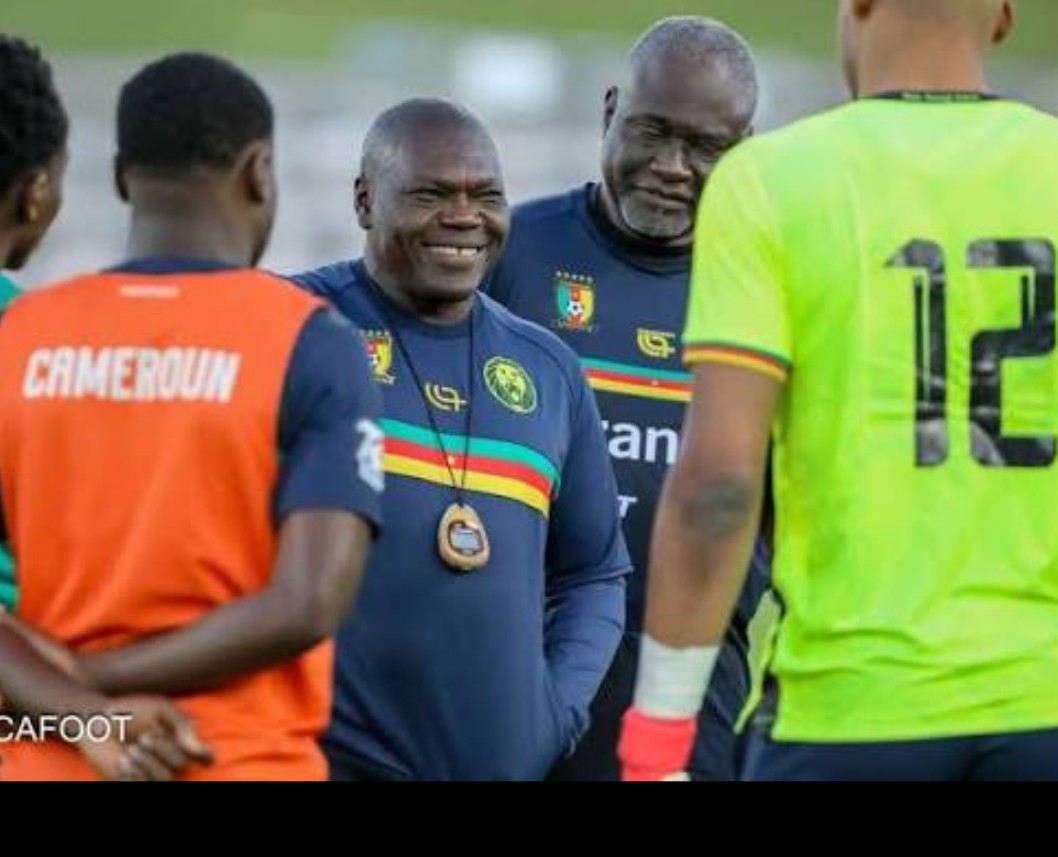
With the 2027 AFCON qualifiers approaching, Cameroon faces a major tactical challenge during the September FIFA window. Between Carlos Baleba’s injury and the withdrawal of key players, the Indomitable Lions’ coaching staff must rebuild their midfield and reinvent their
On the eve of the 2027 Africa Cup of Nations qualifiers, the Cameroonian national team enters the September FIFA window amidst significant uncertainty. Between last-minute injuries and squad restructuring, the national coach faces a genuine strategic challenge. The anticipated absence of key players, most notably the midfield prodigy Carlos Baleba, forces the coaching staff to revise their plans to maintain the team’s balance and competitiveness. The midfield deprived of its playmaker
The most significant absence on the pitch is undoubtedly that of Carlos Baleba. Having suffered an ankle ligament injury during preseason training, the player is undergoing rigorous medical monitoring. Anxious to take no risks with his recovery, his club has implemented a gradual return-to-play protocol that virtually rules out any active participation in the next two qualifying matches. On the field, Baleba’s absence deprives Cameroon of its main link between the defensive line and the attacking play. Capable of breaking lines with his vertical runs and imposing a constant physical presence in winning back possession, the young midfielder had established himself as the linchpin of the tactical setup. Without his ability to withstand the opposition’s press and direct the play under pressure, the Lions risk losing fluidity during transitions.
A midfield in urgent need of rebuilding
This withdrawal comes at a time when the midfield has already undergone significant changes. With experienced players like Franck Zambo Anguissa sidelined, the Cameroonian midfield is sorely lacking in collective cohesion. The coaching staff is therefore forced to test a new formula for this international break. Two main tactical options are available: a switch to a more conservative 4-3-3,
repositioning a more defensive-minded player as a holding midfielder to secure the central area and compensate for the lack of physical presence, or a 4-2-3-1 formation based on a double pivot combining an athletic ball-winner with a more technically gifted playmaker like the young Arthur Avom, tasked with initiating attacks. However, these adjustments require perfect coordination that only repeated matches and tactical maturity can guarantee.
The attack forced to rethink its approach
On the offensive side, the exclusion of veterans such as Vincent Aboubakar and Eric Maxim Choupo-Moting reflects a clear desire for generational renewal. Nevertheless, coupled with difficulties in supplying the ball from midfield, this transition places a heavy responsibility on the new generation of attackers. Players like Bryan Mbeumo and Danny Namaso will have to drop deeper to contribute to the build-up play, at the risk of leaving the opposing penalty area undefended. Effective crosses and rapid attacks down the wings will become essential weapons to bypass the opposing central block and compensate for the lack of physical presence in the middle.
The challenge of collective cohesion
Faced with these constraints, the major challenge of this September FIFA window will not only be about results, but also about structure. Cameroon must prove its ability to overcome physical setbacks while laying the foundations for a clear playing identity for the 2027 AFCON cycle. The success of this gathering will depend on tactical discipline, collective solidarity, and the ability of the newcomers to immediately meet the demands of the highest continental level.