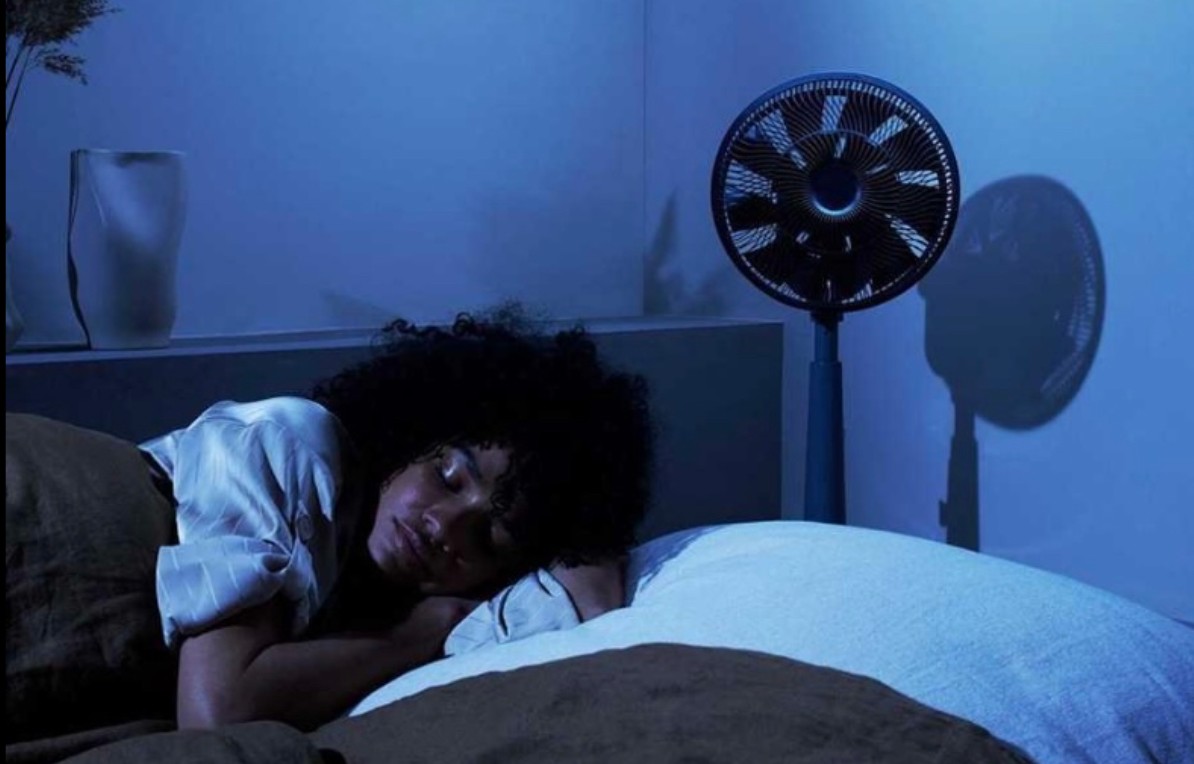
A fan can make hot nights more bearable, especially when temperatures remain high. But leaving it blowing directly onto your body or face throughout the night may cause some discomfort. While it is not generally considered dangerous for healthy people, prolonged exposure can affect the eyes, skin, airways and sleep quality.
Dry eyes and skin
One of the most common effects of continuous airflow is dryness. A fan blowing directly towards the face can dry out the eyes, particularly for people who sleep with their eyes partly open or wear contact lenses. The skin may also become dry or irritated, especially in people with sensitive skin.
The nose and throat can become irritated
Constant airflow can also dry the nasal passages and throat, sometimes causing irritation or discomfort when waking up. People who are sensitive to dust, pollen or other airborne particles may notice more symptoms if the fan is circulating particles already present in the room.
However, a fan does not cause a cold or flu. These illnesses are caused by viruses. Cool air may make some people feel congested or uncomfortable, but it does not create a viral infection.
Dust can become a problem
The cleanliness of the fan matters. Dust can accumulate on its blades and protective grille and then be blown around the room when the appliance is switched on.
For people with allergies or asthma, this circulating dust may contribute to respiratory irritation or worsen existing symptoms. Regularly cleaning the fan can therefore be just as important as deciding where to position it.
It can affect sleep comfort
A fan can actually help some people sleep. Its steady airflow and background noise may create a more comfortable sleeping environment, particularly during hot weather.
For others, however, direct airflow can become uncomfortable during the night. Excessive cooling, noise or waking up with a dry throat may interfere with sleep quality.
How to use a fan more safely
There is generally no need to stop using a fan at night. The simplest precaution is to avoid directing it continuously at the face or body. Positioning it to circulate air around the room can provide cooling without creating a strong stream of air against the skin.
Using a lower speed can also reduce dryness and discomfort. The fan should be cleaned regularly, particularly the blades and grille, to prevent accumulated dust from being circulated.
People with asthma, significant allergies or persistent eye or respiratory irritation should pay attention to symptoms that repeatedly occur at night. If they persist, medical advice can help determine whether the fan is actually responsible or whether another condition is involved.
Ultimately, sleeping with a fan is not inherently harmful. The main concern is prolonged, direct airflow and the conditions in which the fan is used. With a clean appliance, moderate airflow and appropriate positioning, a fan can remain a practical way to stay comfortable during hot nights.