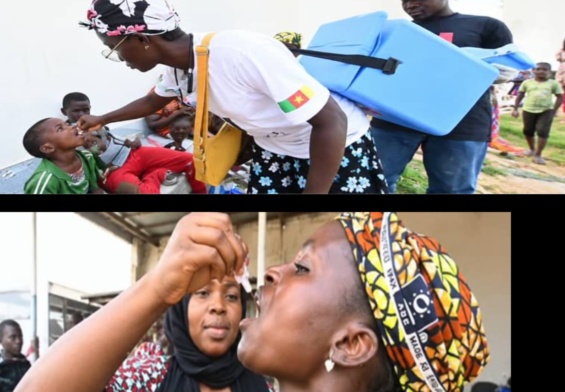
In the face of crises and migration, the Red Cross is stepping up its efforts. Globally, the IFRC trains over 22 million people annually. In Cameroon, the « Life-Saving Skills » program has trained 309 instructors and 1,479 volunteers, while raising awareness among more than a million people.
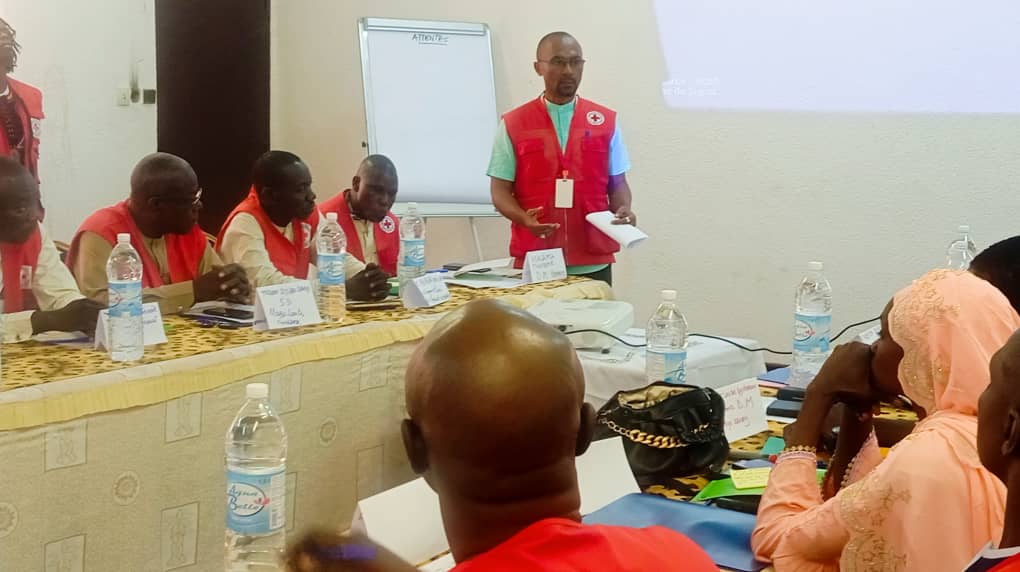
In a world facing a surge in climate, security, and migration crises, mastering life-saving skills is no longer merely a secondary ability; it has become a critical issue for public health and community resilience. Both internationally and within Cameroon, Red Cross teams mobilize daily to train citizens and provide vital assistance in areas where access to healthcare remains limited or difficult. The recent observance of World First Aid Day on September 12th provided an opportunity to review the systems implemented by the Cameroon Red Cross teams, led by National President Cécile Akame Mfoumou. We train children, adults, and even those who are illiterate. We tailor all our training programs to the specific audience we are addressing, because when an accident occurs, the response must be effective and appropriate to the scale of the situation, explains Françoise Ngo Lappe, Head of the Protection Department at the Cameroon Red Cross.
A global network of unprecedented scale
With a worldwide network comprising 191 National Societies and nearly 16 million volunteers, the International Federation of Red Cross and Red Crescent Societies (IFRC) stands as the largest humanitarian network in the world. Emergency preparedness and first aid training are central to its historic mandate. Globally, more than 22 million people are trained in first aid techniques each year by the various National Societies. Guided by its strategic vision for 2030, the IFRC aims to reach a decisive milestone: ensuring that at least one person trained in life-saving skills is present in every household, school, and workplace across the globe.
The Cameroon Red Cross Commitment: Reaching Over One Million People
In Cameroon, this comprehensive commitment translates into a massive field rollout of the Gestes Qui Sauvent (GQS) or Life-Saving Skills program. Between 2020 and 2026, the Cameroon Red Cross (CRC) spearheaded a major humanitarian initiative to strengthen the emergency response capabilities of local populations. Figures from the CRC’s national report highlight the scale of the work accomplished: a total of 309 GQS trainers and 1,479 GQS volunteers were trained and mobilized across the country. Thanks to their ongoing efforts, 1,078,733 community members were educated in emergency response techniques, ensuring direct coverage for 370 villages across several departmental committees. A geographical analysis of the interventions reveals a strategic focus on areas facing extreme vulnerability. The Far North region serves as the operational hub of the initiative, accounting for 196 trainers, 899 volunteers, and over 1,065,250 people reached across 285 villages.
This large-scale deployment addresses urgent needs arising from security crises, forced displacement, and frequent climate-related hazards in the Lake Chad Basin area. Significant progress has also been made in other strategic regions: the Center region has reached 5,933 people across 23 villages; the North-West has reached 3,702 people across 27 villages; the West region has reached 2,454 people across 27 villages; and the South-West region has reached a total of 3,992 people across 9 villages.
An inclusive approach tailored to migration contexts
Beyond technical skills, the Cameroonian Red Cross strategy incorporates international recommendations, particularly regarding assistance in migration and humanitarian emergency contexts. Migration journeys expose individuals to multiple risks, including dehydration, physical trauma, psychological distress, and gender-based violence. In the field, trained volunteers not only provide emergency care but also offer active listening, psychosocial support, and safe referrals to appropriate medical facilities. By targeting children, women, adults, and the elderly, the Red Cross reaffirms its core mission: to transform every citizen into a strong link in the relief chain, thereby building a safer and more united society.
Interview
« First aid skills should be learned from an early age »
In an interview, Bernard Ayissi Nouma, the National Director of Disaster Management for the Cameroon Red Cross outlines the organization’s first aid assistance measures.
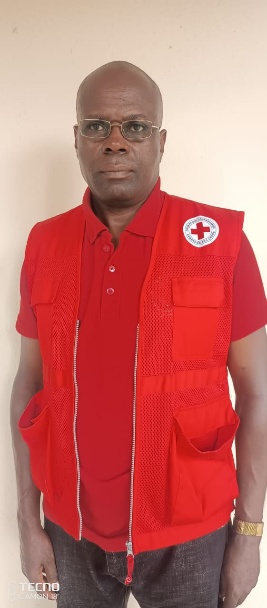
What role does the Cameroon Red Cross play in the assistance framework?
Recognized as an organization of public utility by presidential decree in 1963 a status renewed in March 2020 the Cameroon Red Cross has a core mandate to assist vulnerable populations. To achieve this, it operates through several key stages, notably prevention. With its thousands of volunteers, the association goes into the field to raise community awareness on various topics, such as disaster risk reduction during floods and landslides, or the management of epidemics like cholera.
What is the context for the training programs offered by the Cameroon Red Cross?
The training programs are part of the emergency preparedness phase. The association offers a wide range of modules tailored to different audiences, covering standard first aid, psychological first aid, WASH (water, sanitation, and hygiene), cash transfers, and shelter management.
For populations with limited formal education, the Red Cross has implemented a community-based lifesaving skills approach. Local trainers are instructed sometimes in national languages using community-oriented materials. This ensures that, in the event of an accident, the first people on the scene can perform the essential actions needed to keep the victim alive while awaiting evacuation to a health center.
How are the training sessions organized, particularly for first aid?
Training activities are widely decentralized across the country. With Cameroon comprising 58 departments, the Red Cross maintains a corresponding number of departmental and divisional committees. Furthermore, the organization relates to brigades in primary schools and clubs in higher education institutions.
Although some training courses require specific qualifications, the association adapts its programs to each target group in order to train as many people as possible. Visual and hands-on demonstrations such as techniques for stopping bleeding make it possible to include individuals without formal education.
Regarding equipment, how is distribution handled within the communities?
Thanks to the efforts of the National President and the support of partners like the International Committee of the Red Cross (ICRC), the equipment received is not merely stored in Yaoundé but is distributed to local committees and clubs. This enables local areas to respond immediately with first aid kits and stretchers in the event of an accident. Furthermore, regional warehouses such as the one in Maroua in the Far North house large-scale equipment to support the State during major humanitarian crises.
Is the awareness-raising effort focused only on specific target groups?
The awareness-raising initiatives target a broad and diverse audience. At the start of each school year, volunteers supervise students near roads and educate motorcycle taxi drivers, transport operators, and the general public on road safety rules. Additionally, first aides conduct awareness campaigns and community service activities in markets on Sundays.
The National President’s policy places special emphasis on youth by introducing children to these concepts at an early age, particularly through programs like « Vacation and First Aid » or « Vacances and Leisure », which are open to children as young as five.
In the field, Red Cross teams work closely with medical personnel, firefighters, and other official services, operating under the authority of the designated operations commander.
How many people trained in first aid does the Cameroonian Red Cross have in the country to date? Since its inception, the association has trained approximately 105,000 people across the country, thereby helping to dispel the misconception that limits the Red Cross’s role solely to caring for casualties at stadiums and the like.