
Faced with sustained growth in industrial and domestic demand, the Ministry of Water and Energy and the International Monetary Fund have drawn up an uncompromising assessment of the Cameroonian electricity sector, highlighting ongoing investments and future strategies.
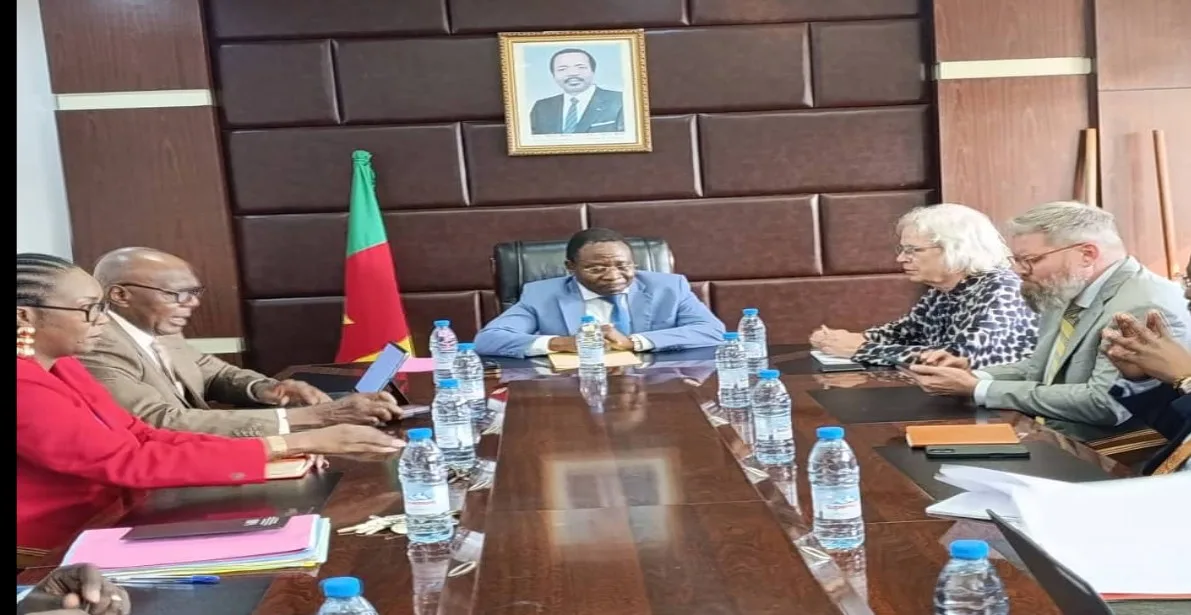
Held under the banner of strategic dialogue and macroeconomic assessment, the meeting on Monday, September 21, 2026, between the Ministry of Water and Energy (MINEE) and the International Monetary Fund (IMF) provided an opportunity to analyze the major challenges facing Cameroon’s electricity sector. Led by Christine Dieterich, IMF Mission Chief for Cameroon, the delegation met with Minister Gaston Eloundou Essomba and his close associates, including the Secretary General of MINEE and the heads of technical departments. Discussions focused exclusively on production, service quality, transmission infrastructure, technical and commercial losses, and the financial health of a sector facing rapidly expanding demand.
When questioned about the quality of the power supply, the Minister acknowledged the continued disruptions, while highlighting an encouraging trend toward their reduction thanks to ongoing investments. These efforts include rigorous maintenance of the transmission network, optimization of transformation capacities at several substations, and the progressive securing of the distribution network. Particular attention is being paid to wooden poles, whose age remains a major cause of outages. Of the approximately 1.5 million wooden poles in the country, a first pilot phase supported by the World Bank plans to replace 50,000 units with concrete poles across the ten regions, prioritizing strategic power lines.
Nachtigal, energy transport and loss reduction
The situation at the Nachtigal hydroelectric power plant was a central topic of discussion. While the production facilities are fully operational, the plant is subject to the vagaries of the water supply. Hydrological conditions do not always allow for the simultaneous use of the full installed capacity, illustrating the significant impact of hydrological risks on the balance of the national electricity system. Meanwhile, the transmission of energy produced at Nachtigal to Yaoundé is underway, but the strategic challenge remains strengthening the transmission corridor intended to supply Douala and its industrial basin. Construction is progressing rapidly, with the stated objective of completing this entire transmission corridor before the end of 2026.
The crucial issue of technical and commercial losses was also examined. Minimizing these losses is essential to guaranteeing the financial and operational stability of the sector. The action plan is based on modernizing networks, increasing rigor in maintenance, and intensifying the fight against fraud.
Anticipating strong growth in demand
Faced with alarming projections of sustained growth in household consumption and industrial needs, the Government is deploying short- and medium-term solutions. A 200 MW emergency solar program is planned to quickly inject additional capacity, complemented by the rehabilitation of existing facilities. In Kribi, the optimal use of natural gas will increase the capacity of the local thermal power plant. These transitional measures aim to secure supply while awaiting the completion of future major infrastructure projects. For the Ministry of Water and Energy (MINEE), the ultimate objective goes far beyond simply ensuring electricity availability: it is about building a robust and reliable energy supply to sustainably support the industrialization and economic transformation of Cameroon.