The World Health Organization (WHO) reported on October 5 that Angola is strengthening community-based surveillance in Cunene Province to interrupt Guinea worm transmission. The joint mission assessed disease surveillance and water sources in Humbe and Cuanhama, as the country works towards certification as free of the disease by 2030.
Communities at the center of surveillance
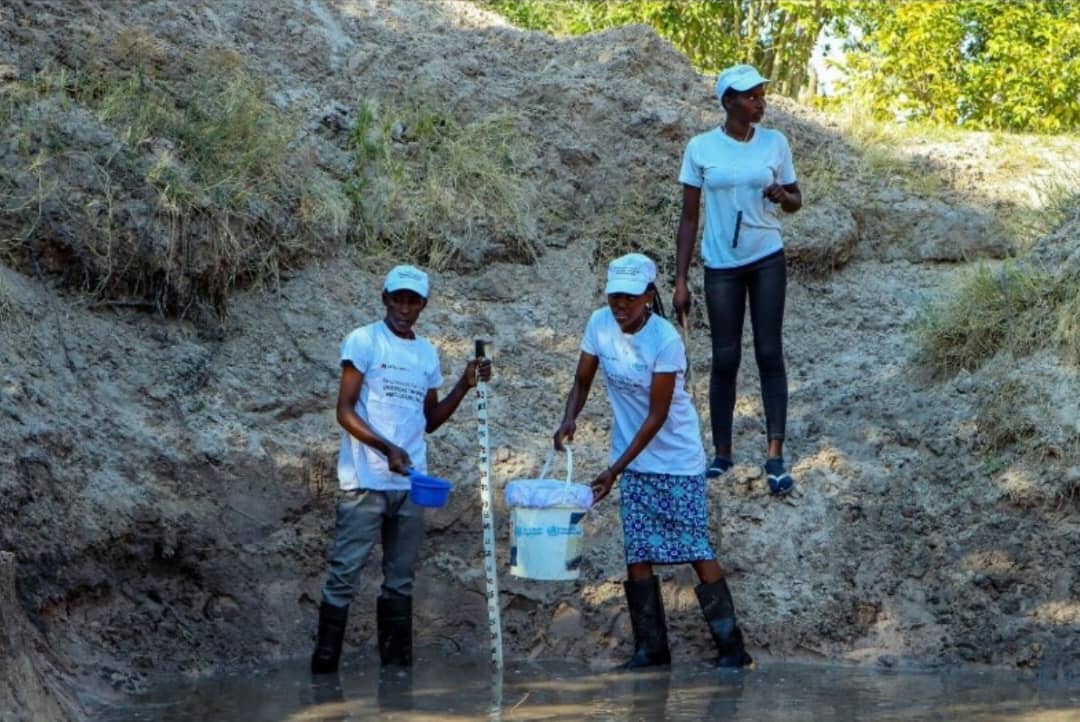
The latest mission brought together Angola’s Ministry of Health, WHO, the Carter Center, the National Technical Certification Committee and provincial health authorities. In Humbe and Cuanhama, the teams reviewed community surveillance mechanisms and assessed water sources considered relevant to Guinea worm transmission.
The approach reflects the particular challenge of eliminating a disease that has become increasingly rare. When transmission falls to very low levels, health authorities need to identify suspected infections quickly, investigate them and prevent infected people or animals from contaminating water sources.
Community members therefore become an important part of the surveillance chain. Local
health workers and volunteers can help identify unusual symptoms, report suspected cases and alert health authorities to possible transmission in areas that may be difficult to reach through conventional health services.
Water remains a key line of defense
The focus on water sources is directly linked to how dracunculiasis, commonly known as Guinea worm disease, spreads. People become infected by drinking water containing tiny aquatic crustaceans carrying the parasite’s larvae.
There is currently no vaccine against the disease. Prevention consequently relies heavily on access to safe drinking water, the use of appropriate filters, rapid detection of cases and measures preventing infected people from entering water sources.
Angola has already invested in these interventions. According to WHO’s 2025 annual report, more than 93,000 filters were distributed to 26,805 families, while 359 water sources were treated. Community surveillance covered 145 villages, supported by 458 community volunteers.
These measures are particularly important in Cunene, the province that has remained at the center of Angola’s Guinea worm response.
Animal infections complicated the final phase
Although Angola has made major progress against human transmission, infections in animals remain a significant challenge. Dogs have accounted for the overwhelming majority of animal infections reported in the country in recent years.
WHO reported in early 2026 that Angola had recorded 137 animal infections between 2018 and 2024, including 134 in dogs. The infections were concentrated in Cunene Province.
The epidemiological situation has also evolved during 2026. While earlier assessments highlighted years without reported human cases, two human Guinea worm cases were subsequently confirmed in March, underscoring the need to maintain surveillance even after substantial progress has been achieved.
The persistence of animal infections makes eradication more complex because the parasite can continue circulating outside the human population. Detecting infected animals and preventing contamination of water sources are therefore essential to breaking the transmission cycle.
The road to certification
For Angola, the objective is no longer simply to reduce the number of infections but to demonstrate that transmission has been interrupted. WHO certification requires countries to provide evidence of sustained interruption of transmission and effective surveillance capable of detecting any potential re-emergence.
The October 5 mission in Cunene therefore comes at a critical stage of the country’s eradication efforts. By combining community surveillance, water safety measures and monitoring of both human and animal infections, health authorities are seeking to close the
remaining gaps in transmission.
The challenge now is to maintain these systems until the country can demonstrate that Guinea worm disease is no longer being transmitted. For communities in Cunene, this means that reporting suspected infections and protecting drinking water remain central to Angola’s ambition to reach the 2030 eradication target.