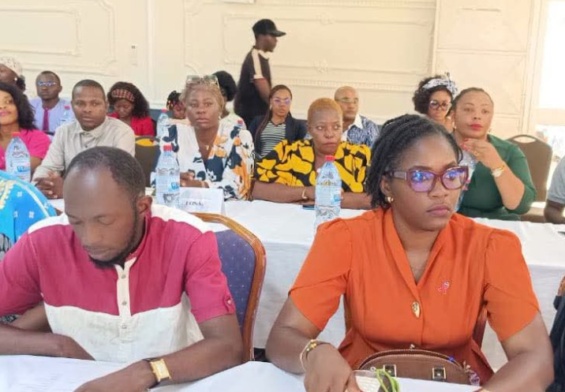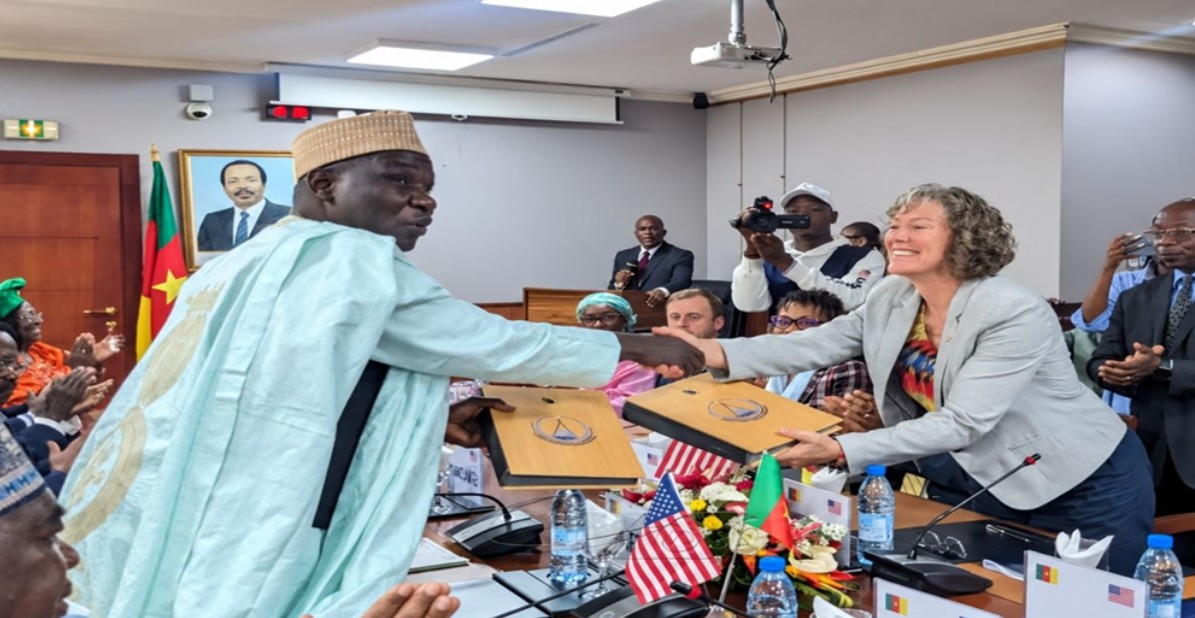
On October 1, 2026, in Yaoundé, Minister of Economy Alamine Ousmane Mey and US Chargé d’Affaires Brenda Soya signed the SOAG agreement. Washington is contributing 240 billion CFA francs, while Yaoundé is mobilizing up to 270 billion CFA francs. The objective is to combat HIV/AIDS, tuberculosis, and malaria; strengthen laboratories; reduce maternal and infant mortality; and build a resilient health system by 2030.
Some signatures do more than simply fulfill a protocol. They move mountains. On October 1, 2026, in Yaoundé, Cameroon and the United States of America affixed their seals to a financial instrument of unprecedented scale: 510 billion CFA francs to be mobilized over five years to rebuild the national health system. At the heart of this mechanism lies a strategic shift: Washington is contributing approximately 240 billion CFA francs, or 400 million dollars. Yaoundé, for its part, is committing to mobilize up to 270 billion CFA francs, or 450 million dollars. For the first time on this scale, Cameroon’s contribution exceeds external support. Co-investment is no longer just a slogan; it’s a framework.
The Strategic Objectives Grant Agreement (SOAG) was initialed by Alamine Ousmane Mey, Minister of Economy, Planning and Regional Development, and Brenda Soya, Chargé d’Affaires ad interim of the United States Embassy in Cameroon. The ceremony took place in the presence of the Minister of Public Health, Dr. Manaouda Malachie, and several members of the government. Ten months after the memorandum of understanding signed on December 16, 2025, the SOAG marks the transition to the operational phase.
The sums involved are staggering, but the statistics illustrate the stakes even better. Over five years, the 270 billion FCFA pledged by Cameroon represents a theoretical average of 54 billion FCFA per year if the effort were spread out evenly. This figure should be considered in light of the historical health budget, which has never exceeded 7.07% of the national budget since 2001, compared to the 15% promised in Abuja. The SOAG (State Health Action Plan) does not resolve this structural issue, but it does establish a trajectory: increasing public health spending and anchoring financing in an endogenous model.
What exactly will this 510 billion fund? The action plan covers several critical areas. The fight against HIV/AIDS, tuberculosis, and malaria is a top priority. Strengthening epidemiological surveillance, laboratories, pharmaceutical supply chains, and health data systems completes the plan. Reducing maternal, neonatal, and infant mortality, as well as improving the performance of
primary healthcare districts, are priority targets. The One Health approach, which links human health, animal health, and the environment, is integrated to better prevent cross-border risks.
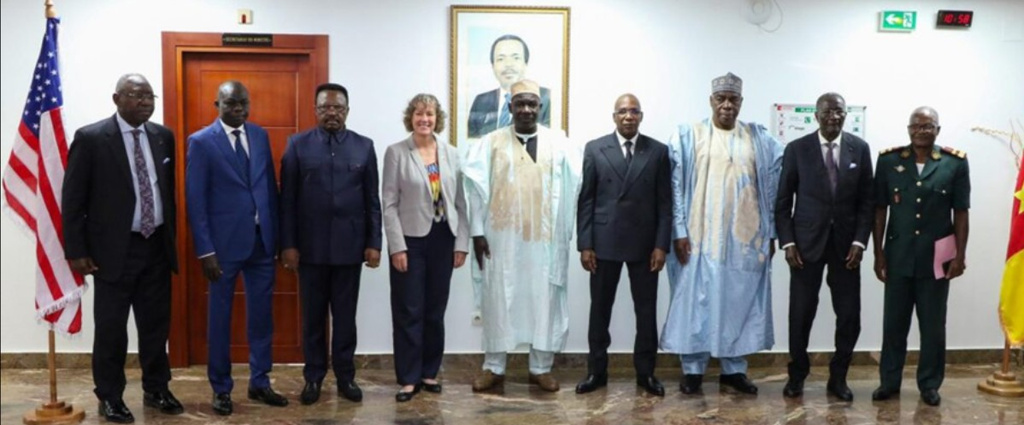
The legacy speaks for itself. In two decades, the United States has invested more than $1.1 billion, or approximately 640 billion CFA francs, in Cameroonian health. This funding has enabled the expansion of clinical services nationwide and provided access to antiretroviral treatment for more than 440,000 people. It has supported the distribution of mosquito nets and improved malaria diagnosis. It has contributed to the establishment of a public health emergency operations center and the training of more than 2,000 field epidemiologists and health investigators.
The new framework sets a clear course: a complete transition to a government-led and government-managed health system in Cameroon by 2030. Brenda Soya stated this unequivocally: the objective is to achieve concrete and measurable results in epidemic response, the availability of health products, workforce capacity building, and the development of integrated health data systems. Alamine Ousmane Mey reiterated that this support contributes to accelerating the 2020-2030 National Development Strategy and the vision of an emerging Cameroon by 2035.
The challenge is therefore twofold. It is financial, with 510 billion FCFA to be transformed into sustainable capacity. It is political, with the requirement of effective national ownership. A robust health system is not an expense; it is the prerequisite for productivity and prosperity. By signing the SOAG, Yaoundé and Washington did not simply agree on figures. They made an act of faith in Cameroon’s human capital.