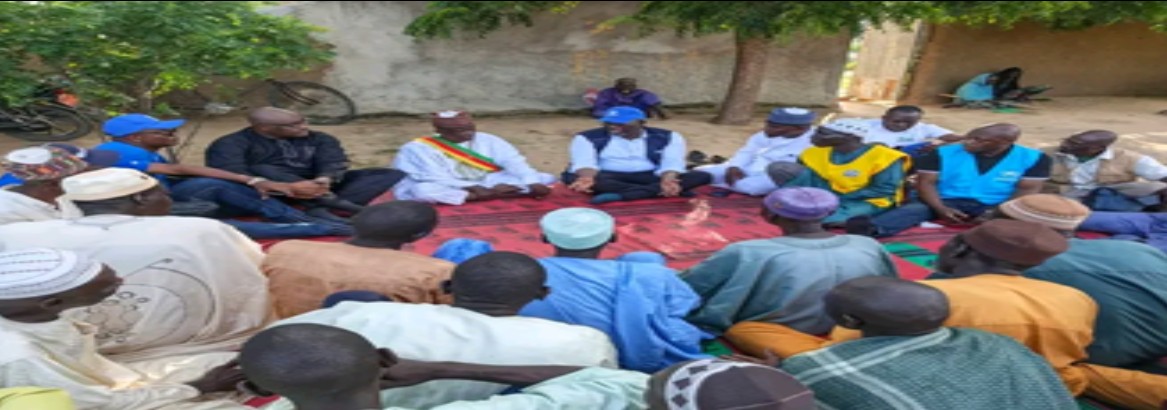
A joint mission from WHO, UNHCR and the Ministry of Public Health visited the internally displaced persons camp in Mémé, in the Mora health district, to gather concerns from populations affected by cholera and adapt the health response to their needs.
The cholera epidemic continues to plague the Far North. As of August 30, 2026, the region had recorded 2,075 reported cases and 53 deaths, for a case fatality rate of 2.55%. Eleven districts were experiencing a confirmed outbreak, including Mora, where the disease continues to pose a threat to populations already weakened by displacement. It is in this context that the communities of the Mémé internally displaced persons camp have been placed at the heart of the response. A joint mission from the World Health Organization, the United Nations High Commissioner for Refugees, and the Ministry of Public Health visited the area to engage directly with those affected by the epidemic. Led by the WHO Resident Representative, Dr. MAGARAN MONZON BAGAYOKO, and the UNHCR Resident Representative, Ms. Yvette MUHIMPUNDU, this mission prioritized dialogue with the populations.
Listen before you act
In the Mémé camp, the response was not limited to medical interventions. Focus groups brought together internally displaced persons, including women, men, and young people. These discussions allowed the population to directly express their difficulties and expectations regarding the health situation. Access to healthcare was among the main concerns raised. Participants also discussed the protection of vulnerable people and issues related to maternal and child health. These concerns enabled those involved in the response to better understand the realities experienced daily in the camp and to identify the most appropriate responses. This approach is particularly important in a context where cholera requires not only a rapid response but also a thorough understanding of the behaviors, difficulties in accessing services, and living conditions of the exposed populations. The WHO also noted in its report as of August 30 that the epidemic remained active in the Far North and had spread to 12 health districts. Mora was among the most affected districts.
Populations made vulnerable by displacement
In areas hosting displaced persons, cholera prevention and management must take into account the specific living conditions of the communities. Access to water, sanitation, healthcare, and health information is essential to limiting the spread of the disease and promoting early treatment of individuals exhibiting suggestive symptoms. Since July, the Ministry of Public Health had already strengthened the response system in the Far North region in response to the persistence of outbreaks. The Minister of Public Health reiterated that treatment for cases would be free of charge. In Mémé, the decision to directly engage with the population complements existing health interventions. This approach allows for the reporting of challenges on the ground and enables prevention, treatment, and protection efforts to be better tailored to the realities of thosenat risk.
The community as an actor in the response
Beyond simply gathering concerns, these discussions highlight that the fight against cholera does not rely solely on health facilities. Communities are also a crucial link in early detection, the adoption of preventive measures, and the rapid access to care. For partners involved in the response, listening to women, men, and young people allows them to develop more inclusive interventions that are better adapted to the real needs of the population. In an ongoing epidemic, this community-based approach aims to strengthen trust between communities and health workers, as well as the capacity of communities to cope with health threats.
In Mémé, the message is clear: when faced with cholera, the response also involves listening to those who live with the risk every day. By placing their concerns at the heart of their interventions, health and humanitarian actors seek to strengthen a response that is closer to the ground and, above all, more effective.
Marie Chantale FAIDA