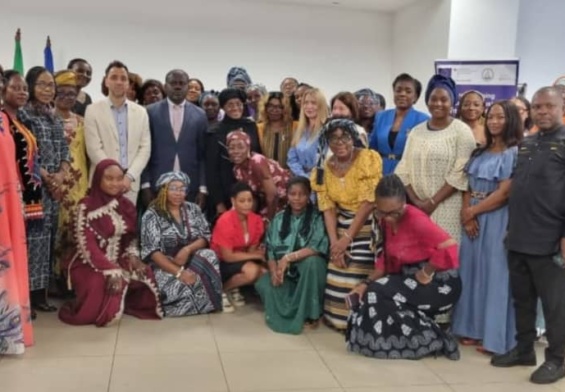
On April 30, 2026, a high-level meeting held by the Minister of Public Health in Yaoundé. The meeting revealed structural weaknesses in Regional Health Promotion Funds, as authorities push for accountability and faster delivery under Universal Health Coverage.
In a sharply worded meeting at the Ministry of Public Health in Yaoundé on Thursday afternoon, Cameroon’s Health Minister delivered a clear message to Regional Health Promotion Funds (FRPS): step up or risk undermining the country’s Universal Health Coverage (UHC) ambitions.
The session, which brought together heads of the decentralized funding bodies, was initially framed as a routine consultation. It quickly evolved into a moment of reckoning. With UHC gradually taking shape nationally, the Ministry signaled that operational inefficiencies at the regional level can no longer be tolerated.
Praise, then pressure
Speaking on behalf of his peers, the head of the East region’s FRPS opened the discussions on a conciliatory note. He acknowledged the Minister’s leadership and highlighted progress made across the health system despite persistent challenges. He also reaffirmed the funds’ commitment to tightening their operational standards in line with UHC demands.
While recognizing efforts already made, Dr Manaouda Malachie, underscored a fundamental point: the FRPS are not peripheral actors but integral extensions of the Ministry. As such, they are expected to play a decisive role in financing health interventions and promoting public health at the grassroots level.
Structural flaws laid bare
The Minister did not thin words when outlining the shortcomings. Chief among them was the lack of structured proposals from the regional funds to central authorities, a gap he described as evidence of weak strategic vision and insufficient coordination.
Equally concerning was what he termed a “low-profile presence” of the funds in driving their own mandates. In a system undergoing transformation, passive administration is no longer acceptable.
The issue of accountability surfaced repeatedly. The absence of annual activity reports; critical tools for performance evaluation and policy adjustment, was singled out as a major failure. Without reliable data and reporting, the Ministry warned, effective governance becomes nearly impossible.
Delays in reimbursing health facilities also came under scrutiny. Such bottlenecks, the Minister stressed, directly affect service delivery and erode trust within the healthcare system.
A turning point for decentralized health financing
By the close of the meeting, the directive was unambiguous: Regional Health Promotion Funds must transition from administrative inertia to performance-driven entities. The emphasis is now on accountability, strategic alignment, and measurable impact.
This recalibration comes at a critical juncture. As Cameroon advances toward Universal Health Coverage, the effectiveness of decentralized financing mechanisms will largely determine whether reforms translate into real access to care.
Thursday’s meeting may well mark a shift from tolerance to enforcement. The success of UHC will not hinge solely on national policy, but on the ability of regional actors to deliver efficiently, transparently, and at scale.
Ornéla ZANGA